DIY: Blank Bible (part 1)
Intro
 In August we ran a short series on how to make a Jonathan Edwards blank bible – how to cut and rebind a bible with blank pages interwoven for note taking (see part 1, 2 and 3). I was hoping at least 10 of my friends would find it useful. At least a few readers would be entertained at some hombre loco who took a table saw to new bibles.
The actual response was overwhelming.
Over 4,000 hits in three-day period overshadowed all expectations. Jonathan Edwards fans from around the Web stopped by to have a look. Edwards scholars stopped to explain what the original Jonathan Edwards bible looks like and to give insight how his bible was made. Dozens of blogs linked to the series, pastors and Christians from around the world poured encouraging emails into my inbox as they took up the project themselves.
But that original series had its deficiencies.
Judging from the amount of questions that we raised at the end of t he series, I had not explained certain steps well enough. There was a lack of photographs. We needed better explanations on how to clamp the bible before cutting and more info on the paper we used. After the first series was done, binding experts sent their insights into alternate options for those who cannot (for example) use a saw to cut the original binding off.
It was obvious I needed a do-over. So this series is my attempt to go back and recreate that original series, to highlight all the steps involved and give better directions.
Overview
I am firmly committed to keeping my notes on Scripture as close to Scripture as possible. Ideally I have always wanted a bible that will provide me enough room to keep a lot of notes bound with the text in which they originate (this is the genius of the Jonathan Edwards blank bible). I have looked at some journaling bibles, but I needed more space. I have looked at bibles in three-ring binders but they are very bulky and awkward and need my entire desk cleared out to open it up (and those three rings are always in the way).
But there was a bigger hurdle in my search for the perfect blank bible.
Those in the bible publishing industry tell me the cost of bible paper continues to increase. And because a blank bible doubles the amount of paper, it is unlikely that a blank bible will be published due to affordability. In other words, if you want one, you need to be willing to make it yourself.
So that’s what I did.
It wasn’t hard, just a simple process of taking my ESV bible through eight steps: cut, rip, clamp, saw, slice, stuff, punch and bind [insert grimacing sound from Justin Taylor here].
This time I hope to explain (more fully and clearly) each step as we progress.
[BTW: This exact process is also useful to make ‘blank books’ (like the Valley of Vision) or, minus blank pages, to spiral bind a book fitted for a cardio machine at the gym.]
The bible
In our first blank bible series used the English Standard Version, classic reference edition. We ended up with three volumes. If I were to do it again I would use the same bible. The paper is very easy to work with in the binding process (and the center-column references are excellent, too). I continue to use that first blank bible (although it’s funny that nobody asked me if my wife ever got her ‘Karalee’s blank bible’).
Last time we heard from a number of readers who wanted to create a blank bible with interlinear bibles of the Old and New Testament. And so with the recent release of the long-awaited ESV English-Greek Reverse Interlinear New Testament, we believe it will best suit our needs (though just the New Testament, it will be larger than the previous bible project).
Because this interlinear will provide more space in the New Testament than the previous blank bible project, it will be most useful for taking sermon notes where much space is needed. The blank bible, having less space is most useful for personal study reflections where I have more time to think and express my thoughts concisely.
Overview
The series will be broken into three sections
1. Cutting, ripping, clamping, sawing
2. Slicing and stuffing
3. Punching and binding
Provided these turn out, we will conclude the series with a little contest.
——————————————–
Next time … DIY: Blank Bible (part 2) Cut, Rip, Clamp, Saw
——————————————–
Special thanks… This project is possible by the graciousness of Justin, Stephen and Kay (go Huskers!) of Good News and Crossway publisher. Not only is Crossway committed to publish books that are doctrinally accurate but they are also very generous with their materials. They reflect in character what they communicate in print. Thank you.
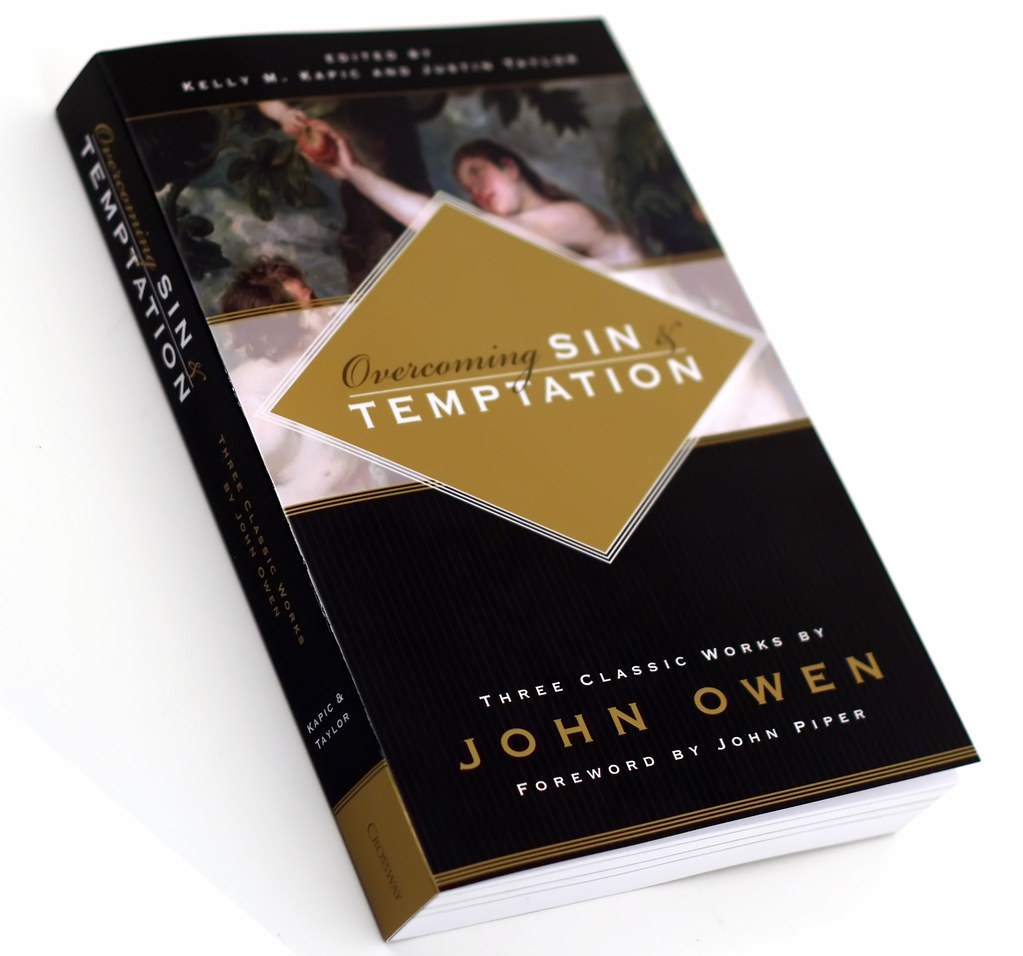 wound of my people lightly’ (Jer. 6:14; 8:11, ESV). I take this to refer to leaders who should be helping the church know and feel the seriousness of indwelling sin (Rom. 7:20), and how to fight it and kill it (Rom. 8:13). Instead the depth and complexity and ugliness and danger of sin in professing Christians is either minimized—since we are already justified—or psychologized as a symptom of woundedness rather than corruption. This is a tragically light healing. I call it a tragedy because by making life easier for ourselves in minimizing the nature and seriousness of our sin, we become greater victims of it.”
 about to read. It’s the basic ABCs of critical thinking, really. However the historical big-picture of the Old Testament is often hard to discern and so the details are often disconnected.
 Tony Reinke