
The stack of excellent Christian books published in 2007 would reach at least 5 feet in the air. So while I’m privileged to have read so many great books, whittling down my top 30 favorites is no easy assignment.
In the past, some TSS readers have asked what criteria I use in making this determination and I admit it’s very subjective. My list of top books is based upon a personal opinion of the overall value of individual volumes. Which volumes pioneer new territory? Which books clarify topics of great importance? Which books from 2007 will my kids read in 10 years?
Included in the list are complex doctrinal books, academic polemics, historical biographies, children’s books, marriage books, exegetical guides, etc. My reading interests are wide open, and so is the TSS book of the year competition. There are book recommendations for pretty much all readers.
Themes in 2007
Topically, 2007 will be remembered as the year where precious doctrines like justification and the atonement took rightful center stage (see The Truth of the Cross by R.C. Sproul, The Great Exchange by Bridges and Bevington, and also #3, #12, and #25 on the top-30 list). The doctrine of assurance was the focus of two excellent new volumes (see #13 and #23). Church history and the events of the Reformation found themselves in three excellent volumes (see #8, #11, and #30). But 2007 will also be remembered as the year of John Owen, reformed spirituality, and communion with God (see #6, #14, #15, and #21). We also saw the publishing of one of the best new children’s books (see #4). All around, it was a very fruitful year for some very important topics.
2007 Books of the Year
But two books stand apart from the rest in 2007, because they are volumes that promise to shed a wealth of understanding over large sections of Scripture. They captured my attention because I know I myself have some work to do in discovering the richness of God’s revealed truth in Scripture (and especially in the Old Testament narratives).
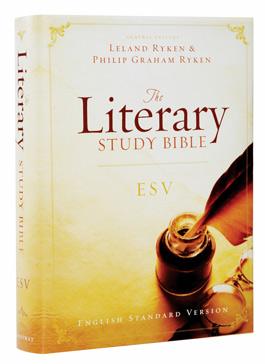
So today I happily announce the 2007 TSS books of the year – The ESV Literary Study Bible by Leland and Philip Ryken and An Old Testament Theology by Bruce Waltke.
TSS top-30 books from 2007
 1 (tie). ESV Literary Study Bible edited by Leland and Philip Ryken (Crossway). Getting readers comfortable enough to read large selections of Scripture was formerly the work of dynamic equivalent translations like The Message. But the Rykens establish a framework for readers to comprehend large sections of Scripture for themselves by introducing each chapter, exposing the literary style of the work, and providing a general outline of what to expect. Then readers can jump into the literature of Scripture to experience the text for themselves. In the end, the Rykens have produced a Bible that retains the “word-for-word” literal language of the ancient Scriptures (ESV) while helping readers along in fruitful comprehension. Readers who have never enjoyed the Bible from cover-to-cover will especially benefit and find the biblical storyline easier to follow. This is no ordinary study Bible, and it is one that will be cherished by the church long into the future. We wrote a full review of the LSB and also talked with Leland Ryken about it this Summer. $31.49
1 (tie). An Old Testament Theology: An Exegetical, Canonical, and Thematic Approach by Bruce Waltke (Zondervan). Some of the details of the Old Testament appear to simply hang suspended for the modern reader. Let’s take Exodus 2:11 for example: Why is it important that Moses became angry when he saw the harsh treatment of the Israelite by an Egyptian? Why did Moses kill the Egyptian? Why would the biblical author record this event in the first place? Some events in the Old Testament don’t entirely make sense on the surface. Waltke takes these events from the biblical narratives and weaves them into the bigger storyline of Scripture. For this specific example, it helps to understand that Moses was in transition from his identity in Pharaoh’s palace to his new identity with Israel (p. 352). Exodus 2:11 is actually critical in establishing Moses’ transition from Egyptian-raised to Israel’s front-man in the Exodus. And this is just one itsy-bitsy detail from the Old Testament. By taking these seemingly disconnected events and connecting them into the bigger picture of Scripture, Waltke has given us a very helpful guide to understanding the Old Testament. And his insights into the Ten Commandments are worth the price of the volume (see pp. 415-433). In the end, Waltke’s clear articulation of the Old Testament informs the church of her past and thereby informs her present identity. This is a volume you will want to read slowly and digest fully, perhaps within a group of fellow Christians. It will open up the theology and storyline of the Old Testament like no other book I’ve seen. Read more about this volume in our full review. $29.69
3. Pierced for our Transgressions: Rediscovering the Glory of Penal Substitution (UK:IVP/US:Crossway). Written by Steve Jeffery, Michael Ovey, and Andrew Sach, this book has proven to be a huge success in both the UK and the US in defending the core of the atonement of Jesus Christ. If you want to understand the Cross at a deeper level (don’t we all) you will cherish this volume. It will go on my shelf along with some of the giants on this topic (like Stott). But what makes this volume especially important is the central role it represents in bringing together a worldwide brotherhood of Christians who believe and cherish the penal substitutionary atonement of the Cross. What Together for the Gospel and the Gospel Coalition conferences have done to unify American churches and ministries around these precious truths, Pierced for Our Transgressions has accomplished on an international scale. $16.50
4. The Jesus Storybook Bible: Every Story Whispers His Name by Sally Lloyd-Jones (Zondervan). Finding children’s books that introduce little ones to the major stories of the Bible while simultaneously pointing their souls to the Cross is a rarity. This is perhaps the best children’s storybook Bible on the market, and a must-have for any parent of young children. Incredible illustrations, too. $11.65
 5. When Sinners Say “I Do”: Discovering the Power of the Gospel for Marriage by Dave Harvey (Shepherd Press). Harvey has blessed couples with an excellent book for connecting the Cross to the daily trials and triumphs of marriage. Don’t attempt marriage without the Gospel. Bring Harvey along to explain why. $11.16
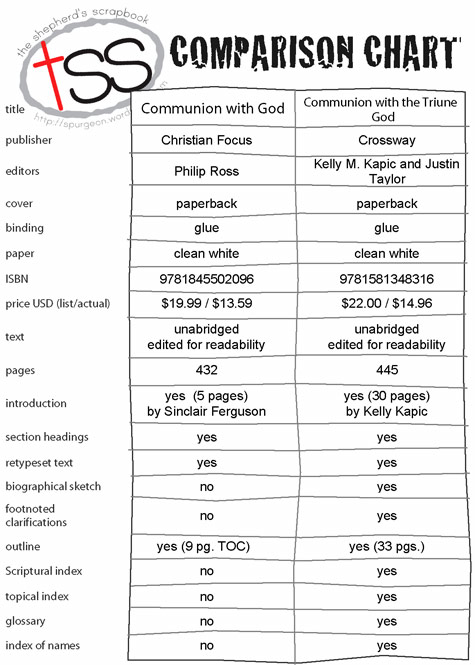
6. Communion with the Triune God by John Owen (Crossway). The classic book written by English Puritan John Owen resurfaced in 2007, in a new edition edited by Kelly Kapic and Justin Taylor. It’s unlikely I can overstate the importance of Taylor and Kapic’s editorial work in introducing Owen to the new generation of young, reformed Christians. An excellent follow-up to last year’s Overcoming Sin and Temptation (Crossway). $14.96
7. Doing Things Right in Matters of the Heart by John Ensor (Crossway). Ensor provides an excellent introduction to biblical manhood and femininity that will help engaged or married couples understand their God-ordained roles. This book is perhaps the best introductory volume on these often controversial topics. $9.59
 8. The Reformation: How a Monk and a Mallet Changed the World by Stephen Nichols (Crossway). With brevity, pictures, call-out boxes and humor, Stephen Nichols walks through the highlights of the Reformation to help us see that “the Reformers saw nothing less than the gospel at stake” (p. 21). It’s cliché, but true: I couldn’t put this volume down. Nichols is always good, but especially here. $10.39
9. The Reading and Preaching of the Scripture in the Worship of the Christian Church: The Modern Age by Hughes Oliphant Old (Eerdmans). This is volume six of Old’s large series tracing out the history of preaching from the Biblical era (vol. 1; 1998), the Patristic age (vol. 2; 1998), the Medieval church (vol. 3; 1999), the Reformation period (vol. 4; 2002), during Moderatism, Pietism and Awakening (vol. 5; 2004) and now the most recent volume covering the modern age of 1789-1989. Volume six alone is about 1,000 pages and covers preachers like Broadus, Kuyper, Maclaren, Moody, Spurgeon and Lloyd-Jones. Very insightful work on the history of preaching that has replaced Dargan on my shelves. $36.50
 10. Signs of the Spirit: An Interpretation of Jonathan Edwards’ ‘Religious Affections’ by Samuel Storms (Crossway). Edwards’ work is classic, and Storms helps the contemporary reader glean its gold. Excellent commentary on one of Edwards’ most valuable works. $10.87
11. Church History: A Crash Course for the Curious by Christopher Catherwood (Crossway). Catherwood sets out the history of the Church from a global perspective, and at all times relays the implications of history to contemporary events. This “crash course” is another volume published this year for a popular audience that will help readers grown in appreciation for developments in the church’s history. $12.99
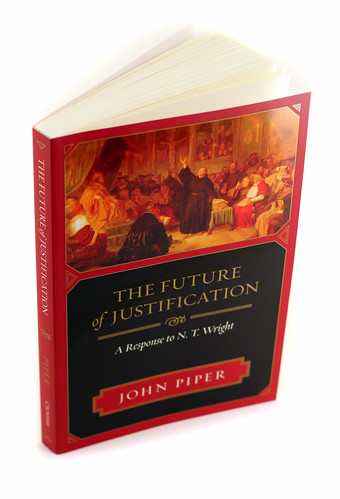
12. The Future of Justification: A Response to N.T. Wright by John Piper (Crossway). Piper excels with a clarification on justification in light of the contemporary debate. $12.23
13. Assured by God: Living in the Fullness of God’s Grace by Philip Graham Ryken, Al Mohler, Joel Beeke, Sinclair Ferguson, John MacArthur, Jerry Bridges and R.C. Sproul (P&R). This collaborative effort is a very helpful collection of essays on the topic of the reformed doctrine of assurance. How do we know that we know God? (see Tullian Tchividjian’s work later.) $12.24
14. Sweet Communion: Trajectories of Spirituality from the Middle Ages through the Further Reformation (Baker Academic). Written originally in Dutch by Arie de Reuver, this academic work was made available in English in 2007. It traces the influences of Bernard of Clairvaux (1090-1153) and Thomas à Kempis (1379-1471) upon the “Dutch Puritans” like Willem Teellinck, Herman Witsius and Thodorus and Wilhelmus à Brakel. The seven biographies that fill this volume are excellent. This volumes helps us develop a “reformed spirituality,” a seeking after God’s presence illuminated by genuine theology. $21.89
15. The Inner Sanctum of Puritan Piety: John Flavel’s Doctrine of Mystical Union with Christ (Reformation Heritage Books). Flavel is one of the most valuable Puritans, and this study by Stephen J. Yuille looks at one facet of his theology. The doctrine of the believer’s union with Christ lies at the heart of the Puritan pursuit of godliness, and this small but wonderful outline traces the doctrine generally and highlights Flavel’s rich teaching specifically. $12.00
16. Chosen for Life: The Case for Divine Election (Crossway) by Sam Storms. Originally published in 1987 by Baker under the title, Chosen for Life: An introductory guide to the doctrine of divine election, Storms’ work was republished in 2007 and remains one of the clearest defenses for reformed soteriology. $12.23
 17. Respectable Sins: Confronting the Sins We Tolerate by Jerry Bridges (NavPress). Hitting from all sides, Bridges confronts all those sins we would rather not talk about, and provides a very Cross-centered approach to killing the flesh. $12.91
18. B.B. Warfield: Essays on His Life and Thought edited by Gary L.W. Johnson (P&R). Part biography, part theology, this new book on Warfield provides a treasure of essays on the thought and life of the outstanding theologian. $15.59
19. A Sweet Flame: Piety in the Letters of Jonathan Edwards by Michael A.G. Haykin (Reformation Heritage Books). A short but excellent collection of Edwards’ most important and moving personal letters, this little volume makes a great gift. $7.50
20. By Faith Alone: Answering the Challenges to the Doctrine of Justification edited by Gary L.W. Johnson and Guy P. Waters (Crossway). Including chapters by David Wells, Cornelius Venema and Al Mohler, this work tackles contemporary attacks upon the gospel (and especially those of N.T. Wright). $12.23
21. Communion with God: The Divine and the Human in the Theology of John Owen by Kelly Kapic (Baker Academic). The long-awaited printing of Kapic’s research did not disappoint. On these same lines, Kapic also wrote the introduction to Communion with God (see #6). $18.47
22. The Expository Genius of John Calvin by Steven J. Lawson (Reformation Trust). This short work traces out 32 distinctives from the expositional ministry of the great Reformer, and sets them out as patterns for contemporary preachers. A short and encouraging work for pastors.
23. Do I Know God? Finding Certainty in Life’s Most Important Relationship by Tullian Tchividjian (Random House). An understanding of assurance written from a very personal and compelling vantage point. Excellent in content, but I especially appreciate the format that other writers can follow in communicating biblical doctrine to a new generation of readers. $11.55
24. Interpreting the Psalms: An Exegetical Handbook by Mark D. Futato (Kregel). Excellent little handbook in helping expositors pull all the meat from the Psalms for their their sermon preparations. Not just exegetical, but also helpful in determining the overall theology of the Psalms. $14.27
25. Justified in Christ: God’s Plan for us in Justification (Christian Focus). Edited by K. Scott Oliphant this compilation includes an intro by Sinclair Ferguson and chapters by men like Carl Trueman, William Edgar and Peter Lillback on the importance of justification by faith alone, in Christ alone. Looks at traditional problems with Roman Catholic theology and contemporary concerns with N.T. Wright on union and imputation. $12.99
26. The Majesty of God in the Old Testament: A Guide for Preaching and Teaching (Baker Academic). Renowned Old Testament scholar Walter C. Kaiser Jr. says we should preach more of the Old Testament and in his newest book he takes the preacher by the hand and shows them exactly how. Walking through 10 texts, Kaiser models exegesis and outlining of each specific texts. But in it’s easy-to-read format and concluding application questions in each chapter, this book will double as a group study of God in the Old Testament. $11.55
27. Preaching the Cross: Together for the Gospel (Crossway). The transcripts from the 2006 Together for the Gospel conference written and delivered by Ligon Duncan, Al Mohler, Mark Dever, C.J. Mahaney, John MacArthur, John Piper and R.C. Sproul. An all-star lineup and one of the best compilation on the topic of preaching the gospel. $13.59
28. Revelation and Reason: New Essays in Reformed Apologetics (P&R). Edited by K. Scott Oliphint and Lane G. Tipton. Yet another excellent collection of essays from P&R that captured my attention and helped me work through various difficulties in apologetics. $18.24
29. The Faithful Preacher: Recapturing the Vision of Three Pioneering African-American Pastors by Thabiti Anyabwile (Crossway). Highlights Lemuel Haynes (1753-1833), Daniel A. Payne (1811-1893) and Francis J. Grimké (1850-1937). The book contains one short biography of each man, but is largely comprised of sermon transcripts. Anyabwile’s book is especially important because he is challenging the contemporary African-American churches to consider the gospel of first importance and is thereby calling for large-scale reform. $10.87
30. Reformation Heroes: A Simple, Illustrated Overview of People Who Assisted in the Great Work of the Reformation by Joel R. Beeke and Diana Kleyn (Reformation Heritage). The men, women and events of the Reformation written for older children and teens to boost their appreciation for the church. $18.00
And here are some other titles that are likely worthy of the above list, and I wish I made time to read:
- Andrew Hoffecker, ed., Revolutions in Worldview: Understanding the Flow of Western Thought (P&R) $23.51
- Norman Geisler, Reasons for Faith: Making a Case for the Christian Faith (Crossway) $12.23
- J. Mark Bertrand, Rethinking Worldview: Learning to Think, Live, and Speak in This World (Crossway) $11.55

- Jerry Bridges and Bob Bevington, The Great Exchange: My Sin for His Righteousness (Crossway) $10.87
- Herman J. Selderhuis, Calvin’s Theology of the Psalms: Texts and Studies in Reformation and Post-Reformation Thought (Baker Academic) $21.89
- Sinclair Ferguson, In Christ Alone (Reformation Trust) $14.40
- Justin Taylor and John Piper, The Supremacy of Christ in a Postmodern World (Crossway) $10.19
- R.C. Sproul, Gospel of God: An Exposition of Romans (Christian Focus) $14.99
- Thabiti M. Anyabwile, The Decline of African American Theology: From Biblical Faith to Cultural Captivity (IVP) $13.60
So these are my favorite books of 2007. I hope this list serves you in your book-purchasing for the glory of Christ!
Blessings to you all and Merry Christmas from your friends at TSS,
Tony
 N.T. Wright is a British New Testament scholar and the Anglican Bishop of Durham, England. He’s become known for his controversial teaching on justification and for his statements like: “The discussions of justification in much of the history of the church, certainly since Augustine, got off on the wrong foot – at least in terms of understanding Paul – and they have stayed there ever since.”



 Question:

 This morning I noticed that hard copies of Owen’s
  ESV Literary Study Bible
 Tony Reinke