Techno Magic


Peter Kreeft writes that the following excerpt from C. S. Lewis, “contains the most important and enlightening single statement about our civilization that I have ever read.”

C. S. Lewis, The Abolition of Man, page 77:

There is something which unites magic and applied science while separating both from the “wisdom” of earlier ages. For the wise men of old the cardinal problem had been how to conform the soul to reality, and the solution had been knowledge, self-discipline, and virtue. For magic and applied science alike the problem is how to subdue reality to the wishes of men: the solution is a technique.

Explains Kreeft:

If the Enlightenment helped the modern world discard notions of original sin and moral absolutes, it also uprooted the foundations of truth and goodness. Unlike the Medieval era, all we have left are vague political and psychological notions of what works efficiently. Technology has replaced religion as our civilization’s summum bonum. Naturalism has replaced supernaturalism. Subjectivism has defined a new age of moral relativity.

Explains Timothy Keller in The Reason For God, page 71:

In ancient times it was understood that there was a transcendent moral order outside the self, built in to the fabric of the universe. If you violated that metaphysical order there were consequences just as severe as if you violated physical reality by placing your hand in a fire. The path of wisdom was to learn to live in conformity with this unyielding reality. That wisdom rested largely in developing qualities of character, such as humility, compassion, courage, discretion, and loyalty.

Modernity reversed this. Ultimate reality was seen not so much as a supernatural order but as the natural world, and that was malleable. Instead of trying to shape our desires to fit reality, we now seek to control and shape reality to fit our desires. The ancients looked at an anxious person and prescribed spiritual character change. Modernity talks instead about stress-management techniques.
Glories, Dangers, and Responsibilities Beyond Understanding

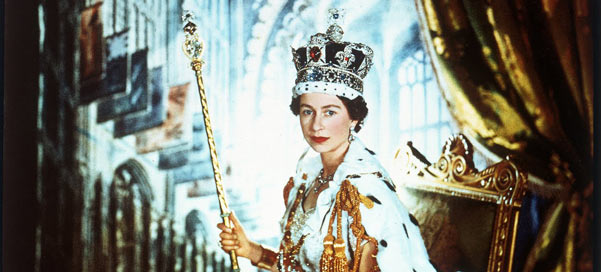
Queen Elizabeth II was crowned on 2 June 1953 in London. C. S. Lewis chose not to attend the festivities because the weather was not great, because he did not like crowds, nor did he feel like dressing up. Instead he watched the event on TV (it was the first fully televised coronation). In July, Lewis wrote this in a letter (Letters, 3:343):

You know, over here people did not get that fairy-tale feeling about the coronation. What impressed most who saw it was the fact that the Queen herself appeared to be quite overwhelmed by the sacramental side of it. Hence, in the spectators, a feeling of (one hardly knows how to describe it) – awe – pity – pathos – mystery. The pressing of that huge, heavy crown on that small, young head becomes a sort of symbol of the situation of humanity itself: humanity called by God to be His vice-regent and high priest on earth, yet feeling so inadequate. As if He said, ‘In my inexorable love I shall lay upon the dust that you are glories and dangers and responsibilities beyond your understanding.’ Do you see what I mean? One has missed the whole point unless one feels that we have all been crowned and that coronation is somehow, if splendid, a tragic splendor.

Happy Birthday C. S. Lewis!

C. S. Lewis, the Christian apologist and novelist, was born this day in 1898. Among modern Christian thinkers and writers he remains one of the most important voices, and you can learn much about him in the biographical address by John Piper (here).

Lewis spoke of the physical limitations that pushed him towards fictional adventure and novel writing in his autobiography, Surprised By Joy: The Shape of My Early Life (1955), page 12:

What drove me to write was the extreme manual clumsiness from which I have always suffered. I attribute it to a physical defect which my brother I both inherited from our father; we have only one joint in the thumb. The upper joint (that furthest from the nail) is visible, but it is a mere sham; we cannot bend it. But whatever the cause, nature laid on me from birth an utter incapacity to make anything. With pencil and pen I was handy enough, and I can still tie as good a bow as ever lay on a man’s collar; but with a tool or a bat or a gun, a sleeve link or corkscrew, I have always been unteachable. It was this that forced me to write. I longed to make things, ships, houses, engines. Many sheets of cardboard and pairs of scissors I spoiled, only to turn from my hopeless failures in tears. As a last resource, I was driven to write stories instead; little dreaming to what a world of happiness I was being admitted. You can do more with a castle in a story than with the best cardboard castle that ever stood on a nursery table.

Lift Up Our Hearts!

C.S. Lewis wrote the following in a corrective letter to his friend, the 78-year-old Don Giovanni Calabria [12/26/51; Letters, 3:152]:

. . . This emboldens me to say to you something that a layman ought scarcely to say to a priest nor a junior to a senior. (On the other hand, out of the mouth of babes; indeed, as once to Balaam, out of the mouth of an ass!) It is this: you write much about your own sins. Beware (permit me, my dearest Father, to say beware) lest humility should pass over into anxiety or sadness. It is bidden us to ‘rejoice and always rejoice.’ Jesus has cancelled the handwriting which was against us. Lift up our hearts!

Permit me, I pray you, these stammerings. You are ever in my prayers and ever will be.

Farewell.

C.S. Lewis

On C.S. Lewis

If I could invite three guys over for dinner to talk C.S. Lewis it would probably be Douglas Wilson, the author of What I Learned in Narnia, Nate Wilson, the author of The Great Divorce screenplay, and Alan Jacobs, the author of The Narnian, by far my favorite book on Lewis. It just so turns out that a while back these men gathered to chat about Lewis for 80 minutes, a conversation was filmed and is now available for viewing online. If Lewis interests you, and if you can find the time, I highly recommend it: