 I appreciate all the thoughts and comments you left on the previous post. The priority of ancient literature in the reading diet of the Christian is a topic of great interest to me. But the topic brings some baggage due to the wide pendulum of opinion. Is reading this literature idolatrous? Is it helpful? Helpful merely as philosophy? Is it ethically useful? Theologically? C.S. Lewis, Luther, and Calvin seem to answer these questions differently.
John Calvin, for example, encouraged others to study and to appreciate the “profane authors.” “If we reflect that the Spirit of God is the only fountain of truth,” Calvin writes, “we will be careful, as we would avoid offering insult to him, not to reject or condemn truth wherever it appears. In despising the gifts, we insult the Giver” [see his Institutes 2.2.14—16].
Cornelius Plantinga has summarized Calvin’s approach in this way:
Calvin understood that God created human beings to hunt and gather truth, and that, as a matter of fact, the capacity for doing so amounts to one feature of the image of God in them (Col. 3:10). So Calvin fed on knowledge as gladly as a deer on sweet corn. He absorbed not only the teaching of Scripture and of its great interpreters, such as St. Augustine, but also whatever knowledge he could gather from such famous pagans as the Roman philosopher Seneca. And why not? The Holy Spirit authors all truth, as Calvin wrote, and we should therefore embrace it no matter where it shows up. But we will need solid instruction in Scripture and Christian wisdom in order to recognize truth and in order to disentangle it from error and fraud. Well-instructed Christians try not to offend the Holy Spirit by scorning truth in non-Christian authors over whom the Spirit has been brooding, but this does nor mean that Christians can afford to read these authors uncritically. After all, a person’s faith, even in idols, shapes most of what a person thinks and writes, and the Christian faith is in competition with other faiths for human hearts and minds. [Engaging God’s World (Eerdmans 2002) p. x.]
Martin Luther distinguished the philosophical value from the theological value of the ancients. Gerrish in his Grace and Reason: A Study in the Theology of Luther makes this comment (thanks Tom!):
To Luther’s mind it was quite astonishing that anyone should fail to see the incompatibility of Aristotle and ‘Catholic Truth’. And yet one recalls that it was the special concern of his own teacher, Trutvetter, to demonstrate their harmony. The important thing to note, however, is that he does not deny some validity to the heathen master’s philosophy in its own sphere. Aristotle wrote with admirable learning on the problems of ethics. Both his books and Cicero’s are extremely useful for the conduct of this life. In other words, Aristotle’s moral philosophy is of value in the Earthly Kingdom. This, no doubt, explains the apparent contradiction between the abuse which Luther heaps on Aristotle’s Ethics in one place and the praise which he bestows upon it in another. When Luther looks at Aristotle’s natural philosophy and moral philosophy, weighing them strictly on their own intrinsic merits, he much prefers the latter; but he can conceive of nothing more mischievous than Aristotle’s ethics when they are mixed up with the theology of grace and salvation. In any case, he calls it mere philistinism (barbarum) to be ignorant of Aristotle’s natural philosophy, even though it may not be universally true. After all, the Greek philosopher’s views form an integral part of culture and rest upon sound arguments. Clearly, as long as the distinction between theology and philosophy is kept before the mind, there is nothing to prevent one from passing favourable judgements upon Aristotle or, at least, giving him a fair trial.
Another quote originates from the pen of Peter Leithart. While I disagree with him on a number of various theological points, I find him cautious and helpful on this particular topic. Here is one excerpt of what he has written:
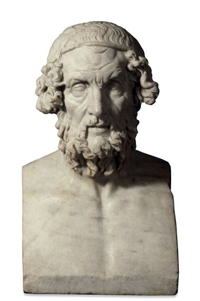
Given the fact that the classics are idolatrous through and through, why should we want to preserve them? Why should we keep alive the memory of Greek gods? Should we be studying the exploits of heroes who served these gods? Should we not instead throw all of Homer, Aeschylus, Sophocles, and Virgil into one flaming heap in the town square? Wouldn’t Moses?
A part of the answer to these questions is that Christians have no more moral duty to read and study Greek and Roman literature than ancient Israelites had a duty to study the myths of Baal and Asteroth. Nor should Christian schools or home schoolers think that they can have a good Christian education only if the “classics” are prominent in the curriculum. The goal of Christian education is to train a child to be faithful in serving God and His kingdom in a calling, and certainly this goal can be achieved by a student who never cracks the cover of a Homeric epic. Given the appalling ignorance of the Bible among evangelical Christians today, mastering Scripture must be an overwhelming priority in all Christian education. If one must choose between studying Leviticus or Livy, Habakkuk or Homer, Acts or Aeschylus, the decision is, to my mind, perfectly evident, and the point holds even if the non-biblical literature were Christian. The genealogies of 1 Chronicles 1-9 are vastly more important to study than Dante, Shakespeare, Milton, or Dickens.
But, of course, students and teachers are not always faced with a stark either/or choice. Assuming a student has a strong grounding in Scripture, there may be good reasons for taking up a study of other literature. And a few texts of Scripture demonstrate that it is not necessarily sinful for believers to study pagan literature. Daniel and his three friends learned the language and literature of the Chaldeans (Dan. 1:4), which undoubtedly focused on Chaldean mythology. In the New Testament, Paul occasionally reveals that he knew some of the literature and philosophy of the Greeks and Romans. [Heroes of the City of Man: A Christian Guide to Select Ancient Literature (Canon Press, 1999), p. 18.]
So these are a few of the prominent quotes that are helping me think through the priority of ancient myth in the reading diet of a Christian (or not). Keep the comments coming. I appreciate your feedback! Your feedback—learning from you and learning together—is why I continue to blog. Thanks to each of you who have (and will) respond.
Tony
 Tony Reinke