The Happy Marriage

Timothy Keller wrote the following in his new book, The Meaning of Marriage: Facing the Complexities of Commitment with the Wisdom of God (Dutton, 2011), pages 132–133:

A parishioner heard me preach on Ephesians 5, where Paul says that the purpose of marriage is to “sanctify” us. She said, “I thought the whole point of marriage was to be happy! You make it sound like a lot of work.” She was right—marriage is a lot of work—but she was wrong to pit that against happiness, and here is why. Paul is saying that one of the main purposes of marriage is to make us “holy . . . without stain or wrinkle or any other blemish” (verses 26–27). What does that mean? It means to have Jesus’s character reproduced in us, outlined as the “fruit of the Spirit”—love, joy, peace, patience, kindness, goodness, faithful integrity, gentle humility, and self-control—in Galatians 5:22–25.

When Jesus’s love, wisdom, and greatness are formed in us, each with our own unique gifts and callings, we become our “true selves,” the persons we were created to be. Every page in the Bible cries that the journey to this horizon cannot be accomplished alone. We must face it and share it with brothers and sisters, friends of our heart. And the very best human friendship possible for that adventure is with the lover-friend who is your spouse.

Is all this a lot of work?

Indeed it is—but it is the work we were built to do. Does this mean “marriage is not about being happy; it’s about being holy”? Yes and no. As we have seen, that is too stark a contrast. If you understand what holiness is, you come to see that real happiness is on the far side of holiness, not on the near side. Holiness gives us new desires and brings old desires into line with one another.

So if we want to be happy in marriage, we will accept that marriage is designed to make us holy.
Idolatry

Timothy Keller writes the following in his book The Gospel in Life: Grace Changes Everything, Study Guide (Zondervan, 2010), page 40:

Why do we lie, or fail to love, or break our promises, or live selfishly? Of course, the general answer is “Because we are weak and sinful,” but the specific answer is that there is something besides Jesus Christ that we feel we must have to be happy, something that is more important to our heart than God, something that is enslaving our heart through inordinate desires. The key to change (and even to self-understanding) is therefore to identify the idols of the heart.”

After explaining the idolatry theme more closely from Romans 1:18–25, Galatians 4:8–9, and 1 John 5:21, Keller lists particular categories for personal reflection. The idol categories include the following:

“Life only has meaning/I only have worth if…

  • I have power and influence over others.” (Power Idolatry)
  • I am loved and respected by _____.” (Approval Idolatry)
  • I have this kind of pleasure experience, a particular quality of life.” (Comfort idolatry)
  • I am able to get mastery over my life in the area of _____.” (Control idolatry)
  • people are dependent on me and need me.” (Helping Idolatry)
  • someone is there to protect me and keep me safe.” (Dependence idolatry)
  • I am completely free from obligations or responsibilities to take care of someone.” (Independence idolatry)
  • I am highly productive and getting a lot done.” (Work idolatry)
  • I am being recognized for my accomplishments, and I am excelling in my work.” (Achievement idolatry)
  • I have a certain level of wealth, financial freedom, and very nice possessions.” (Materialism idolatry)
  • I am adhering to my religion’s moral codes and accomplished in its activities.” (Religion idolatry)
  • this one person is in my life and happy to be there, and/or happy with me.” (Individual person idolatry)
  • I feel I am totally independent of organized religion and am living by a self-made morality.” (Irreligion idolatry)
  • my race and culture is ascendant and recognized as superior.” (Racial/cultural idolatry)
  • a particular social grouping or professional grouping or other group lets me in.” (Inner ring idolatry)
  • my children and/or my parents are happy and happy with me.” (Family idolatry)
  • Mr. or Ms. “Right” is in love with me.” (Relationship Idolatry)
  • I am hurting, in a problem; only then do I feel worthy of love or able to deal with guilt.” (Suffering idolatry)
  • my political or social cause is making progress and ascending in influence or power.” (Ideology idolatry)
  • I have a particular kind of look or body image.” (Image idolatry)

Then he looks more closely at the first four categories:

If you seek POWER (success, winning, influence)…

  • Your greatest nightmare: Humiliation
  • People around you often feel: Used
  • Your problem emotion: Anger

If you seek APPROVAL (affirmation, love, relationships)…

  • Your greatest nightmare: Rejection
  • People around you often feel: Smothered
  • Your problem emotion: Cowardice

If you seek COMFORT (privacy, lack of stress, freedom)…

  • Your greatest nightmare: Stress, demands
  • People around you often feel: Neglected
  • Your problem emotion: Boredom

If you seek CONTROL (self-discipline, certainty, standards)…

  • Your greatest nightmare: Uncertainty
  • People around you often feel: Condemned
  • Your problem emotion: Worry

Wow, that is quite convicting.

For more information check out his workbook and DVD.

Keller on Tolkien

In a recent interview Timothy Keller said the following about J.R.R. Tolkien and The Lord of the Rings:

Tolkien has helped my imagination. He was a devout Catholic — and I am not. However, because he brought his faith to bear into narrative, fiction, and literature, his Christianity — which was pretty ‘mere Christianity’ (understanding of human sin, need for grace, need for redemption) — fleshed out in fiction, has been an inspiration to me.

What I mean by inspiration is this: he gives me a way of grasping glory that would otherwise be hard for me to appreciate. Glory, weightiness, beauty, excellence, brilliance, virtue — he shows them to you in some of his characters.

When people ask: how often have you read Lord of the Rings?, the answer is: I actually never stop. I’m always in it.

As an aside, if you’d like to purchase a copy of LOTR, an edition that will withstand repeated use, Westminster Books now carries a gorgeously illustrated box set. I bought two sets last week and was really impressed with the quality. Find details here.

Affirm, Share, Serve

Here’s a helpful organization of the “one anothers” of Scripture as they appear in Tim Keller’s study guide, Gospel in Life: Grace Changes Everything [ht JT]:

Affirm

1. Affirm one another’s strengths, abilities, and gifts.

2. Affirm one another’s equal importance in Christ.

3. Affirm one another through visible affection.

Share

4. Share one another’s space, goods, and time.

5. Share one another’s needs and problems.

6. Share one another’s beliefs, thinking, and spirituality.

Serve

7. Serve one another through accountability.

8. Serve one another through forgiveness and reconciliation.

9. Serve one another’s interests rather than our own.

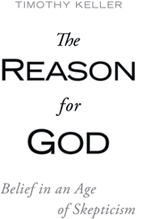
The Reason for God

reasonforgod.jpgOften, the way Timothy Keller articulates the gospel (and the implications of the gospel) in his new book–The Reason for God— are incredibly thought-provoking. Take this one for example,

“A central message of the Bible is that we can only have a relationship with God by sheer grace. Our moral efforts are too feeble and falsely motivated to ever merit salvation. Jesus, through his death and resurrection, has provided salvation for us, which we receive as a gift. All churches believe this in one form or another. Growth in character and change in behavior occur in a gradual process after a person becomes a Christian. The mistaken belief that a person must ‘clean up’ his or her own life in order to merit God’s presence is not Christianity. This means, though, that the church will be filled with immature and broken people who still have a long way to go emotionally, morally, and spiritually. As the saying has it: ‘The church is a hospital for sinners, not a museum for saints.’

… Now imagine that someone with a very broken past becomes a Christian and her character improves significantly over what is was. Nevertheless, she still may be less secure and self-disciplined than someone who is so well adjusted that she feels no particular need for religious affiliation at all. Suppose you meet both of these women the same week. Unless you know the starting points and life journeys of each woman, you could easily conclude that Christianity isn’t worth much, and that Christians are inconsistent with their own high standards. It is often the case that people whose lives have been harder and who are ‘lower on the character scale’ are more likely to recognize their need for God and turn to Christianity. So we should expect that many Christians’ lives would not compare well to those of the nonreligious (just as the health of people in the hospital is comparatively worse than people visiting museums).”

-Timothy Keller, The Reason For God (Dutton: 2008), pp. 53-54.