Books on Building Great Sentences (Advice for Writers)

typewriter

According to the Oxford English Dictionary, our language has more than 100 synonyms for verb forms of “to be wordy,” a detail I find beautifully enigmatic. English is rich, and writing sentences is an art with few concrete boundaries. But crafting great sentences means choosing the right type of sentence structure.

I love to read (and re-read) great books on beautiful sentences of all shapes and sizes: sound sentences, long sentences, short sentences, pop sentences, classic sentences, and literary sentences. I find it helpful to take apart a great sentence, break it down into its individual parts, and see how it works (like a typewriter).

Recently, I posted a picture of some of these books on Instagram, and got enough questions to warrant a quick explanation for why I chose these certain titles as my five favorites. And from the start I should mention that none of these books are written by Christian authors, at least not to my knowledge. In each case, the unbelieving worldviews of these non-Christian writers are not always shrouded.

Now, to the list.

On writing fundamentally sound sentences:

Style: The Basics of Clarity and Grace by Joseph M. Williams

This is a book for all writers. It’s a brief, to-the-point, and refreshingly visual guide to putting good sentences together. I read this book back in my early days of writing (way back in ought-nine), and it’s been with me ever since. At $30, it’s a wallet-gouging, over-priced little guide, used in a lot of academic training. For less expensive options for general writing help, see Roy Peter Clark and Steven Pinker below.

On writing long sentences:

Building Great Sentences: How to Write the Kinds of Sentences You Love to Read by Brooks Landon

This book is for more experienced writers who want to master the art of the long, right-branching sentence that seems to expand with no necessary end in site, that sends waves of compounding details washing over the reader and descriptions flowing to the mind. The content in this book was first a video lecture series, but the published version is a now more affordable way to get the same details. No surprise, Landon often is guilty of feather-tongued multiloquence.

On writing short sentences:

How to Write Short: Word Craft for Fast Times by Roy Peter Clark

Great journalists know how to write compact sentences, and Roy Peter Clark is one of the best. He also trains the best. Roy Peter Clark is to the writing life what Paul David Tripp is to the Christian life: You just read everything he writes, and enjoy the overlap. This book is a goldmine of writing advice.

Clark has a new book on reading, for writers, with a lot of tips on penning sentences: The Art of X-Ray Reading: How the Secrets of 25 Great Works of Literature Will Improve Your Writing (2016).

Beginning writers, especially, should consider everything by Clark. See also his books Writing Tools (2008), The Glamour of Grammar (2011), and Help! For Writers (2013).

On writing pop sentences:

Word Hero: A Fiendishly Clever Guide to Crafting the Lines that Get Laughs, Go Viral, and Live Forever by Jay Heinrichs

Pop sentences may or may not be useful for you as a writer, but every writer (and reader) can benefit from learning the lessons of the most thoughtful pop stylists. So much thought goes into witticisms and snappy pop-culture writing that understanding these trendy tips will help you frame your own message for today’s reading culture. Heinrichs is a genius when it comes to arguments and rhetoric (see his bestselling book, Thank You for Arguing), and his book Word Hero is equally valuable. Perhaps most impressive to me was the way he formulates the subtle skills of using syllabic sounds to strengthen sense and setting.

On writing classic sentences:

Clear and Simple As the Truth: Writing Classic Prose by Francis-Noël Thomas and Mark Turner

Thomas and Turner’s book is definitely for advanced writers. I feel like I’m cheating a bit here because the whole point of classic style is to not focus on the mechanics of sentence structure, but to build the flow of logic.

This is a subtle art mastered by French writers, but once you get a handle on it, you will learn why the readers of C. S. Lewis’s essays sometimes feel like they arrive at the conclusions before Lewis does. There’s a method behind classic style’s persuasive powers, and Thomas and Turner explain the deeper philosophical substructures well.

A good summary of the classic style can be found in The Sense of Style: The Thinking Person’s Guide to Writing in the 21st Century by Steven Pinker. Pinker devotes his entire second chapter to a synopsis of Thomas and Turner, and loads the remainder of the book with practical tips for pulling it off. Pinker’s attempt is less philosophical, less advanced, and more practical.

In Pinker’s words, “Classic style is not a contemplative or romantic style, in which a writer tries to share his idiosyncratic, emotional, and mostly ineffable reactions to something. Nor is it a prophetic, oracular, or oratorical style, where the writer has the gift of being able to see things that no one else can, and uses the music of language to unite an audience. . . . The guiding metaphor of classic style is seeing the world. The writer can see something that the reader has not yet noticed, and he orients the reader’s gaze so that she can see it for herself” (28–29).

Classic writing isn’t punchy or sexy, it’s often long, works best in books, rarely goes viral, and it’s certainly not the best style for every situation. But it is a style you must master if you want to understand the psychology of persuasion and if you want to use sentences to move readers toward ah-ha moments of self-discovery. And the important philosophy behind the style is why I say don’t pass over Thomas and Turner too quickly.

On writing literary sentences:

Artful Sentences: Syntax as Style by Virginia Tufte

Tufte’s book is for advanced writers, and I recommend this book all the time because it’s worthy of repeated commendation. Tufte dives into what makes sentences work well, and highlights hundreds of the best sentences she can find. Every serious writer should have a copy of this book on hand to read and enjoy, as Tufts splendidly reveals the secrets behind the slight of hand by the masters of literature.

So there it is, my favorite books on writing sentences. Like a well-balanced workout, writers will need exercise in all these fields: a technical kettlebell routine (classic), some jogging (long), and walks (literary), sit-ups (short), and a little PX90 (pop).


Also in this series:

• What Kind of Writer Am I? (Advice for Writers)

Boring Ourselves Back to Life

disconnect

In 2003 and 2006 Carl Trueman published a pair of editorials that are worth reading (annually). Here are the especially pertinent excerpts.

Carl Trueman, “Editorial: Boring Ourselves to Life,” Themelios, 28.3 (2003), 3–4.

Why do we pay sports stars, actors, and the various airheads that populate the airwaves more than we pay our political leaders? We do this because they help to take our minds off the deeper, more demanding truths of life, particularly the one great and ultimately unavoidable truth: death. It is not just the entertainment industry that does that: the huge amount of money expended on the health industry in general and the cosmetic surgery industry in particular also point us towards the basic drive in society to avoid this one at all costs. As Pascal himself says, ‘It is easier to put up with death without thinking about it, than with the idea of death when there is no danger of it.’ . . .

This is where boredom is so important. Stripped of diversions and distractions, individuals have no choice but to reflect upon themselves, the reality of their lives and their future deaths. Human culture has proved adept over the centuries at avoiding the claims of Christ and the truths of human existence revealed in him. The modern bureaucratic state, the instability and insecurity of the work environment, the entertainment industry and the consumer society in which our modern Western affluence allows us to indulge all play their part in keeping us from reflecting upon reality as revealed to us by God.

Let us take time to be bored, to strip away from ourselves the screens we have created to hide the real truths of life and death from our eyes. Let us spend less time trying to appropriate culture for Christianity and more time deconstructing culture in the light of Christ’s claims on us and the world around us. Only then will we truly grasp the urgency of the human predicament. Oh and by the way, if it snows again, don’t rent a video; read a copy of Pascal’s Pensées.

Carl Trueman, “Editorial: The Eloquence of Silence,” Themelios 32.1 (2006), 1–2:

One of the distinguishing marks of God as he reveals himself in Scripture is that he is a God who speaks. He is a God who is not silent. This contrast with silence is fascinating; and, in a world which is full of all manner of ‘noise’ — cultural, social, commercial — reflection on silence, and the significance this has for the God who is not silent, can be most productive. Indeed, one could argue that silence is, in its own way, one of the most enlightening things about the world in which we live and about who we are within that world, both positively and negatively.

I have reflected before in an editorial on the contribution of the Christian philosopher, Blaise Pascal, to the development of Christian cultural criticism. I have looked at how, with his ethical understanding of the human thought and his categories of distraction and diversion, he probed the ways in which cultural pursuits, from entertainment to education to bureaucracy, could be used to avoid facing the moral realities of human sin and mortality, and the inevitable judgement that follows.

It would seem to me that one of the challenges that Pascal lays before us is that of silence: if cultural ‘noise’ is generated to allow us to forget or to avoid the reality of our human condition, then surely silence is useful as one context in which that condition can, indeed must, be faced. The measure of a man or woman, one might say, is the ability to sit alone and be silent in a room for an hour, contemplating nothing but their own mortality in the light of eternity.

Think about it. Think about the lengths we go to in order to exclude silence from our lives: from iPods as we travel to and from work, to the background hum of the television, stereo or radio as we go about our daily lives at home. Noise is everywhere. Much of it is unnecessary and a matter of our personal choice. We live in a world where silence is rare, and, if we are honest, is deliberately excluded even from those obvious contexts we have in which we might indulge in it. Yet silence is golden, for in silence human beings must face the starling reality of who they are.

What Kind of Writer Am I? (Advice for Writers)

writing

No writer can write about everything, but just about any writer can write about anything. So at some point, you’ll need to have an honest conversation with yourself about what subjects you’ll tackle (and which ones you won’t).

Recently, I set aside one hour of time to reflect on this dilemma, and to write out — at a more conceptual level — what types of writing most interest me. I wanted to see if I could detect certain themes already at work in what I already publish.

This was not my first attempt at this categorization, and the theories I present here are still very much in process, but that hour of reflecting and meditating brought several key conclusions.

As a writer, I am at my best when I observe and express three things:

  1. the essence of a thing (as defined by the Creator)
  2. how beings relate to God and other beings, and
  3. what pressures change these relationships.

That was a summary of three specific conclusions:

(1) I like to write about ontological marvels. I am very interested in quiddity, in getting to the essence of a thing. I enjoy articulating its haecceity, its this-ness, what makes anything unique and describable. I love to press in past the surface appearance of things, to study the property, quality, and distinctions of all things based on God’s revealed intentions. What does God declare to be true? What he says is true, is true, about creation, about beings (both in union/disunion with Christ), and about the nature of God as he reveals himself. Helping convince souls of what is true, certainly does not ignore the affections. “There is a dignity and poignancy in the bare fact that a thing exists” (C.S. Lewis). Or, “Christians enjoy their worldview, aesthetically, once they have accepted it as true” (C.S. Lewis). In fact conviction of what is true, in the details, is necessary for stirring all of the religious affections. And it is often where Christians stumble today.

(2) I like to write on spiritual socio-ecology. I am attracted to the study of how we understand our selves and then how we related to others in various environments. Additionally, I enjoy studying the phenomenons of identity and longing and belonging, and describing the nature of all things and beings in their primary relationship (to God).

(3) I like to write on the essential spiritual dynamics at play in the push and pull of enticement and coercion. I am interested in understanding the forces in play in the physics of our relationships with one another, of our relationships to creation, and especially of our relationships with God. My interests focus on the compressive influence of human culture to coerce, persuade, or dissuade the soul. And of course I am most interested in the enticements of God, and in his work in Christ to allure and woo us toward himself.

Finally, after contemplating what I like to write about, I took some time to define how I like to write.

The content of my writing is driven and refined by a writing style I adopted early in my career. Known simply as the “classic style,” a conversational style with an emphasis on shrewd observation (which is overt), and builds upon strict flow of logic (which is mostly concealed). The classic style not only reads conversationally, it should read spontaneously and even passionately. Any hints that a piece of writing is premeditated is strictly removed. Given other forms of style, and given the simplicity of prose it aims to produce, the classic style is quite complex and takes some time to understand. Even more, it takes years of work to employ (I’m still in process). Classic style is also old and proven by years of successful examples written most consistently, it seems, by the French, who first embraced the genre on a massive scale, and gave it prominence in the seventeenth-century (Blaise Pascal, in our circles, being the most famous example). The style is beautiful for the way it naturally draws out the writer’s personality, but also for its clear air of simplicity, and all the while being driven by an internal engine of logic. The style is attractive and rich, but it’s not without limitations. By design, the classic style aims to help readers make their own conclusions and therefore stresses the value of observable truth over blunt attempts at persuasion.

To more fully understand how the classic style works, I commend Clear and Simple As the Truth: Writing Classic Prose by Francis-Noël Thomas and Mark Turner. More on that book (and others) here.

Hopefully what I actually write, on a published level, sounds less geeky than all of these meditations. But sketching out my writing interests at a conceptual level, and putting them on paper, is illuminating to me.

But now it’s your turn. Invest a little time for this type of self-reflection to understand yourself as a writer, and you will reap the life-giving reward of focus.

The Joy Project (Free Book)

TJP-cover-2.0-2
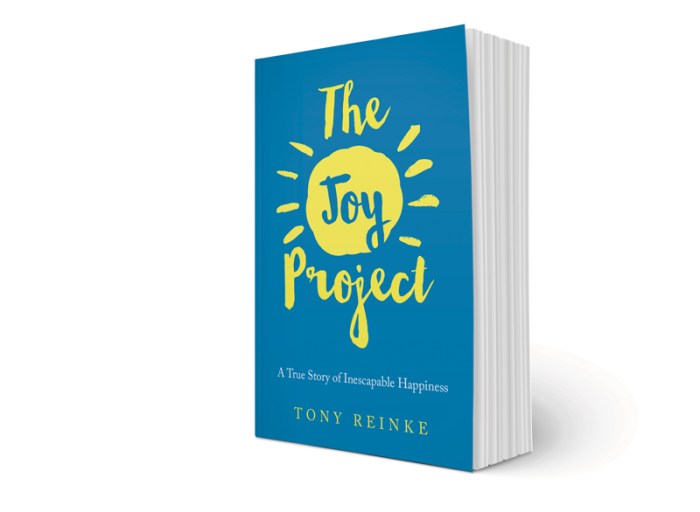
This week I launched my third solo book, titled, The Joy Project: A True Story of Inescapable Happiness.

The new book is short — 120 pages — but in those few pages I attempt to dive into the most profound story ever told in the universe, the story of God’s Sovereign Joy.

The Joy Project also fulfills of a dream of mine to write and publish a full book free of charge to the world. The dream has become a reality thanks to the financial donors behind desiringGod.org, and so it seemed appropriate to dedicate the book to these many men and women around the world who support our daily labors.

You can download the book right now, free of charge, in three digital formats, at desiringGod.org/thejoyproject.

What John Newton Taught Me

jnxl-social

Recently a friend of mine wrote and asked: “Having spent so much time with your friend John Newton, what would say is the single most important thing — numero uno — he has pressed into your heart?”

Here’s my answer (posted with permission):

Brother, what a wonderful question!

Well, what strikes me most about Newton is his insistence that the Christian life is exodus (conversion), followed by forty years of desert wandering and trials and challenges (the Christian life), that all usher in the Promised Land of eternal life in the presence of Christ. In other words, most of us arrive at the doorstep of eternity by degrees and disclosures, not abruptly and in a flash.

And so many of the pressures and promises of life cloud our vision. There are many sinful things we think will be gainful in life, and so we are lured from one idol to another fleeting idol until we are made to realize the futility of this search, and how habitually we have been reaching for god substitutes. But something of this hold true for even the good things in life, like marriage and children and ministry — so God brings into our lives disruptions and trials to break us free from assuming these good gifts can supply the gain we need to manage this life with joy.

And so as time goes on, and as we find the sinful things to be empty, and even the good things in life wear thin in what we expect them to bring in truly satisfying our hearts, we begin to see something our hearts were longing for in all those things. And just as we begin to see the thinness of all the things we previously rooted our eternal hopes in, a new delight shines through the background.

As the Christian life develops and deepens we are ever weaned from this world, slowly, by increments, and through various trials and troubles and letdowns. And the good gifts in life do not become worthless but seem to take on a new character because Christ begins shining through them to us and we grow in gratitude and see all things as gifts that come to us directly from the Savior’s hand.

And as the Christian ages and spouses are taken away and even children are taken early and as ministry responsibilities pass on to others, there is a growing sense of inadequacy and a growing sense of incapability with this world that grows stronger and in a sense more bitter — a sorrow in the rejoicing.

Then finally comes a day when our time on earth draws to a close, and the beauty of Christ shines more precious to us than ever before in life. Not all of the sudden, but as though it were the culmination of forty years of wilderness preparedness, all of life leading us to a point when finally everything on earth seems to be loss compared to the greatest gain, the greatest treasure, which is to enter the unspeakable delight of the presence of our Savior. And in that moment, suddenly, through death, we find the truest gain we were seeking for all along as the doorway into the beatific presence of Christ opens to us.

I have never seen a man live with resolve in a vision of the Christian life like the one I see in the life and letters of John Newton. That’s what I take from him. He pulls away the clouds and the shrouds of what makes this life feel so enclosed by the momentary, to show that we are all being led, day-by-day, step-by-step, into the presence of our greatest gain in the universe.

The Church and the Problem of A-Literacy

Pastor Timothy R. Nichols, from his article “Holding Center: The Theocentric Unity of Truth in the Postmodern World,” CTSJ, 11.1 (2005): 52–54:

In general terms, an aliterate person is able to read, but chooses not to. Most people today can read in the gross sense, i.e., they can understand the labels on packages at the store, learn from the marquee what time a movie is showing, or read the road sign that tells them how many miles to Richmond. However, aliterate people do not exert the sustained attention necessary to draw meaning out of a longer written text like a poem, novel, or biography. And because they choose not to, they lose whatever skill they might have developed in school. An aliterate person who has been out of school for ten years will be very rusty indeed at understanding a printed text of any length. …

Although it is true that an illiterate (or aliterate) believer can live a successful Christian life, it would be a mistake to conclude on that basis that reading is not crucial to Christianity. As long as there are some readers who accurately convey the text to the rest, the church can tolerate a shortage of readers. However, the fewer the people who access the Scriptures directly, the more power those who do will have. This is dangerous — witness the many doctrinal and other abuses perpetrated by the medieval Catholic church. Popular facility [proficiency] with the text prevents a “priesthood of skilled readers.”