Introducing: takeupandread.com

takeupandread.com

As you can tell from The Shepherd’s Scrapbook, I love to read, collect and photograph books. So I was excited when my friend John at Monergism.com contacted me to see if I would be willing to direct my love of books in their direction. Beginning today, I am very excited to announce my newest endeavor with a website I’m simply calling takeupandread.com (hosted by the newly designed Monergism.com).

“Take up and read” is the English translation of Augustine’s famous Latin phrase tolle lege, a statement that floated out of the mouth of a child at a neighbor’s take-up-and-read-mug.jpghouse that caused Augustine to pick up the Bible and find salvation in Christ. The phrase “take up and read” permanently symbolizes the life-changing potential of published truth.

This new endeavor will also help organize my two pursuits. This new website will allow me to move a number of past and future book reviews off the blog and to allow TSS to focus more as a forum for essays about the Cross-centered life. I will still use TSS to announce new books and review music and DVDs, but my prayerful intention with takeupandread.com is to provide a larger audience with a one-stop archive of full book reviews.

My hope is to introduce readers familiar with contemporary Christian literature to the rich heritage of excellent works from the past. Men like Jonathan Edwards, John Owen, Horatius Bonar, John Calvin, Charles Spurgeon, and others stand in a long line of Reformed authors that are greatly needed in our generation. And for those who are familiar with these old authors, we need to become aware of the great books being published today by men like C.J. Mahaney, Wayne Grudem, Paul David Tripp, John Stott, John Piper and David Powlison. Just as the fonts in the graphic suggest, I’m trying to merge the antique and the modern into one life-changing library.

Being encouraged to pursue reformed books is a treat because each of these authors saw/sees the centrality of the Cross in everything. Literally tons of reformed literature is today being churned out by publishers around the world and I’ll help you figure out which volumes are best suited so you can “take up and read” and get on with the life transformation.

Have a Cross-saturated weekend!

-Tony

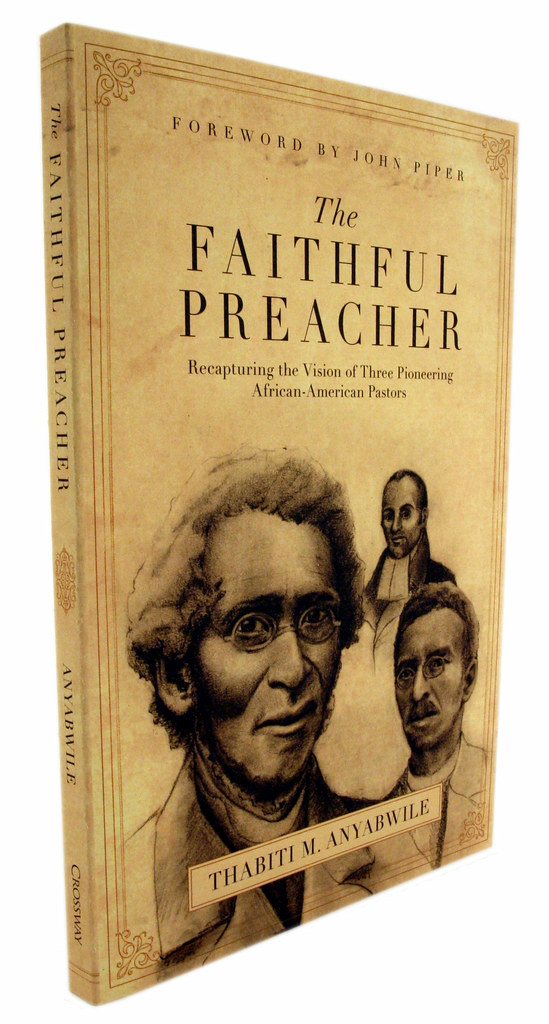
The Faithful Preacher by Thabiti Anyabwile (1581348274)

Book announcement
The Faithful Preacher
by Thabiti Anyabwile

Talking about the faith with my African-American pastor friends are some of the more awkward conversations I experience. We come from totally different backgrounds, with totally different perspectives, and that leaves very little common ground. So I am greatly encouraged to see blogger, pastor, and author Thabiti Anyabwile taking the time to address the nature and status of the black church in a series of blog posts titled, Can the Predominantly African-American Church Be Reformed? I have learned a lot about why my friends and I have a hard time discussion the nature of the church. These blog posts are interesting and engaging.

In seeking the reformation of the “predominantly African-American church” Anyabwile has also set out to present the lives of three black pastors. He does this in his new book from Crossway titled, The Faithful Preacher: Recapturing the Vision of Three African-American Pastors. The pastors highlighted are Lemuel Haynes (1753-1833), Daniel A. Payne (1811-1893) and Francis J. Grimké (1850-1937). The book contains one short biography of each man but is largely comprised of sermon transcripts.

Here is one short example from a sermon by Francis J. Grimké from 1919. Addressing the reconstruction of the damages done by World War I, he says,

“As a minister of Jesus Christ in this co-called work of spiritual reconstruction, I have nothing new to offer, nothing better to offer than I have been offering for the last forty years – the gospel of the grace of God in Christ Jesus; the taking of Christ’s yoke upon us and learning of Him; denying ourselves and taking up our cross daily and following Him through evil report as well as good. Others may have something new, something better to offer, but I have not, and I have no disposition to seek for anything else or any desire to offer anything else. So far as the world has been saved, the gospel preached and lived is the only thing that has saved it, and the only thing that will continue to save it” (p. 169).

“They were Puritans,” Anyabwile writes of the three preachers. “They committed themselves to sound theology in the pulpit, theologically informed practice in the church, and theologically reformed living in the world.”

Thabiti Anyabwile is serving the greater church well by asking some hard questions but also – building from the lives and preaching of three African-American preachers – presenting a vision for black pastors to be radically Cross-centered. And that’s a vision predominantly white churches can learn from, too.

——————

Title: The Faithful Preacher: Recapturing the Vision of Three African-American Pastors
Reading level: 2.0/5.0 > easy
Boards: paperback
Pages: 191
Volumes: 1
Dust jacket: no
Binding: glue
Paper: normal
Topical index: yes
Scriptural index: yes
Text: perfect type
Publisher: Crossway
Year: 2007
Price USD: $15.99
ISBNs: 1581348274, 9781581348279

Special offer on John Calvin volumes

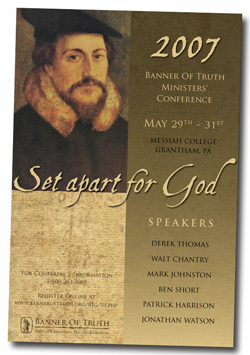
The 2007 Banner of Truth minister’s conference (May 29-31), “Set Apart For God,” will reference the teaching of John Calvin. Tobotconf.jpg promote the conference, The Banner of Truth is offering our readers a 40-percent package discount on these three volumes:

1. Calvin’s, Sermons On The Epistle To The Ephesians (list: $36.00; 40% off: $21.60). Charles Spurgeon recommended this book with one short sentence: “The sermons are priceless.”

2. Letters of John Calvin (list: $10.75; 40% off: $6.45)

3. A.N. Martin, Practical Implications of Calvinism (list: $2.50; 40% off: $1.50)

Purchase all three volumes for a greater discount (list: $49.25), just $27.50. Offer good until April 30, 2007, which is the Early Bird Registration Deadline for signing up for this year’s Banner of Truth ministers’ conference. Offer good within the U.S. and Canada. To receive this discount you must do two things. First, call the Banner’s US office directly (800-263-8085). And secondly, you must tell them you are “a friend of The Shepherd’s Scrapbook.” And if you’re a pastor, church leader (elder, deacon), missionary or seminary student, Banner of Truth will sign you up to attend this year’s conference at the same time. I’m already registered myself and would look forward to seeing you there!

Humble Calvinism > Part 17 > Viewing God’s Theater (1.14)

02spurgeonhumcalvinism.jpg

Part 17: Viewing God’s Theater (1.14)

After 24-inches of snow last week and 50-degree weather this week, I grabbed a book and headed to a favorite reading spot along a creek near my house. As I 01spurgeoncalvin1.jpgexpected, the water was higher and swifter than I’ve seen. The loud creek provided the perfect silence for a good book.

The edge of the swift creek was a front-row seat to view the stage of God’s majesty, a special transcendent gaze into God’s glory and power. Calvin writes, “let us not be ashamed to take pious delight in the works of God open and manifest in this most beautiful theater” (179). Yesterday was “pious delight” in God’s “theater.”

But in chapter 14 of the Institutes, Calvin reminds us that God’s “theater” is much larger than what our eyes and ears can absorb from a metal bench along a swiftly running creek. Scripture opens us to a theater of God’s works that reveal an even larger and deeper glimpse into the power and might of God. God’s creative powers fashioned the visible, and He formed the elements of this universe that are largely invisible to the natural eye.

Angels

As Calvin transitions us from God’s general revelation (what can be seen with our eyes, usually encapsulated in the study of natural sciences) into God’s special revelation (what can only be seen through Scripture by faith, usually focused on salvation) the angels often fall forgotten in the middle. They are part of creation but only ‘visible’ through special revelation. So “if we desire to recognize God from his works, we ought by no means to overlook such an illustrious and noble example” (162).

First a warning. Human speculation corrupts our understanding of angelic beings. Every generation has attempted to explain angels apart from Scripture. Paul, having been taken to the third heavens, would not even trust his own observations but pointed people to the Word of God to understand the spiritual beauties (2 Cor. 12:1-4). “Therefore, bidding farewell to that foolish wisdom, let us examine in the simple teaching of Scripture what the Lord would have us know of his angels” (165).

We know angels are real beings only because Scripture reveals them to us. They are part of God’s creation we need Scripture to help us “see.” Calvin relates this to an old man with dim eyes trying to read without his glasses (160-161). We need Scripture to make God’s creation clear. We need to pray that God would open our eyes to see these angelic beings. Calvin uses this story in 2 Kings as an example:

When the servant of the man of God rose early in the morning and went out, behold, an army with horses and chariots was all around the city. And the servant said, “Alas, my master! What shall we do?” He said, “Do not be afraid, for those who are with us are more than those who are with them.” Then Elisha prayed and said, “O Lord, please open his eyes that he may see.” So the Lord opened the eyes of the young man, and he saw, and behold, the mountain was full of horses and chariots of fire all around Elisha. (2 Kings 6:15-17)

We need Scripture to see God’s protection around us. Revelation of the angels is not to satisfy our vain curiosity but to provide peace and comfort that God is protecting His children. May God grant us eyes to see.

Work of angels

The majesty of God’s creation in the angels is revealed in the work and power of the angels because they “in some respect exhibit his divinity to us” (165). The angels reveal this divinity in their works as God’s messengers and as “dispensers and administrators of God’s beneficence towards us” (166). Amazingly, the angels played a central role in the transmission of the Law (Acts 7:53; Gal. 3:19; Heb. 2:2). Beyond this angels protect, defend and direct the believers just as the angels ministered to Christ (Matt. 4:11; Luke 22:43). And “to fulfill the task of protecting us, the angels fight against the devil and all our enemies, and carry out God’s vengeance against those who harm us” (166-167).

So do we have guardian angels? Maybe. Some passages, like Acts 12:15, make it sound as though each believer has one primary angel. But this conclusion is uncertain and to Calvin unnecessary. “For if the fact that all the heavenly host are keeping watch for his safety will not satisfy a man, I do not see what benefit he could derive from knowing that one angel has been given to him as his especial guardian” (167). Good point.

Don’t worship angels

The warning is this: Don’t look so highly upon angels that you begin to worship them. We’ve already seen in our study of Humble Calvinism that John Calvin forcefully turns us away from everything that dilutes our worship of God. The angels are no different.

Paul’s Epistle to the Colossians displays this caution well. Christ created all things, even the angels (Col. 1:16). Paul does this so “that we may not depart from Christ and go over to those who are not self-sufficient but draw from the same well as we” (170). The angels are just as dependent upon God for their lives as we are for ours. “How preposterous, then, it is for us to be led away from God by the angels, who have been established to testify that his help is all the closer to us! But they do lead us away unless they lead us by the hand straight to him, that we may look upon him, call upon him, and proclaim him as our soul helper” (172).

But there are angels seeking to turn us away from God.

Demons

This would be the best place to insert a discussion of our angelic enemies. Satan is a powerful deceiver of souls. He deceives in order to lead sinners away from God, away from the Gospel, and blindly into eternal judgment (Matt. 13:25). “For he opposes the truth of God with falsehoods, he obscures the light with darkness, he entangles men’s minds in errors, he stirs up hatred, he kindles contentions and combats, everything to the end that he may overturn God’s Kingdom and plunge men with himself into eternal death” (174).

“We have been forewarned that an enemy relentlessly threatens us, an enemy who is the very embodiment of rash boldness, of military prowess, of crafty wiles, of untiring zeal and haste, of every conceivable weapon and of skill in the science of warfare. We must, then, bend our every effort to this goal: that we should not let ourselves be overwhelmed by carelessness or faintheartedness, but on the contrary, with courage rekindled stand our ground in combat” (173). While Satan roams and deceives, he is allowed only to do what God sovereignly allows (Job 1:6,12; 2:1,6; 2 Thes. 2:9-11).

Conclusion

Now back to the good angels. In all of this Calvin does not want us to forget about the full theater of God’s creative power. Look to His angels and be amazed at God’s power and glory. Be amazed at His thoughtfulness, love and protective power of us through them. The angels that we see with our eyes of faith are just as real and God-glorifying as the rushing stream that exalts God through the physical eye. Don’t wait until you are on top of the Rocky Mountains to worship God in His creation. Open Scripture!

Not only do we seek to know that God is the Creator of all things but in watching the theater of His creating power we feel His goodness which affects our hearts to service and comforts us in trials. But even more important to Calvin, it’s in Scripture’s revelation of this incredible God that we find assurance that the One we worship is in fact the One True and Living God, Maker of the universe. We worship no dead idol.

See you Monday

Hello everyone! I’ll be back next week to pick up our Humbletsslogobig.gif Calvinism series. We’ll be looking at that interesting part of creation we cannot see with our eyes and thus typically forget to worship God over. Can you guess what that would be? All this and more. Blessings, my friends!

-Tony

‘Of my own accord’: The Eager Redeemer (pt. 3)

‘Of my own accord’: The Eager Redeemer (pt. 3)
by Tony Reinke

“Every step He took from Bethlehem to Calvary did but unfold the willingness of Jesus to die… They thought the nails alone kept Him to the cross — He knew it was His own love that fastened Him there.” -Octavius Winslow

When it comes to the willing sacrifice of Christ for sinners there are two common errors. The first is to look at the death of Christ as merely an example for us to live by a higher moral code, willing to give our lives to defending country or confronting world poverty. The other error is to tip our hats to the work of Christ and then live daily as though the Cross has no practical impact whatsoever. Both errors are confronted in the willingness of Christ.

Christ’s death is not our example

In our wartime era, we are daily confronted with the latest deaths of American men and women. The men and women of our armed forces – who are called to leave their families to face evil and to risk their own lives — are each an example of sacrifice. But this sacrifice is distinctly and profoundly different than the willing death sacrifice of Christ.

Wartimes give us a special opportunity to see the incredible sacrifice of Christ. Charles Spurgeon writes,

“A man may righteously surrender his life for the good of his country, and for the safety of others. There have frequently been opportunities for men to do this, and there have been brave fellows who have worthily done it; but, then, all those men would have had to die at some time or other. They were only slightly anticipating the payment of the debt of nature; but, in our Lord’s case, he was rendering up to the Father the spirit, which he might have kept if he had chosen to do so. ‘No man taketh it from me,’ said he concerning his life; ‘I lay it down of myself;’ and there is here a cheerful willingness to yield up his spirit into his Father’s hands. It is rather remarkable that none of the Evangelists describe our Lord as dying. He did die, but they all speak of him as giving up the ghost, — surrendering to God his spirit. You and I passively die; but he actively yielded up his spirit to his Father. In his case, death was an act; and he performed that act from the glorious motive of redeeming us from death and hell; so, in this sense, Christ stands alone in his death” (sermons vol. 45).

Christ was no mere man awaiting natural death but the eternal God who was not naturally subjected to death. This is the Man who willing subjected Himself to death as the Atonement for His people.

Our hearts are rightfully grieved to hear of a young man or woman’s death. The earlier the death the more traumatic the grief. If it is so grievous to our hearts to hear of the death of small child, how much more traumatic the death of One who never should have died?

We can willingly give our lives in the name of freedom, the defeat of evil, and the preservation of our country. But this is the offer of a life that will be taken by nature anyways and so it’s a qualified “willingness.” I don’t want to appear cold or harsh toward those who have lost family in the war or tragedy. My point is simply that there is no correlation between the willingness of one to die for freedom and the willingness of the Savior to drink the cup of the Father’s wrath. Christ’s willingness to endure death was an example for no sinful man.

Christ’s love is the husband’s example

However, the willingness of Christ does leave a pattern of love. And nowhere should the loving willingness of Christ more exemplify our lives than when we as husbands care for our wives. Paul writes,

“Husbands, love your wives, as Christ loved the church and gave himself up for her, that he might sanctify her, having cleansed her by the washing of water with the word, so that he might present the church to himself in splendor, without spot or wrinkle or any such thing, that she might be holy and without blemish” (Eph. 5:25-27)

Notice the willingness of Christ “gave himself up for” the Church. This willingness provides the scope and context for every response of the husband towards his wife. Christ willingly endured pain and sorrow to pursue His Bride.

On Ephesians 5 Octavius Winslow writes, “With the burden of sin — the fire of justice — the wrath of God — the ridicule of man — the malignity of devils — the sorrows of Gethsemane — the pains of Calvary, and the sea of His own blood, all, all in vivid prospect before Him, He yet went forward, loving not His own life unto the death, because He loved ours more.”

The lessons for husbands are many. We pursue our wife’s spiritual purity in a way that is un-reluctant, un-hesitant, and un-limited. Our lives should reflect an eager pursuit of our wives as Christ’s love pursued us willingly. We do not wait for the right time to care for our wives; we pursue them as Christ pursued us willingly and eagerly. Loving leadership of our wives should be a humble and eager pursuit of their eternal good.

In light of the eagerness and willingness of Christ to pursue the Cross for me, here are some questions I can ask and ponder as a husband:

-What do I willing sacrifice for my wife?
-How do I serve my wife in a way that exemplifies this willingness?
-Do I serve her with grumbling or with joyfulness?
-Do I serve her when externally prodded or with spontaneity?
-Do I initiate serving my wife or do I only respond?
-Does my eager service communicate my joy in her?
-What personal sins must die to willingly sacrifice for my wife?
-How do I demonstrate a pursuit of my wife’s eternal health?

The willingness of Christ to endure the Cross is both an amazing spectacle of divine sacrifice and a beautiful example of Christian love. Christ “gave himself up for her.” Have we given ourselves to our wives?

Remember marriage is temporary (1 Cor. 7:27-31). The eternal significance of marriage is in providing a context where the willing love of Christ is displayed to the watching world. So husbands, take this incredible theme of the free willing sacrifice of the Son and use your marriage to show this truth to the world.

Conclusion

Spurgeon reminds us that when we ponder the Cross we should remember how “spontaneous” was the sacrifice by which he redeemed us from sin, and death, and hell. That word “spontaneous” is a loaded term. It means Christ pursued the Cross out of personal willingness, not any external manipulating force. Literally, “spontaneous” means “self-acting.”

Christ spontaneously pursued the Cross, motivated by a personal willingness. He was both a suitable Savior and a willing Savior. There is a weight to His willingness that should press upon our hearts at all times.