Worthy is the Lamb that was slain,
and hath redeemed us to God by His blood,
to receive power,
and riches,
and wisdom,
and strength,
and honour,
and glory,
and blessing.Blessing and honour,
glory and power,
be unto Him that sitteth upon the throne,
and unto the Lamb,
for ever and ever.Amen.
Young, Restless, Reformed, and Humbled
It’s too easy to get puffed up, and not puffed up in a post-Thanksgiving way, but in a doctrinal way as those who pride themselves in the doctrines of grace (ie Calvinists, aka young restless reformed rascals). Those of us that believe in total depravity tend to forget that this doctrine paints a dark portrait of ourselves. And those of us that pray to the Sovereign God of the universe and who orchestrated all of history, tend to get distracted easily in our prayers by passing butterflies of whimsical thoughts.
We Calvinists have much to be humbled about.
John Newton (1725–1807) was no stranger to controversy, but he didn’t stir it up either. In fact Newton served as a peacemaker in the Calvinist vs Arminian debates of his time. This excerpt from one of his letters is worthy of a careful read.
Dear Sir,
To be enabled to form a clear, consistent, and comprehensive judgment of the truths revealed in the Scripture, is a great privilege; but they who possess it are exposed to the temptation of thinking too highly of themselves, and too meanly of others, especially of those who not only refuse to adopt their sentiments, but venture to oppose them.
We see few controversial writings, however excellent in other respects, but are tinctured with this spirit of self-superiority; and they who are not called to this service, if they are attentive to what passes in their hearts, may feel it working within them, upon a thousand occasions; though, so far as it prevails, it brings forcibly home to ourselves the charge of ignorance and inconsistence, which we are so ready to fix upon our opponents.
I know nothing, as a means, more likely to correct this evil, than a serious consideration of the amazing difference between our acquired judgment, and our actual experience; or, in other words, how little influence our knowledge and judgment have upon our own conduct. This may confirm to us the truth and propriety of the Apostle’s observation, “If any man think that he knoweth any thing, he knoweth nothing yet as he ought to know” [1 Cor. 8:2].
Not that we are bound to be insensible that the Lord has taught us what we were once ignorant of; nor is it possible that we should be so; but because, if we estimate our knowledge by its effects, and value it no farther than it is experimental and operative, we shall find it so faint and feeble as hardly to deserve the name. …
John Newton had the gift of deflating the heads that knowledge puffed up.
So how can young restless reformed rascal (like me) find humility? It’s a two-step process. First, look at the depth of your theological convictions. Thank God for that–it’s a gift. Second, compare those convictions with the shallow daily decisions that are made totally uninfluenced by them. And if that doesn’t work, look at how easily you are tempted to fear, to anxiety, to anger, and to idolatry, and then ask if those responses jibe with the God of Calvin’s Institutes.
May God grant us fresh eyes to see the chasm that separates our reformed convictions and our daily practices. This will work humility into our orthodoxy.
Unofficial Logos 4 Tutorial Videos
Logos Bible Software 4 users may want to bookmark Mark Barnes’ helpful new series of tutorial videos. The 14 videos cover the following topics:
- Installation and Indexing (6:28)
- First Steps (23:05)
- Bible Facts (15:53)
- Searching (35:13)
- Reverse Interlinears (38:42)
- Favorites (22:28)
- Clippings (13:31)
- Passage Lists (19:20)
- Highlighting (19:59)
- Notes (21:32)
- Managing Your Content (11:24)
- Printing (20:48)
- Exporting (27:09)
- Layouts (24:36)
Watch the videos on Vimeo here.
Handel’s Messiah
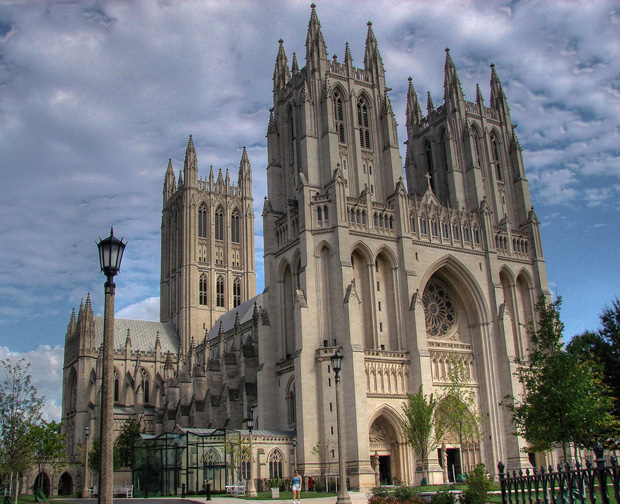
 In December I plan to take the family downtown to see Handel’s Messiah performed at the Washington National Cathedral. To prepare for the event, I recently read the excellent new book Handel’s Messiah: Comfort for God’s People by Calvin Stapert (Eerdmans, 2010). Stapert, a professor of music at Calvin College in Grand Rapids, explains the musical and historical background of Handel’s oratorio. But he also provides a very helpful theological commentary on the narrative that traces Jesus’ birth (act 1), suffering, death, resurrection (act 2), and His eternal reign (act 3). Messiah is the gospel set to 2.5 hours of music, complete with a personal invitation (part 1, scene 5).
To enjoy Messiah is—in the words of one friend—to be washed with the Gospel.
The musical score was written, of course, by George Frideric Handel (1685–1759). The narrative (or libretto), is a carefully woven mix of biblical passages, the work of Charles Jennens (1700–1773). Stapert does a fine job explaining how these men worked together to produce the masterpiece. But here is what I find most interesting: Messiah, first performed in Dublin on April 13, 1742, was intended to be something of an apologetic, according to Stapert. He explains on pages 75–76 in an excerpt worth quoting at length:
Messiah tells a deliverance story—the story of God’s ultimate deliverance of his people from bondage to sin and death. But it is a story that increasing numbers of Europeans were disbelieving, and therein lies the motivation behind Jennens’s compilation of the Scripture passages that constitute the libretto for Messiah.
The Enlightenment was in full swing, and the church was severely threatened by those who denied that Christ was the Son of God, the long-promised Messiah who would deliver his people from bondage to sin and death. Of course the church had always faced threats to the faith from unbelievers. But the number of unbelievers in Europe increased significantly during the Enlightenment, a movement that fostered “natural” religion that proclaimed a commonsense social morality and an optimistic view of human nature. Typically it took the form of Deism.
Deism did not deny the existence of a Supreme Being who created all things but claimed that after creation that Being left humans to themselves. According to Deists, humans had no need of a god because they were innately good and had the resources to solve their own problems. Human perfectibility could be achieved by human resources without divine intervention. Thus Deism was fundamentally at odds with Christian beliefs that humans are basically sinful, that they are incapable of saving themselves, and therefore that they need a Savior. In other words, Deists did not believe in the need for a Messiah.
Messiah was born into this world of growing Deistic threat to the church. It was not only that Deism added substantially to the number of Europeans who didn’t believe Jesus to be the Messiah, but also that unlike other disbelievers (Jews, Muslims, atheists), Deists were often within the church, even among the clergy—”profane scoffers among our selves,” as Richard Kidder called them. Committed orthodox Christians like Jennens had reason to be concerned, and that concern spawned an outpouring of works that reaffirmed the historic Christian beliefs, the chief among them being that Jesus Christ is the Son of God, the Messiah. Jennens’s libretto for Messiah joined a host of writings on the subject. Treatises and tracts, poems and periodical articles were written to prove that Jesus was the Messiah prophesied in the Old Testament.
Stapert makes an interesting point. We can pray that the Lord will use the many performances of Messiah this winter for that very same purpose—to open the eyes of sinners to see their need for a messiah, and to see the sufficiency and suitability of Jesus Christ to be the very Messiah for which the weight of our eternity rests.
Note: you can listen to a recording of Messiah online via NPR here.
Always Debtors
William Cooper, How Must We in All Things Give Thanks, 1661:
Our continual praying shows that we are always beggars, and our continual thanksgiving shows us always debtors. Our thanks, then, indeed, is the rebound of mercy heavenward, whence it came, and a holy reflection of the warm sun-beams of God’s benefits shining on us.
Thanksgiving, the Condition of Enjoyment
When I think of Thanksgiving I think about food–and so does Paul. Note the correlations between giving thanks to the Creator and enjoying a delicious feast:
1 Timothy 4:1–5:
Now the Spirit expressly says that in later times some will depart from the faith by devoting themselves to deceitful spirits and teachings of demons, through the insincerity of liars whose consciences are seared, who forbid marriage and require abstinence from foods that God created to be received with thanksgiving by those who believe and know the truth. For everything created by God is good, and nothing is to be rejected if it is received with thanksgiving, for it is made holy by the word of God and prayer.
Hans Conzelmann (TDNT):
1 Tm. 4:3f attacks the Gnostically based demand for asceticism in meats by pointing to the custom of grace at meals, which is here connected with faith in God as the Creator. No laws can be set up in terms of foods. The norm is the attitude towards God. In this sense thanksgiving is the condition of enjoyment.
 Tony Reinke