The Joy Behind All Joy

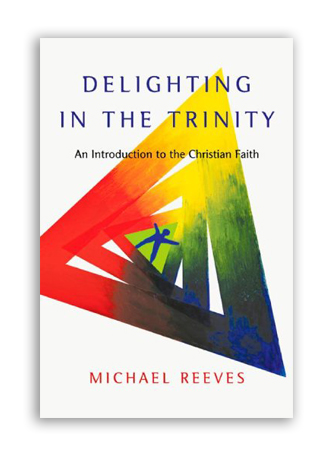
reevesThe power of a great book to awaken your soul to the majesty of God is on full display in Delighting in the Trinity by Michael Reeves. If you get this — or if it “gets” you — your life will never be the same.

Next time you look up at the sun, moon and stars and wonder, remember: they are there because God loves, because the Father’s love for the Son burst out that it might be enjoyed by many. And they remain there only because God does not stop loving. He is an attentive Father who numbers every hair on our heads, for whom the fall of every sparrow matters; and out of love he upholds all things through his Son, and breathes out natural life on all through his Spirit.

And not only is God’s joyful, abundant, spreading goodness the very reason for creation; the love and goodness of the triune God is the source of all love and goodness. The seventeenth-century Puritan theologian, John Owen, wrote that the Father’s love for the Son is “the fountain and prototype of all love. . . . And all love in the creation was introduced from this fountain, to give a shadow and resemblance of it.”

Indeed, in the triune God is the love behind all love, the life behind all life, the music behind all music, the beauty behind all beauty and the joy behind all joy. In other words, in the triune God is a God we can heartily enjoy — and enjoy in and through his creation. (62)

The Accidental Feminist

feministFrom Courtney Reissig’s forthcoming book, The Accidental Feminist: Restoring Our Delight in God’s Good Design (Crossway; May 31, 2015), pages 115–116:

In the 1950s, the pinnacle of a woman’s life was her home. Her home was her domain and her identity. Betty Friedan saw something wrong with that and encouraged women out of the home and into a life of greater purpose. While her diagnosis of misplaced identity was correct, she simply replaced one idol for another. Now the workplace became the identity. What a woman accomplished in society was what defined her.

And now here we are in twenty-firstcentury America, and many women are trying to do it all. We are endlessly having the discussion about whether women can have a home life and a work life — and whether she can do everything with skill and ease. Frankly and understandably, I think a lot of women are just exhausted with it all.

The issue lies in the fact that these things were never meant to fulfill us. Motherhood, while good and life-changing, is not our identity. Our home, while important and necessary, is not our identity. Our career, while fulfilling and challenging, should never define us. Our marital status, while enjoyable and rewarding, is not where we find our hope.

What feminism failed to answer was this question of identity. Where should a woman find her sense of self-worth? Where should she put her hope?

Our circumstances are always changing. When we place all of our eggs in the basket of motherhood, career, home, marital status, gifting, or some combination of all of these, we will always come up short. We can be stripped of those things at a moment’s notice. Any understanding of our role in the home must first be rooted in the fact that our identity is never to be found there. It is to be found in Christ.

God’s Sovereignty Over World Religions

As a fan of the theology of Herman Bavinck, I fully expected to enjoy Daniel Strange’s new book, Their Rock Is Not Like Our Rock: A Theology of Religions (Zondervan, 2015). And I have. Strange returns to the works of Bavinck (and J.H. Bavinck) to fill an often overlooked gap in religious studies.strange

So what are we to make of the world’s religions? What we do with all the idols?

To put the matter in a blunt summary, Strange rightly contends that all non-Christian religions are idolatrous responses to God, each ‘subversively fulfilled’ in Christ. In other words, Christ simultaneously contradicts and then counter-intuitively fulfills religious hopes and impulses (see 1 Cor. 1:22–25). Years ago I found this point essential to my development as a Christian who reads and benefits from books written by non-Christians (see Lit!, 73–75).

But Strange presses deeper into the subversive side, asking how God’s sovereignty plays out over the world’s religions and idols. Here’s how he explains it in his new book, building off Piper:

We are within standard Reformed territory to say that all things were created by Christ and for Christ (Col. 1:16), including thrones, dominions, rulers and authorities, which (given Col. 2:15 and Eph. 6:12) includes evil supernatural powers such as demons.

Unpacking this a little further, John Piper notes ‘the apex of the glory of Christ is the glory of his grace . . . and the apex of this grace is the murder of the God-man outside Jerusalem around A.D. 33. The death of Jesus Christ was murder. It was the most spectacular sin ever committed.’ By his death, Christ defeated the ‘powers’ at the cross (Col. 2:15). Piper, linking Colossians 1:16 and 2:15, argues that Christ will be ‘more highly honored’ because he allowed Satan (and implicitly the demons) to do evil for millennia before defeating them at the cross, than had he eliminated Satan immediately.

Given the constraints of this study, such axiomatic truth can be but asserted here with little further justification.

Given this assertion, however, what does require further reflection and justification is precisely how the sovereignly ordained, ‘spectacularly sinful’ and essentially God-denying worship of the religious Other can glorify the living God. . . .

The Bible’s presentation of the nature of non-Christian religions indicates that they must be understood as the impulse of opposition in fallen humanity towards the Creator God, who has made himself known in Christ Jesus. Idols and false gods feature in the narrative of Scripture as God’s rivals. They are those things that, falsely credited with divine presence, vie for the affections of God’s people, those things that contend with God. By virtue of Scripture’s portrayal of this rivalry, idols are constantly set up in comparison with the one true God, a contest in which they always emerge as ultimately powerless and defeated.

By their very deficiency, therefore, idols are constantly pointing to God’s excellences, his holiness, his power, his faithfulness and his mercy. Inasmuch as the narrative of Scripture provides us with a portrait of God, a meditation on his attributes and actions, idols function as a foil, a device to throw that portrait of God into sharper relief. They fulfill, so to speak, a hermeneutic function. God allows the religious Other to flourish because then its final defeat will glorify him all the more. It is only when this impulse of opposition is recognized that its purpose in God’s economy may be understood properly. (309–310)
The Laughing Theologian

truemanCarl Trueman, Luther on the Christian Life: Cross and Freedom (Crossway, 2015), 198–199:

In general terms, of course, Protestant theologians have not been renowned for their wit, and Protestant theology has not been distinguished by its laughter. Yet Luther laughed all the time, whether poking fun at himself, at Katie, at his colleagues, or indeed at his countless and ever increasing number of enemies. Humor was a large part of what helped to make him so human and accessible. And in a world where everyone always seems to be “hurt” by something someone has said or offended by this or that, Luther’s robust mockery of pretension and pomposity is a remarkable theological contribution in and of itself.

Humor, of course, has numerous functions. It is in part a survival mechanism. Mocking danger and laughing in the face of tragedy are proven ways of coping with hard and difficult situations. Undoubtedly, this played a significant role in Luther’s own penchant for poking fun. Yet I think there is probably a theological reason for Luther’s laughter too.

Humor often plays on the absurd, and Luther knew that this fallen world was not as it was designed to be and was thus absurd and futile in a most significant and powerful way. Thus, he knew that life is tragic. It is full of sound and fury. It is marked by pain and frustration. The strength of youth must eventually fade into the weakness of old age and finally end in the grave. We believe ourselves to be special, to be transcendent, to be unique and irreplaceable.

And yet the one great lesson that everyone must ultimately learn in life is that they are none of these things, however much we want them to be true and however much we do things to trick ourselves into believing our own propaganda. We are fallen, finite, and mortal. We are not God. And because God is and has acted, because in incarnation, Word, and sacrament he has revealed and given himself and has thus pointed to the true meaning of life, our own pretensions to greatness are shown to be nothing but the perilous grandstanding of the absurdly pompous and the pompously absurd.

Every Obstacle Resolved

furmanGloria Furman, The Pastor’s Wife: Strengthened by Grace for a Life of Love (Crossway, April 2015), 56–57:

Compared to our shadowy self-love, the love of God is permanently resolute. All the so-called self-realization we seek is shown to be petty compared to being known by God. Self-sufficiency comes undone in the presence of the Holy One in whom all things hold together, and our self-righteousness reeks like rotten fruit.

When light is cast on the rock-solid fortress of the eternal security we have in Christ, our self-assurance slinks into the shadows. Our insecure self-defense has nothing novel to say, because our heavenly Father is in charge of our public relations department. Through the power of the Holy Spirit, all the energy absorbed by our self-awareness becomes readily available for Christlike sacrificial love. Being aware of these spiritual realities that play out in our lives is a source of sweet joy. Our hearts are strengthened by joy, God is glorified in our dependence on him, and the watching world becomes curious about the reason for our hope.

Being known and loved by God — being found in Christ — has far-reaching implications for our lives. Through his death and resurrection, Jesus has resolved every obstacle that prevented us from treasuring God forever.