Easter, New Creation, and Pro-Life

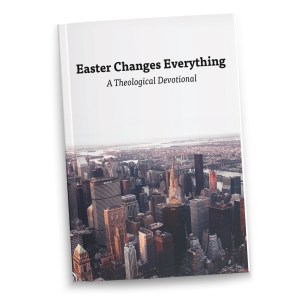
In the weeks leading up to Easter I like to set aside time to reflect on the resurrection of Christ, how it inaugurates the New Creation, and how this profound moment in cosmic history shapes all the Christian life and ethics. I’ll have more on this later (and an ebook to share on March 5th).

easter-bookFor now, here’s a gem from Russell Moore’s article, “The Gospel According to Jane Roe: Abortion Rights and the Reshaping of Evangelical Theology,” published in The Southern Baptist Journal of Theology 7.2 (2003): 44–45.

Evangelicals do not have biblical warrant to disengage from the life-and-death issues of the public square in order to pursue an “other-worldly” and “wholly spiritual” endeavor of rescuing souls from the created order. The Christian doctrine of salvation is rooted in the creation purposes of God, as well as in the eschatological telos of creation in the restoration of the image of God (Rom 8:29) and the regeneration of the entire cosmos (Eph 1:10).

The two come together in the resurrection of Jesus from the dead, the decisive act of redemptive history that confirms the Kingdom purposes of God for the whole of humanity, body and soul, as well as for the whole of the created order. The resurrection of Jesus, as the righteous human firstborn of the new creation (Col 1:18; Heb 5:7–9) along with the future resurrection of the Messiah’s joint-heirs is a resounding confirmation that God still deems His cosmos — including His justified image-bearers — as “good” (Rom 8:19–23).

This informs evangelical engagement on issues such as abortion because, as ethicist Oliver O’Donovan observes, the resurrection does away with any notion that Christian theology mandates a negation of the bodily and material aspects of created reality.

A creational understanding of the gospel as revealed in the new creation begun in the resurrection, therefore, demands that Christians embrace a holistic concern for humanity. By refusing to bifurcate the body from the soul, a Kingdom-oriented soteriology might have well served an evangelical theology taken off-guard by Roe.

By envisioning the mission of the Kingdom as encompassing concern for both body and soul, and by seeing Kingdom priorities as including both the justification of the wicked and justice for the innocent, evangelical theology might have been better prepared for the cultural upheaval that led to the debate over abortion rights.

This holistic interrelationship between creation and salvation would also serve as an impetus for evangelical theology to engage vigorously other matters of human dignity, which are mounting as reproductive and human cloning technologies proliferate.

Pastor, are you having fun?

_26C0667

“I have a little and earnest peeve,” John Piper said last night in his second message at DG’s 2015 Conference for Pastors, “Make War: The Pastor and His People in the Battle Against Sin” (2/3/15).

“‘Fun’ has become an adjective, and is the most common word used today, I think, among pastors to describe their happiness in ministry. That’s very telling. All of you do it. I hear it everywhere. ‘Having a blast in the work.’ ‘Oh, we’re having fun!’ Lots of people who say that are not superficial people, they have just absorbed the language from superficial people. If any word is superficial, the word ‘fun’ is superficial.”

He went on to explain:

I think one of the reasons so many worship services in America are so playful and amusing and entertaining and casual and flippant and jokey and trifling and downright silly is that there is so little sense that anything ominous is really at stake in this service. This service is for secure believers to have fun and for unbelievers to see them have fun; so they will know Christianity is fun. And “fun” has become the most common word among pastors to describe their happiness in ministry. It’s very telling. . . .

In Romans 8:13 Paul says, “If you live according to the flesh you will die.” How could he talk that way to the “saints” at Rome?

Thousands of pastors today would never talk that way to their people. Which is one reason why people don’t feel anything huge, eternal, life-shaking, awesome is at stake in this service or this message. Paul could talk that way because his understanding was that the way people receive and respond to the word of God confirms what kind of person they are: truly born of God, or not. . . .

Then he closed:

In the end, the warfare [against sin] doesn’t sound so bleak. It is serious. Every Sunday. Everyday. But it is a profoundly happy business, because our main work is, by the Spirit of God, with the word of God, to portray the glories of God as more beautiful and more satisfying than anything in the world. We pastors, we people, are a seriously happy band because we aim to kill sin that kills joy in God.

The Pain of Life, the Supreme Goodness of God, and the Joy of the Psalmists

From Stephen Westerholm’s little gem, Understanding Paul: The Early Christian Worldview of the Letter to the Romans (Baker, 2004), pages 33, 87–88:

The psalmists of the Bible found joy in the presence of God: an overwhelming sense that, wherever one found oneself, and whatever one’s circumstances, God is there — and God is good. The joy may be expressed, as the Psalms frequently enjoin, with music and dance and boisterous shouts. It may find voice in a quiet prayer of assurance: “When I awake, I am still with thee.” In any case, the psalmists repeatedly speak of discovering in the Eternal not only their provision and protection but also their heart’s delight:

Thou hast put gladness in my heart,

more than in the time

that their corn and their wine increased.

In thy presence is fullness of joy;

at thy right hand

there are pleasures for evermore.

Delight thyself also in the LORD;

and he shall give thee

the desires of thine heart.

Not incidental to the pleasure was the belief that the enjoyment was mutual:

He [God] delighteth not in the strength of the horse:

he taketh not pleasure in the legs of a man.

The LORD taketh pleasure in them that fear him,

in those that hope in his mercy.

The psalmists’ joy is rooted in their conviction that, circumstances notwithstanding, life is good, and that they have a share in its goodness, loved by the One who matters most. Praise, for them, is the natural, appropriate venting of joy: to praise the Lord is “fitting” and “good.”

And yet,

The psalmists who found such satisfaction in God’s “face” were fully aware of the darker aspects of life: is there anywhere a literature that more profoundly probes the lot of the despised, the slandered, the despondent, those ravaged by disease or war? God’s ways are often disturbingly mysterious even for the psalmists. They feel that at times he has “hidden” his “face,” and they cannot understand why.

Nonetheless, what prevails in the end is the unshakable faith in their bones, whatever the fate of their flesh, that underlying all is goodness, beyond human understanding but deserving of human trust: a goodness not only worth clinging to when all else fails, but more precious by far than anything else one might desire.

From Theological Fads to Timeless Exegesis

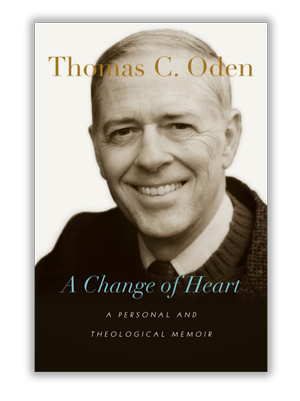
odenI finally got around to reading Thomas C. Oden’s A Change of Heart: A Personal and Theological Memoir (IVP, 2014). The book is a fascinating, self-effacing memoir of a widely respected theologian who spent much of his life gobbling down political and theological fads. He would later become a man who found his place sharing patristic exegesis of Scripture, a work he frequently mentions by the saucy label “consensual exegesis.”

Oden summarizes his theological journey with a characteristic bluntness and honesty that makes his book endearing.

My life story has had two phases: going away from home as far as I could go, not knowing what I might find in an odyssey of preparation, and then at last inhabiting anew my own original home of classic Christian wisdom. The uniting theme of the two parts of my life can only be providence. For confessing Christians it is a familiar story of a life unexpectedly turned around by an outpouring of grace. . . . I had been enamored with novelty. Candidly, I had been in love with heresy. Now I was waking up from this enthrallment to meet a two thousand year stable memory. (140)

This summary statement is pregnant with the fads he bought into, advocated, and then abandoned (his relationship with feminism alone is worth reading the book).

But most interesting to me is how his life intertwines with so many theologians, particularly the neo-orthodox like Bultmann, Barth, Tillich, and Niebuhr, all of whom he knew personally, and some of them he wrote about extensively. Those theologians would eventually leave him unsatisfied, something he explains in a buried endnote:

None of the neo-orthodox theologians had adequately rediscovered the consensual center of classic patristic teaching. Bultmann had demythologized the resurrection. Barth had trounced many aspects of classic Christian natural-law reasoning. Tillich had turned the gospel into an uneventful philosophy of “being itself.” Reinhold Niebuhr abandoned classic ecclesiology in favor of political actions and arguments. All four had influenced me decisively. I had written books on two of them (Bultmann and Barth). Yet none had followed the classic consensual method. None broke through the illusion of the permanence of modern ideologies. What neo-orthodoxy lacked was the pre-Reformation core of classic Christian exegesis — before Luther, before Calvin, before Harnack. (352–53)

It was finally the patristic writers who got through to Oden, and who would break through the illusion of the permanence of modern ideologies. And it was here, in this turn to the patristics, Oden found an earlier premonition fulfilled:

In the season of Epiphany 1971 I had a curious dream in which I was in the New Haven cemetery and accidentally stumbled upon my own tombstone with this puzzling epitaph: “He made no new contribution to theology.” I woke up refreshed and relieved. (143)

Jovial Calvinism

cslYesterday’s post (Sammy Rhodes on Twitter humor and resurrection hope) reminds me of an exchange at the 2013 DG National Conference on C.S. Lewis. During the speaker panel the topic of “jovial Calvinism” arose, and the discussion was later published in The Romantic Rationalist: God, Life, and Imagination in the Work of C. S. Lewis (Crossway, 2014), pages 166–69:

Douglas Wilson: I guess the first thing I would say is that you have to be careful that the joviality is not sort of a Dr. Pangloss, like out of Candide, where someone who’s going through a terrible world of suffering is not clued in to what’s happening. That’s not joviality. That’s not someone who is responding appropriately. He needs to be dialed in. True joviality, I think, has to be understood as an act of defiance. The world is a mess. It is fallen. It’s filled with wickedness.

In The Lion, the Witch and the Wardrobe the White Witch comes across the feast in the woods and asks, “Why all this gluttony? Why all this self-indulgence?” Lewis captures that wonderfully. Judas is the one who wants to know why the ointment was not sold and given to the poor. Judas is the one who is being the skinflint. Judas was the one pinching the pennies — and there was a reason for that, as John tells us. The White Witch captures that wonderfully. If you’re celebrating at some Sabbath dinner, or you’re celebrating because you’ve never heard of any of the conflict, then you just are not clued in. But if you are at Rivendell, The Last Homely House — if you’re feasting — then it’s an act of defiance. It’s a declaration of war. It’s the recognition that this is how we fight. We are the cheerful warriors, the happy warriors, the cavalier. We should fight like a cavalier. We should fight like Dartanian and not like a thug. Right? We need to fight. We must fight, but the person who fights like a cavalier is an attractive leader. He’s going to attract more people to his side. He’s going to be more effective.

Think about a pro-life activist who says, “But they’re killing babies, and it’s terrible. And the whole world’s falling apart. The whole world’s going to hell.” So they write their letter to the editor with a fisted crayon — what I like to call the spittle-flecked letter. That is, they can’t say, “But abortion’s so important, I’ve got to do it this way.” I would say no. Abortion is so important that you must not do it that way. You’re not venting; you’re fighting. And if you fight, you want to fight effectively. You want to use your head. You want to keep your cool. And part of this is, I think, essentially joviality.

Joe Rigney’s talk yesterday was wonderful, and he pinpointed King Lune as the quintessential jolly man. He’s king of Archenland. But he’s the quintessential jovial character. He’s not a pacifist. He’s first in and last out. He is the fighting king, but he’s the kind of fighting king that I would want to follow. There are people who are so hard-bitten — they’re so disillusioned — that they’re not going to motivate anybody to do anything. So that’s in a nutshell what I would say.

Philip Ryken: Joviality is not the only mood of the Christian life, but somebody that does not have a godly, sanctified joviality perhaps has a one-dimensional or not as fully human expression of the Christian life. The New Testament seems to present both fasting and feasting as normative for the Christian experience — both lamentation and celebration. Most of us find it hard to get the balance or proportion right, but those are both strongly held values in the Gospels. And C. S. Lewis is one of the best exemplars we can think of as the jovial Christian.

Douglas Wilson: Yeah. The apostle Paul says in Corinthians, “We are sorrowful yet always rejoicing.” So you can go through afflictions. There’s tears and bruises and hard times, and that’s what I think a biblical joviality means. Death is swallowed up by victory at the end, and we must never forget that. . . . If you have a true community of believers, if you are plugged into a church and are a vibrant member of that church and you take the words of the Scripture seriously, “Weep with those who weep; rejoice with those who rejoice,” then you find yourself having to do a lot of those things in quick succession. You’ve got the funeral on Wednesday and the wedding on Friday or the funeral on Wednesday and the wedding rehearsal Thursday evening and then the wedding on Friday. And you’ve got to go from one to the other.

We’re not called to schizophrenic scatteredness. We are called to weep with those who weep and rejoice with those who rejoice. The thing I must have to orient me in all of this is the recognition at all times that this is a comedy, not a tragedy. This ends well. It is comedy not in the sense of a sitcom, but comedy in the sense of The Divine Comedy, where it ends well. So it begins with a garden. The Bible begins with a garden and ends with a garden city. It ends with the bride coming down the aisle. That’s how it ends. That’s the story I’m in. So if I’m preaching the funeral of someone whose death just shocked the whole congregation, do I know where I am? Do I know what kind of book I’m in? This goes back to your point of knowing the genre. Do I know the genre of the history of the world? It’s a comedy.

Randy Alcorn: Many of you have had this experience. Certainly when I’ve been doing memorial services, the therapy of laughter occurs as certain stories are told about the loved one who’s departed and is now with the Lord, and you’ll have tears just streaming down your face and then laughter — and it’s not a superficial laughter. It’s a laughter that is an overcoming laughter. It’s a laughter that says we know a God of joy, a God who is eternally happy, and we’ll be happy for all eternity, and we’ll be with him and enjoying that happiness, and our loved one has gone on to be with him. That doesn’t minimize our tears, but it does give a tone to the memorial service that’s remarkable. There are times when laughter is louder at memorial services than in a normal context, and when it’s done for those reasons it’s Christ-centered laughter. I think it’s very healthy.