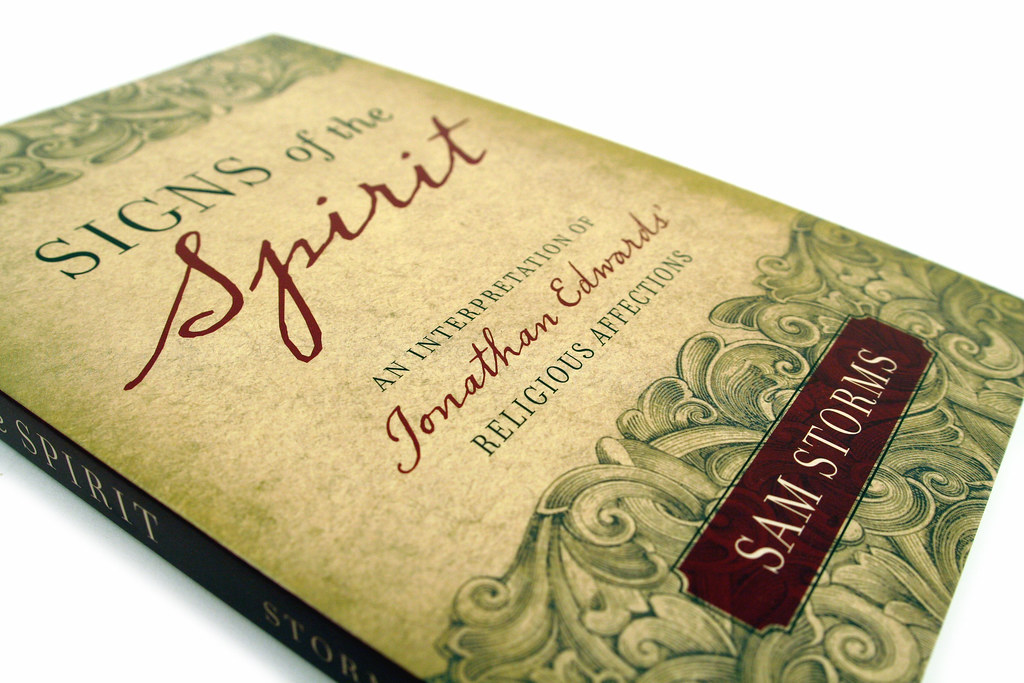
Signs of the Spirit by Sam Storms

Book review
Signs of the Spirit by Sam Storms

Published in 1746, Jonathan Edwards’ Religious Affections remains the great masterpiece on biblical discernment. Edwards exposes the inner workings of the soul, using Scripture to make concrete the contrast between the fleeting affections of a hard hypocritical heart and the enduring affections of a softened and converted heart. The precise dissection of the soul in Religious Affections is one of the enduring characteristics of Edwards intellectual brilliance and a precision warranted from such delicate matters. But many contemporary readers (like this one) have found Edwards’ intellectual precision difficult to read.

In his new release, Signs of the Spirit: An Interpretation of Jonathan Edwards’ ‘Religious Affections’ (Crossway: 2007), Sam Storms has written an excellent guide through Edwards’ rich arguments. Storms is noted for his study of Edwards and has worked through the Religious Affections at least 10 times (p. 12).

But Storms is not enthralled with the genius of Edwards. He begins the book with clear, foundational biblical exposition and carries biblical proof throughout the entire work. Genuine discernment of the true work of God finds its basis in God’s Word, not Edwards. Storms’ careful biblical development deserves applause.

From here Storms builds a historical backdrop to Religious Affections and then defines affections, finally concluding that affections are the “warm and fervid inclinations that reveal the fundamental orientation of the human heart” (p. 44). Storms follows the design of Edwards in explaining the 12 signs that don’t necessarily authenticate the work of God in the soul and the 12 signs that do authenticate the genuine work of God in the soul. Genuine God-given affections are lit by the flame of God Himself, an enduring flame that displays itself in genuine love and admiration of God as He exists in His spectacular beauty. True religious affections will reveal themselves by causing us to hate sin and pursue Christ-likeness, driving our appetite for more of God and to pursue the sweetness in the Person and Work of Christ.

Edwards’ personal testimony of these religious affections comprise the final 80 pages.

Religious Affections is always relevant but especially in our day when “Christianity” is often defined by outward affiliations, church strategies, and cultural relevance. Edwards’ reminder to our era is that genuine Christianity is marked by a radical soul transformation. Christianity is not defined pragmatically by what it offers and what we get. More important than marketing Christianity as a list of exclusive benefits, Edwards understands that a true work of God begins with a vision of God in His unspotted glory and supreme majesty.

“We must, therefore, be careful that our primary joy is in God, as he is in and of himself, and not in our experience of God. That we have been made recipients of his grace and are enabled to behold his beauty is a marvelous thing indeed. But it is secondary and consequential to a recognition of God’s inherent excellency. What brings you greatest and most immediate delight: your experience of a revelation of Christ, or Christ revealed?” (p. 92)

Discerning this genuine work of God is essential for every generation of Christians, and Edwards’ timeless truth has now been made more accessible. But don’t misunderstand. If reading Religious Affections is climbing the face of Mount Everest, reading Sam Storms’ interpretation is climbing the rock wall at REI. There is a harness, air conditioning, engineered footholds and an attendant holding the rope, but you’ll still sweat.

Storms’ timing is excellent. Our generation needs Edwards to help us ground our discernment between the facade of inauthentic Christian profession and the genuine work of God in the soul.

“I doubt if there is a more pressing and urgent issue for the church today than determining ‘what are the distinguishing qualifications of those that are in favor with God, and entitled to his eternal rewards.’ Or to put it in other words, what is the nature of true spirituality and those features in the human soul that are acceptable in the sight of God?” (p. 37)

I think he’s right.

Title: Signs of the Spirit: An Interpretation of Jonathan Edwards’ ‘Religious Affections’
Author: Sam Storms
Reading level: 3.5/5.0 > moderately difficult
Boards: paperback
Pages: 238
Volumes: 1
Dust jacket: none
Binding: glue
Paper: normal
Topical index: yes
Scriptural index: yes
Text: perfect type
Publisher: Crossway
Year: 2007
Price USD: $15.99 from Crossway (includes free PDF)
ISBNs: 9781581349320, 1581349327

Finding Cross-centered books for children

Philip Ryken has issued a warning about new children’s books. This highlights the difficult challenge parents face in selecting books centered on the Cross (rather than terminating on ethics or the feats of David, Daniel, Joshua, Ruth, Peter, Paul, etc.). My wife and I have come to love two specific volumes that are both Cross-centered AND child approved. We highly recommend The Big Picture Story Bible (Crossway: 2004) as an easy-to-follow and well illustrated guide through the biblical storyline. And of course another family favorite is Caleb’s Lamb by Helen Santos (Reformation Heritage Books: 2005). Read our review from last year for more information.

Know of a good Cross-centered children’s book to recommend? Let us know in the comments.

Blessings, and have a great weekend worshiping our gracious Savior! Tony

Review: Shopping for Time by the girltalk bloggers

tsskare.jpgBook Review
Shopping for Time by the girltalk bloggers
Reviewed by Karalee Reinke

[Girltalk’s new book is tried, tested and now wears the TSS stamp of approval. I mean, how else would my wife – on her due date, caring for two young kids, under heavy online demands and married to Mr. Messy – send along a book review for Shopping for Time? Somehow she made the time to write this review and I can assume the girltalk bloggers had something to do with it. Here now is the inaugural appearance of my precious wife on The Shepherd’s Scrapbook. -Tony]

——-

With a baby due any day, I am acutely aware of the need to get everything done. From to-do lists, to shopping lists, to cleaning lists, there is an endless supply of tasks that threaten to create anxiety and steal my joy.
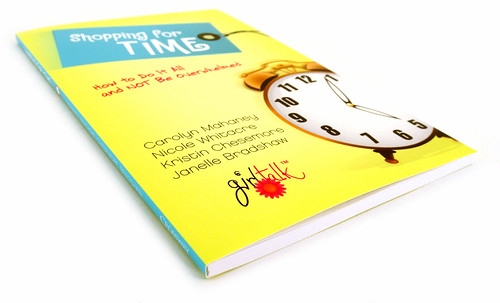
So I have been anticipating the girltalk bloggers’ newest book, Shopping for Time: How to do it all and not be overwhelmed (Crossway: 2007). It could not have arrived at a more opportune time. In the evenings after I pull my nesting instincts away from the washing and sewing machines, and after reading chapters from the “Holy God book” to my daughter (that is The Big Picture Story Bible) and a chapter from that “dangerous” book to my son, I have been greatly helped by the Mahaney women’s wisdom and practical advice.

At first glance, I had mixed feelings about the small size of the book (under 100 pages). My first thought was, ‘Awesome. I can whip through this thing in a night or two and cross it off my to-do list.’

(Strike one for pride and self-sufficiency.)

My next thought was, ‘Should I stuff it inside a large volume of John Owen, so Tony will be impressed as we sit up and read at night?’

(Strike two for pride and fear of man.)

After examining my heart and expectations for the book, and after praying for God’s help to “open my eyes” to the truth of His word (Ps 119:18), I opened the cover, ready to receive all that He would teach me. And not surprisingly, my initial impressions were quickly changed.

While short, easy-to-read, and entertaining, this book is not intended to be rushed. With God’s help, I found it most helpful to read one chapter at a time, allowing time to reflect and meditate on the content.

The tone is chatty and conversational, what we have come to expect from the girltalk blog. The introduction opens around the table during Friday lunches together at the Mahaney home. Although the idea of meeting together each week with a mom and sisters who are wise Christians (and wives of pastors!) is incredible; and although the picture of their Greek takeout meal is enticing, one phrase jumped out at me as nearly impossible:

“But we have also learned from God’s Word that it is possible to deal with life’s demands without becoming overwhelmed, miserable, and exhausted. We can surmount the numerous responsibilities that threaten to wear us down. More than that, we can actually do all that God has called us to do” (p. 13).

Sitting in front of my notebook-full of to-do lists, I was more than skeptical. I laughed out loud.

(Strike three for pride and lack of trust in God.)

After repenting of my Sarah-like doubt, and remembering that God alone has abundant grace, and He alone can do the impossible, I jumped back into the book with fresh zeal. Through each chapter’s “Shopping for Time” tip, God revealed His wisdom and care for busy women through the girltalkers’ example. Here is a brief outline, with a sampling from each chapter.

Chapter 1. Shopping for Time

The Mahaneys introduce the “Shopping for Time” theme by comparing our careful shopping habits with the lackluster planning we give to the time God has granted us here on earth. Seeing these priorities compared side-by-side is convicting, especially in light of the Scripture they use to motivate change: “Look carefully then how you walk, not as unwise but as wise, making the best use of the time, because the days are evil” (Eph. 5:15-16).

Chapter 2. The First Tip: Rise Early

Regular readers of the girltalk blog are familiar with the 5 AM club. Through a series of posts motivating women to rise early to seek God, they introduced a practice that frames the rest of this book: In order to effectively pursue the rest of the tips (and especially the second), the godly, effective woman will rise early to make the best use of her time. My favorite example is from a group of college women who describe their early-morning habit as causing them to be “more dependent on the Word of God, with hearts fixed on the Cross” (33). Now that’s a reason to set the alarm!

Chapter 3. The Second Tip: Sit Still

If a woman wants to make the best use of her time, she must do “the one thing necessary” – sit at Jesus’ feet (Luke 10:42). Yes, we heard from that other group of sisters, Mary and Martha, in this chapter, and were reminded of the great privilege we have to “sit at the feet of the Wonderful Counselor, Mighty God, Everlasting Father, and Prince of Peace and to listen to Him (Isa. 9:6)” (41). This is sound advice from four women who exhort in a godly way, steering clear of legalism and condemnation. Their Cross-centered advice is particularly helpful:

“… If you are discouraged or condemned by your failure to sit and listen, if you are ‘troubled by many things,’ revel in this truth: we have a Savior who died for our sins and it is His ‘blood and righteousness’ alone that makes us acceptable to God” (49).

Also helpful is their specific advice on “where to start,” and their kind encouragement for mothers with young children.

Chapter 4. The Third Tip: Sit and Plan

I have to admit, I am one who has always been a bit skeptical of personal retreats. Who has “time” for one? So it was particularly helpful for me to read the book’s quote from author Jean Fleming, who addressed my criticism directly:

“Some people tell me they feel uncomfortable with the idea of a personal retreat. After all, the needs around us are so great, the opportunities for service so compelling. How do we reconcile taking time away from the heat of battle when so much needs to be done? It is precisely because the needs are so great and life is so short that I take personal retreats. Retreat is the way to advance. I know this is true because of the way Jesus lived” (p. 64, italics mine).

Through the biblical references to our Savior’s example, my attitude on personal retreats was changed. With a helpful “sample retreat” included by the girltalkers, I’m ready to schedule one for myself. Perhaps I’ll have some quiet time in the hospital after the baby is born?

Chapter 5. The Fourth Tip: Consider People

With their grace-motivated love for others and joy-filled perspective on life, who wouldn’t want to be a friend of the Mahaneys? So you know their advice comes from personal experience when they share, “It’s important to choose friends carefully because friendships take time, and we want to make sure our time is wisely spent.” In looking at several types of friends and family, including friends who sharpen, friends who mentor, friends who need friends, friends who need salvation, and (ungodly) “friends” to leave, the girltalkers give advice and biblical counsel for each. They remind us that the Christian life is not only about how we walk, but with whom we walk; and that we need to spend time with the right people, for the right amount of time.

Chapter 6. The Fifth Tip: Plan to Depend

Before I read the final chapter and conclusion, I thought I was cruising along through the book just fine, checking the other tips off my list with a cursory review.

Then came a particularly challenging day.

From one “interruption” to the other, my carefully-planned to-do list remained virtually untouched at the end of the day. The laundry was sitting wet in the washer, the kids were cranky, and it looked doubtful that an edible dinner would come out of my cluttered kitchen any time soon.

That’s when the anxious thoughts and lies crept in to steal my joy:

“What if I go into labor tonight? My house is a mess!”

“If it’s so hard to get ‘everything’ done now, what in the world am I going to do when a new baby arrives?”

“How can I serve others when I can’t even serve my family?”

Later that night, after the kids were tucked away, my heart was still not right with God. The sun was long down, but I was still harboring anger over my incomplete tasks. Thinking I would “finish something, at least” I picked up the last chapter in Shopping for Time, and I was reminded afresh of God’s amazing grace to a sinner like me.

The last paragraph of the book cut to my heart, and I was able to repent of my anxious thoughts and turn in dependence to the Giver of all grace:

“…our biggest problem isn’t that we’re overwhelmed, miserable and exhausted. It’s that we are sinners, utterly incapable of pleasing a holy God and justly deserving of His wrath – no matter how well we spend our time…

This holy God, whom we have offended, does not treat us as our sins deserve. Instead, he sent his Son, Jesus, to earth to die a horrific death on a shameful cross for the likes of us. There our Savior solved our biggest problem: He died to save us from our sins. He absorbed the wrath of God that we deserved. And now, by His substitutionary sacrifice, we have been forgiven for our transgressions, reconciled to God, and clothed in Christ’s righteousness.

Isn’t it mind-boggling…to consider that we who were once condemned sinners can now, by the grace of God, live a life worthy of the gospel?” (p. 93).

In light of this glorious truth, there is a phrase from the book that has been appearing as a gentle reminder at the top of my to-do list each day:

“In the end, our highest goal each day is not flawless execution of our plans or increased productivity. It’s our relationship with God, walking in dependence upon Him throughout the day. We should not be more consumed with the completion of our to-do list than pleasing and glorifying the Savior” (90, italics mine).

As I begin another day as a “waddling time bomb,” not knowing if the end of the day will bring a completed task list or a new baby, I can walk with confidence in the God that supplies abundant grace. And I can thank the girltalk writers for their newest book, which has greatly encouraged me in that walk.

Title: Shopping for Time: How to do it all and not be overwhelmed
Authors: Carolyn Mahaney and her three married daughters: Nicole Whitacre, Kristin Chesemore and Janelle Bradshaw
Reading level: 1.0/5.0 > conversational
Boards: paperback
Pages: 96
Binding: glue
Paper: normal
Topical index: no
Scriptural index: no
Text: perfect type
Publisher: Crossway
Year: 2007
Price USD: $12.99 from Crossway
ISBNs: 9781581349139, 1581349130

The Cross and Civil Justice

tssflag.jpgThe Cross and Civil Justice
by Francis A. Schaeffer

“… The problem always was, and is, What is an adequate base for law? What is adequate so that the human aspiration for freedom can exist without anarchy, and yet provides a form that will not become arbitrary tyranny?

In contrast to the materialistic concept, Man in reality is made in the image of God and has real humanness. The humanness has produced varying degrees of success in government, bringing forth governments that were more than only the dominance of brute force.

And those in the stream of the Judeo-Christian worldview have had something more. The influence of the Judeo-Christian worldview can be perhaps most readily observed in Henry De Bracton’s influence on British Law. An English judge living in the thirteenth century, he wrote De Legibus et Consuetudinibus (c. 1250).

Bracton, in the stream of the Judeo-Christian world view, said:

And that he [the King] ought to be under the law appears clearly in the analogy of Jesus Christ, whose vice-regent on earth he is, for though many ways we are open to Him for His ineffable redemption of the human race, the true mercy of God chose this most powerful way to destroy the devil’s work, he would not use the power of force but the reason of justice.

In other words, God in His sheer power could have crushed Satan in his revolt by the use of that sufficient power. But because of God’s character, justice came before the use of power alone. Therefore Christ died that justice, rooted in what God is, would be the solution. Bracton codified this: Christ’s example, because of who He is, our standard, our rule, our measure. Therefore power is not first, but justice is first in society and law. The prince may have the power to control and to rule, but he does not have the right to do so without justice…

What the Reformation did was to return most clearly and consistently to the origins, to the final reality, God; but equally to the reality of Man – not only Man’s personal needs (such as salvation), but also Man’s social needs.

What we have had for four hundred years, produced from this clarity, is unique in contrast to the situation that has existed in the world in forms of government. Some of you have been taught that the Greek city states had our concepts in government. It simply is not true. All one has to do is read Plato’s Republic to have this come across with tremendous force.

When the men of our State Department, especially after World War II, went all over the world trying to implant our form-freedom balance in government downward on cultures whose philosophy and religion would never have produced it, it has, in almost every case, ended in some form of totalitarianism or authoritarianism.”

– Francis Schaeffer, A Christian Manifesto (Crossway: 1982/2005) pages 27-29.

[Summary: God does not act out of power alone, but rather His power is displayed in acting righteously according to His Law. Thus, we see the significance of the Cross and the character of God in a democracy where the law curbs the power of its rulers. Countries that do not grasp the justice of God revealed in Christ’s work on the Cross (justification) are prone to being ruled unjustly by those with the most power. We can thank God today for His Law and for His Son and for His declaration that those in His Son’s blood are free from guilt! He is both just and the justifier (Rom. 3:26). … Have a great 4th of July! … “For freedom Christ has set us free” (Gal. 5:1).]

Review: Doing Things Right in Matters of the Heart

Book Review
Doing Things Right in Matters of the Heart by John Ensor

tsslogo.jpgAmerican feminism and wimpy ‘masculinity’ have conspired to blur gender distinctions, making the biblical picture of marriage about as foreign in our culture as typewriter ribbons are to bloggers. The difficult task of communicating the biblical role distinctions of masculinity and femininity did not stop John Ensor from taking a shot in Doing Things Right in Matters of the Heart (Crossway: 2007).

Ensor is the director of Heartbeat International, and he establishes pregnancy help centers throughout the word. Seeing the effects of broken relationships and the consequences of romantic idolatry is his profession.

Let me say from the beginning, I’m not exactly certain the overall purpose or audience of this book. At times it reads as though it’s advice being given to already-married Christians, sometimes to those engaged, and at other times, advice for single men and women seeking to pursue a relationship. The content is broad enough to cover all audiences effectively. This is a must-read for any Christian pursuing or thinking of pursuing relationships.

The title is unclear as well: Doing Things Right in Matters of the Heart. Are the “Matters of the Heart” the heart as it relates to the pursuit of romance and relationships, or is “the heart” a reference to the seat from which our personal affections and motivations originate? A clearer title (or the inclusion of a subtitle) could have been more specific on its true emphasis — providing biblical wisdom for roles in marriage.

Enough of that. This book is wonderful for a number of reasons.

1. Ensor clearly defines biblical manhood and womanhood. His picture of marriage as couples figure skating is unforgettable:

In the Winter Olympics, figure skating events are the hottest ticket in town. Pairs figure skating has occasionally been the highest-rated event among viewers. At its best, it displays the strength and beauty, the power and grace, of true unity. The gold medal is awarded to the couple who has most mastered the skills of male leadership and female support.

He leads her onto the ice and initiates each part of their routine. She receives that leadership and trusts in his strength. His raw physical strength is more on display than hers; he does all the lifting, twirling, and catching. She complements his strength with her own – a more diminutive and more attractive strength of beauty, grace, speed, and balance. His focus as the head, or leader, is to magnifying her skills. Her focus is on following his lead and signaling her readiness to receive his next move. He takes responsibility for the two of them, and she trusts his leaderships and delights in it (p. 88).

The second half of the book is devoted to unpacking male leadership and female support. Chapters include titles like the following: he initiates … she responds; he leads … she guides; he works … she waits; he protects … she welcomes protection; he abstains to protect … she, to test; his unmet desire drives him toward marriage … hers is rewarded with marriage; he displays integrity … she, inner beauty; he loves by sacrificing … she, by submitting; he seeks his happiness in hers … she seeks hers in his; he is the primary provider for the family … she, the primary nurturer. These chapter titles just give a glimpse at the biblical, complementary roles of man and woman.

But the masculine/feminine distinctions are under serious attack in our culture. “Where gender differences are acknowledged, they are far from appreciated. Instead they are considered remnants of patriarchy that by nature are unjust and oppressive. All differences are considered imbalances, and imbalances must be corrected and made equal. Equal makes things fair. To be fair, masculinity and femininity must be deconstructed. A new androgyny must be created and then imposed” (p. 72). In chapter four, Ensor masterfully draws the distinctions between the two, showing God’s wisdom in creating us male and female and illustrates the fallout when things go amiss (see pp. 65-83).

2. Ensor balances gender distinctions within gender equality. “Men are apt to reduce women to playthings, at worst demeaning them as ‘bitches’ and forcing them into obsequious servitude. Any hope for doing things right in matters of the heart must begin with a clear appreciation for our equality of value and dignity as men and women created by God in his image” (p. 71). This equality comes in the Cross (1 Pet. 3:7; Gal. 3:28).

3. Ensor masterfully builds from biblical principles. Shakespearian quotes are peppered throughout, but it’s Scripture that saturates the whole. The architect of marriage is our all-wise God, and only in His wisdom do we find fulfilling marriage relationships, and so to His wisdom do we turn. No reader will close this book without being convinced that Ensor’s primary goal was to explain Scripture.

4. Ensor is unafraid to define and attack worldliness. “Sisters, if the only charm you have is your physical appearance, beautiful as you may be, you are foolish and will come to rue the day you scoffed at the value of inner beauty. You will find a man for whom physical beauty is also the main thing. What then happens as you age? You will grow more insecure with every birthday. In vain you will subject yourself to chasing cosmetics like a dog chasing a meat wagon. You will become one of the empty, frighteningly sad women who submit to face lifts, breast surgery, and Botox injections (if you escape the deadly grip of anorexia). By midlife, you will be popping antidepressants” (p. 127).

Conclusion

When it comes to finding Christ as one’s greatest joy in the context of relationships, this book could have been stronger and more consistent throughout (John 4:1-18 would have been a great addition to the first half of the book, especially in light of Ensor’s experience on page 28). But when it comes to readable and accessible definitions of the roles of husbands and wives in the bond of marriage there is (to my knowledge) no better book. Doing Things Right in Matters of the Heart is excellent and must rank in the top-10 best books of 2007 to date and a front-runner for the TSS Book-of-the-Year award.

Title: Doing Things Right in Matters of the Heart
Author: John Ensor
Reading level: 1.75/5.0 > popular level (very easy reading)
Boards: paper
Pages: 160
Volumes: 1
Dust jacket: no
Binding: glue
Paper: normal
Topical index: no
Scriptural index: no (would have proven very valuable)
Text: perfect type
Publisher: Crossway
Year: 2007
Price USD: $11.99 from Crossway
ISBNs: 9781581348422, 1581348428

John Newton: From disgrace to amazing grace

Book Announcement
John Newton: From disgrace to amazing grace
By Jonathan Aitken

Today I’ve decided to try something a bit different in our frequent book announcement feature. These book announcements are intended to bring your attention the new releases that look excellent but not necessarily are going to get a full review.

The new look of the book announcement is the product of watching my friends come over and pick through my library looking especially for highlighted and marked pages in my books and reading the comments I write in the back cover. So today I’m going to attempt something similar online by pointed out a few pages from a new book that I found especially interesting and will show you these pages using the online browsing feature from the publisher.

The book under the spotlight today is Jonathan Aitken’s excellent new biography, John Newton: From disgrace to amazing grace (Crossway: 209781581348484.jpg07). Although Newton’s life is worthy of the cinema, even biographies of the slave trader turned preacher of the Gospel are quite rare. This biography by Aitken is a special treat … So like when you take a stack of books to a comfortable chair in the back of Barnes and Noble and relax for a browse, I invite you to brew some coffee, relax and take a few moments to look through these selected highlights:

… Read the interesting background of the author and why it makes him especially suited to write this bio (page 13).

… The song Amazing Grace was originally written in hymn form so its rich theological truths could be easily remembered by a few lace-makers and farmers (read page 351).

… Read about the powerful impact George Whitefield had upon Newton in 1777 when Whitefield passed through Liverpool (pages 133-137).

… Read Newton’s encouragement and exhortations directed towards William Wilberforce that prevented Wilberforce’s retirement from politics. Wilberforce would become famous politically for his role in the abolition of slavery and we have Newton ‘s relationship to thank for this (see pages 314-317).

… Vivid pulled quote from Newton’s pamphlet, Thoughts Upon The African Slave Trade written in 1788 (on page 23). Being so familiar with the African slave trade and willing to talk about its horrors, it is no wonder Newton led such a powerful abolitionist movement himself.

… The introduction to Newton’s life (pages 17-24) and the epilogue of Newton’s life are especially good (pages 351-356).

Overall Aitken has written an excellent biography and will make for a great Summer read to marvel in the amazing grace of God. Highly recommended.

Title: John Newton: From disgrace to amazing grace
Author: Jonathan Aitken
Reading level: 2.0/5.0 > easy
Boards: hardcover (not cloth)
Pages: 400
Volumes: 1
Dust jacket: yes
Binding: glued (not sewn)
Paper: normal
Topical index: yes
Scriptural index: no
Text: perfect type
Publisher: Crossway
Year: 2007
Price USD: $21.99 from Crossway
ISBNs: 9781581348484, 1581348487