Humble Calvinism: (15) The Institutes > God is One (1.12)

02spurgeonhumcalvinism.jpg

Part 15: The Institutes > God is One (1.12)

We’re on a brisk walk through the 450 year-old Institutes of the Christian Religion by John Calvin to learn Humble Calvinism firsthand. Up to this point (and for a few remaining posts) we’re looking at Book 1: The Knowledge of God as Creator.01spurgeoncalvin1.jpg

Last time Calvin warned us against the idol factory of our minds. We are prone to venerate and honor images and symbols of God’s glory. The next chapter is a lengthy definition of the Trinity. But what connects Calvin’s arguments on idolatry in chapter 11 and the Trinity in chapter 13 is very simple: God is One. Before Calvin defends the nature of God in three Persons, he wants us to grasp the Oneness of God.

That God is One, is a theme throughout Scripture (1 Cor. 8:6, Eph. 4:6, 1 Tim. 2:5). Calvin is not so interested in a defense of God’s Oneness as he is of the implications of this Oneness. And there is a series of building consequences.

First, if God is one, His glory cannot be transferred to another. God’s glory must fully reside within himself. Calvin writes, “as often as Scripture asserts that there is one God, it is not contending over the bare name, but also prescribing that nothing belonging to his divinity is to be transferred to another” (117).

Taking some of God’s glory or honor or worship and transferring that to another person, place or thing is dangerous. Calvin writes, “unless everything proper to his divinity resides in the one God, he is despoiled of his honor, and the reverencing of him profaned,” and, “The glory of his divinity is so rent asunder (although stealthily and craftily) that his whole glory does not remain with him alone” (118).

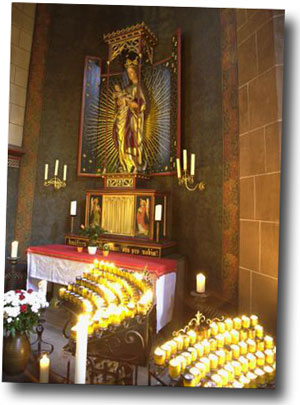
This leads to the next implication. If God is One, and His honor rests within Himself alone, then other displays of His glory are dangerous (as we saw in chapter 11). If God is One God and His glory is not shared with another, then there is no place for religious veneration given to images, dead saints, or religious leaders. All religious reverence and veneration is due to the One invisible God.

These conclusions force Calvin to see no distinction between Rome’s “honoring” God alone (latria) and “serving” images and saints (dulia). To serve or honor anyone or anything else is wrong. Calvin writes,

“the distinction between latria and dulia, as they called them, was invented in order that divine honors might seem to be transferred with impunity [without dishonoring Him] to angels and the dead. For is it obvious that the honor the papists give to the saints really does not differ from the honoring of God. Indeed, they worship both God and the saints indiscriminately, except that when they are pressed, they wriggle out with the excuse that they keep unimpaired for God what is due him because they leave latria to him” (118).

So is there a difference between religiously reverencing images and saints and reverencing God? No. Calvin understands any reverence towards anything but God is idolatry. He makes this argument from three texts.

The first comes in the context of Satanic temptations of Christ. We are told,

“Again, the devil took him to a very high mountain and showed him all the kingdoms of the world and their glory. And he said to him, ‘All these I will give you, if you will fall down and worship me [Gk. proskynëseis].’ Then Jesus said to him, ‘Be gone, Satan! For it is written, ‘You shall worship [Gk. proskynëseis] the Lord your God and him only shall you serve [Gk. latreuseis]’” (Matt 4:8-10).

Calvin understood the Greek word for “worship” [proskynëseis] — while it certainly can reference outright worship — it’s also used simply as a general word for “venerating,” “prostrating” or “honoring.” Satan was not asking for outright worship but “only a reverent kneeling” (119). But Jesus equates this reverent kneeing towards Satan [proskynëseis] with directly serving [latreuseis] Satan. This was objectionable because any religious reverence towards Satan – bowing, honoring, praising, serving — was wrong because all reverence and honor must be directed only towards the One God!

Two clearer illustrations follow. First, the Apostle John was chided for “reverently kneeing” towards an angel (Rev. 19:10, 22:8-9). Calvin writes, “we ought not to suppose John to be so senseless as to wish to transfer to an angel the honor due God alone. But because any reverential act that has been joined with religion cannot but savor of something divine, he could not have ‘knelt’ to the angel without detracting from God’s glory” (119). God’s Oneness forbids reverent kneeling towards angels.

The clearest argument is the account of Cornelius “reverently kneeling” to the Apostle Peter. “Whenhc112.jpg Peter entered, Cornelius met him and fell down at his feet and worshiped [proskynëseis] him. But Peter lifted him up, saying, ‘Stand up; I too am a man’” (Acts 10:25-26). Peter would not stomach veneration of anyone but God. Religious bowing to men was forbidden.

Calvin argues from Scripture that “reverent kneeling” is reserved for God alone.

So why all the higgle and haggle about Greek and Latin terms? Calvin is arguing that Scripture forbids all “reverent kneeling” towards religious authorities, angels, saints and images. Because God is One, God alone gets the kneeling, worship, praise and glory. Both the latria and dulia are His alone. Calvin reminds us that “we must not pluck away even a particle of his glory” and “whenever any observances of piety are transferred to some one other than the sole God, sacrilege occurs” (119-120). God is One.

For the purpose of illustration and contrast we return to the Roman Catholic catechism of 1992 to see if the reforms proposed by the Reformers were taken seriously. After earlier stating, “Through sacred images of the holy Mother of God, of the angels and of the saints, we venerate the persons represented” (1192) the catechism goes on to state, “The first commandment condemns polytheism. It requires man neither to believe in, nor to venerate, other divinities than the one true God” (2112). True, polytheism is dangerous. But the danger is much larger because idolatry extends to any sharing of God’s glory with others by keeling to Apostles, angels, images and all religious authorities. For Calvin the bottom line is this: God is One and sinners are inclined to take His glory and “distribute” that glory “among a great throng” (120).

Finally, some may grow restless with all this nitpicking talk about theology. You may recall Calvin began this chapter by reminding us that “the knowledge of God does not rest in cold speculation, but carries with it the honoring of Him” (116-117). Our relationship and piety rest squarely in properly understanding God through His Word.

Calvin was not opposed to idols because they contradicted his worship style, he opposed them as theological threats to genuine piety.

Humble Calvinism today …

1. Pluralism robs God of His glory.
Our culture tells us there are many ways and religions to God. This is precisely why to gain popular support presidential candidates must deny the authority of Scripture. If Scripture is true there is One God and there is only one way to this God, through the God-Man Jesus Christ. In our culture the temple built to pluralism is bustling with worshippers. However, God is One and He shares His glory with no other.

2. Be suspicious of your religious inclinations. Because of our sinful tendencies, all Christians need to be guarded against idolatry (1 John 5:21). Jesus chided the religious establishment of his day when He said, “Woe to you, scribes and Pharisees, hypocrites! For you build the tombs of the prophets and decorate the monuments of the righteous” (Matt. 23:29). Religiously devout sinners become idolaters by venerating the dead and richly adorning religious shrines. Jesus’ words are a good reminder for us today. But we should not point our finger at others too quickly. If the Scriptural warnings are correct, our own idols may already be in the kiln of our imagination.

3. Idols are crutches to worship. If I understand Calvin correctly, ‘Christian’ idols are anything from dead saints, statues, special crosses, paintings, icons or religious symbols that receive adoration and veneration. Supposedly the veneration of these icons is a method of worshipping God. If this is correct, idolatry hits close to home. In fact Calvinists may have their own set of idols. What if I can only worship God through hymns? What if I can worship best through contemporary music? What if the style of the service hinders your worship? What if the dress code of the preacher makes worship easier for you? If we can pinpoint what our worship rests upon, we can pinpoint our idols. Never should our worship ultimately depend on anything other than the gospel! I’m guessing about ninety-five percent of people leave churches because of their own personal idols. Five-percent go looking for more of the Cross.

4. The doctrines of the Gospel sufficiently fuel our worship.
We don’t need created things. Time and time again Calvin points us back to the teachings of Scripture. The Gospel alone is sufficient to turn our affections towards God. We do not need means and helps and crutches. We have confidence to enter into the presence of God because Christ died for our sins (Heb. 10:19-20). The invitation, merits and means to God are in the blood of His Son. So don’t bow in religious reverence towards men, statues, paintings, Apostles, angels or shrines on your way to God’s presence. Christ opened the way for you!

God is unseen Spirit, therefore do not worship Him through the visible, but in Spirit and Truth (John 4:23-24). The precious doctrines of the Gospel are means of worshiping His justice, mercy, grace and kindness! When sermons, worship and fellowship center on the Gospel, images become worthless and worship styles become trivial.

————————–

Click here to access previous posts in the Humble Calvinism index.

————————–

Humble Calvinism: (14) The Institutes > The idol factory (1.11)

02spurgeonhumcalvinism.jpg

Part 14: The idol factory (1.11)

How do we know God? We know God’s glory through His creation, and even more specifically through His special revelation in the Word of God. Trying to take the biblical God and reduceplasticidol.jpg Him into an image or statue is idolatry that distorts the true God.
In chapter 11, Calvin reminds us that all images of God teach us false things about God. We must watch carefully that a supposed image of God – or any image for that matter – does not replace the doctrines of the Cross of Christ. But Calvin will broaden his definition of idolatry to include statues of biblical characters and saints and even to the myriad of crosses and the crucifix so common in his time.

Here are some themes that emerge from this lengthy chapter:

1. All images teach. Calvin builds off Habakkuk 2:18 where we’re told images of God are “a teacher of lies.” Calvin writes, “whatever men learn of God from images is futile, indeed false” (105). Later, “all who seek the knowledge of God from these are miserably deluded” and “whatever knowledge of God is sought from images is fallacious and counterfeit” (105). Like any piece of artwork, an idol speaks a message to its audience. Trying to communicate God through fashioned images will only speak lies. God cannot be communicated through visible images.

It appears from this chapter that Rome believed images to be the books of the ignorant. Calvin agrees that images speak. But Calvin also knows that images of God only speak from our human conceptions about Him. Reliable truth about God does not come from our minds and into shaped wood, it comes only through Scripture.

2. All images falsely represent God. Calvin builds from the account of Moses reminding the people of Israel about their meeting God at Mt. Sinai. The passage is worth looking at here:

“Then the Lord spoke to you out of the midst of the fire. You heard the sound of words, but saw no form; there was only a voice. And he declared to you his covenant, which he commanded you to perform, that is, the Ten Commandments, and he wrote them on two tablets of stone. And the Lord commanded me at that time to teach you statutes and rules, that you might do them in the land that you are going over to possess. Therefore watch yourselves very carefully. Since you saw no form on the day that the Lord spoke to you at Horeb out of the midst of the fire, beware lest you act corruptly by making a carved image for yourselves, in the form of any figure, the likeness of male or female, the likeness of any animal that is on the earth, the likeness of any winged bird that flies in the air, the likeness of anything that creeps on the ground, the likeness of any fish that is in the water under the earth.” (Deu. 4:12-17)

Moses knows the tendency of the human heart. Some Israelite would begin pondering how to encapsulate the Sinai experience in a statue of a man or bird or fish. But God did not present Himself in any visible form for the exact reason that no images be made of Himself! Moses reminds Israel (and by application he reminds us all) to “watch yourselves very carefully” because we are prone towards images as reminders of His glory.

God is invisible; therefore all representations of Him are false. Calvin reminds us that “God himself is the sole and proper witness of himself … God’s glory is corrupted by an impious falsehood whenever any form is attached to him,” and, “all who seek visible forms of God depart from him” because “God’s majesty is sullied by an unfitting and absurd fiction, when the incorporeal is made to resemble corporeal matter, the invisible a visible likeness, the spirit and inanimate object, the immeasurable a puny bit of wood, stone, or gold” (100-101). Calvin returns frequently to Isaiah for this concept (Isa. 40:18-20; 41:7, 29; 45:9; 46:5-7).

As we will shortly see, contemporary Roman Catholicism defends the veneration of images precisely because they supposedly turn adoration towards God. This is wrong for the same reason praying to a gold replica of a burning bush in your living room dishonors God. A true knowledge of him – the theme of book one in the Institutes – is to come to Him through Scripture.

3. Images originate in the human mind. Our human minds are “a perpetual factory of idols” (108). As soon as sin entered the world, idolatry entered, too. Just shortly after the flood we know that even Abraham’s father Terah was an idolater (Jos. 24:2). Idolatry is pervasive because our minds imagine false things about God. In fact, “all we conceive concerning God in our own minds is an insipid fiction” (103). Once the image is conceived in the mind it’s birthed in wood. Calvin writes, “man tries to express in his work the sort of God he has inwardly conceived. Therefore the mind begets an idol; the hand give it birth” (108).

For Calvin, the mind conjures an idolatrous understanding of God, then fashioned into wood, then adored and becomes an empty superstition. The danger of idolatry is not in carved images, but in the twisted minds that conceive of the images.

4. Idolatry springs from sincerity. Don’t think that people fashion idols because they think the idol alone is what is represented. Idolatry springs from a genuine desire to represent true divinity in the form of an image. This is true of the pagans: “we must not think the heathen so stupid that they did not understand God to be something other than stocks and stones” (109). Likewise, this is true of the Old Testament Jews: “In these images, nevertheless, the Jews were convinced that they were worshipping the eternal God, the one true Lord of heaven and earth” (110). This sincerity makes the adoration of images and pictures a significant danger in the church.

The 1992 Roman Catholic Catechism states, “Religious worship is not directed to images in themselves, considered as mere things, but under their distinctive aspect as images leading us on to God incarnate. The movement toward the image does not terminate in it as image, but tends toward that whose image it is” (2132). But this supposed sincerity is exactly the danger Calvin confronts. Idolatry appears to sincerely point others towards God, but in reality the images point others only towards twisted human conceptions of Him.

5. Embrace art. Calvin is not saying art and adornment are useless. He loves art. But he warns us that “only those things are to be sculpted or painted which the eyes are capable of seeing” (112). He seems to even agree that painting historical events are useful in teaching. Does he here mean biblical events I cannot tell. He is certainly against racy statues supposedly drawn from biblical accounts and against the veneration and adoration given to any representation. There is a place for artistic expression in teaching.

6. Strong doctrine guards against idolatry. For the first four centuries of the church as “religion was still flourishing, and a purer doctrine thriving, Christian churches were commonly empty of images” (112; cf. Turretin, Elenctic, 2:57-60). As soon as images were installed in churches they led to idolatry, “For men’s folly cannot restrain itself from falling headlong into superstitious rites” (113). The doctrine of the Cross is our instruction. Sinners are driven towards images and idols only when the doctrines of the Gospel are not made clear. “But whence, I pray you, this stupidity if not because they are defrauded of that doctrine which alone was fit to instruct them?” (107). Indeed it is a good reminder that when crowds gather around icons and symbols that they arrive only because the true gospel has been withheld. Calvin says it so well,

“What purpose did it serve for so many crosses – of wood, stone, silver, and gold – to be erected here and there in churches, if this fact had been duly and faithfully taught: that Christ died on the cross to bear our curse, to expiate our sins by the sacrifice of his body, to wash them by his blood, in short, to reconcile us to God the Father? From this one fact they could have learned more than from a thousand crosses of wood or stone” (107).

Remember Calvin in this part of the Institutes is telling us how we can know God. Time and time again Calvin points us back to Scripture as the only sure guide to know Him. When the message of the Cross is gone, the vacuum it creates fills in with images and superstitions. Resorting to visual images in worship is a sure sign that the message of the Cross is no longer central. This is the big danger.

In all of this, it’s clear that Calvin sees venerated religious images as the fruit of idolatrous minds and the adoration and veneration of the icons, statues, and special crosses as nothing other than “fornications with wood and stone” (111). Beware of the “image fighters” who think Christian devotion rests upon paintings, crucifixes, statues and special crosses (116). Seek the display of God’s glory in his Word alone. Life comes by the faith in the Cross not the sight of crosses.

Calvinistic meditations …

1. The most ignorant are the most susceptible. If images are the books of the ignorant, we are especially susceptible to errors when it comes to our ministries towards the ignorant. I see arcicons.jpg special danger in children’s ministries when we try and communicate everything through images. We can teach through images – it seems Calvin defends this practice – however we must beware of venerating images and using them to replace the teachings of Scripture. “Therefore watch yourselves very carefully.”

2. Icons are most necessary when the preaching of the gospel has been made unnecessary. Calvin is so clear here. Are our churches adorned in images and pictures representing our conceptions of God or adorned with the preaching of the Cross of Jesus Christ? A sure sign of idolatry is the use of superstitious rituals. As Calvin reminds us from church history, we will not bow and adore images if the preaching of the gospel is strong. When preachers move away from the content of Scripture in sermons they move towards their own mentally carved image of God. Idolatry precedes the injection mold. “Therefore watch yourselves very carefully.”

3. Idol worship seems sincere. We frequently scoff at pagan nations that worship a big statue of a bald and fat guy sitting cross-legged. But we forget that all idols are intended to point others beyond wood, stone and gold. Sincerity does not eliminate the danger of idolatry. Theologian Charles Hodge once wrote, “idolatry consists not only in the worship of false gods, but also in the worship of the true God by images.” Even if we seek to worship the true Living God through images, we will quickly begin worshiping the image itself. “Therefore watch yourselves very carefully.”

4. Our sinful mind is the idol factory! We frequently think of idolatry in terms of wood, stone, metal or plastic. But true idolatry is first conceived in our mind and then birthed in our hands. Sinners must first imagine a “jesus” who doesn’t really care about sin and who does not judge sinners before we forge a hippie-looking plastic “jesus.” The problem is not in the plastic injection mold; the problem is in the wrong theology that informs such an image. A plastic “jesus” removes all fear of Jesus’ majesty and holiness. Such an error is birthed in the mind from false theology. In reality we don’t need wood, stone, and statues to express our idolatrous minds. Idolatry is fully expressed by false images of God conceived in our thoughts and sermons. “Therefore watch yourselves very carefully.” [See chapter four in Knowing God by J.I. Packer.]

5. God saves sinners out of idolatry. Amazingly, God saves religious men. He saved me after 22 years of ‘faithful’ religion. He saved Saul the religious zealot. He saved Abraham out of a family of idol worshippers. Paul wrote, “For they themselves report concerning us the kind of reception we had among you, and how you turned to God from idols to serve the living and true God” (1 Thes. 1:9). Idolatry — that is, to have misunderstandings about God — is very religious. Even today, God’s sovereign power must break into the lives of idol worshippers. He comes, not as a relic to be kissed, but as the Living God who comes in power to confirm the authenticity of Scripture as the only true testimony of Himself.

That’s what is so amazing: It really takes the power of sovereign grace to break into the dead heart of religious, idol-worshipping sinners.

————————–

Click here to access previous posts in the Humble Calvinism index.

————————–

Lawson > The importance of Calvinism

“The great Princeton theologian Benjamin Breckenridge Warfield, writing more than a century ago, perceptively noted, ‘The world should realize with increased clearness that Evangelicalism stands or falls with Calvinism.’ At first glance, this stunning statement may appear to be an exaggeration, even hyperbole. But the more it is weighed, the more one discerns that evangelicalism – that part of the body of Christ that rightly adheres to the inerrancy of Scripture, the total depravity of man, and the sovereignty of God in all aspects of life – always needs the doctrines of sovereign grace to anchor it to the high ground. For without the theological teachings of Reformed truth concerning God’s sovereignty in man’s salvation, the church is weakened and made vulnerable, soon to begin an inevitable decline into baser beliefs, whether she realizes it or not.

Whenever the church becomes increasingly man-centered, she begins the downhill slide, often without recovery, and always to her detriment. Once yielding the high ground of Calvinism, a self-absorbed church puts its full weight onto the slippery slope of Arminianism, resulting in a loss of its foundational stability. Tragically, however, the descent rarely stops there. Historically, man-centered doctrine has served only as a catalyst for an even greater fall.

Rappelling down the slippery slopes of Arminianism, one is soon to find the church sinking deeper and deeper into a murky quagmire of heretical ideas. Such a descent inevitably gives way to liberalism, the utter rejection of the absolute authority of Scripture. From liberalism – given enough time – the church always plunges yet lower into ecumenism, that deadly philosophy that embraces all religions as having some part of the truth. Continuing this downward spiral, the church plummets into universalism, the damning belief that all men eventually will be saved. Yet worse, universalism gives way to agnosticism, a degenerate view that one cannot even know whether there is a God. Finally, the church falls into the deepest abyss – the hellish flames of atheism, the belief that there is no God.”

Steven J. Lawson, A Long Line of Godly Men, Vol. 1, Foundations of Grace 1400 BC – AD 100 (Reformation Trust/Ligonier: 2006) p. 22.


Title: A Long Line of Godly Men; vol. 1, Foundations of Grace 1400 BC – AD 100
Author: Steven J. Lawson
Boards: hardcover
Pages: 577
Volumes: first of projected 5 volumes
Dust jacket: yes
Binding: Smyth sewn
Paper: normal
Topical index: no (publisher should consider this in future volumes)
Scriptural index: yes
Text: perfect type
Publisher: Reformation Trust, Ligonier Ministries
Year: 2006
Price USD: $28.00
ISBNs: 1567690777

Book review > Chosen for Life by Sam Storms (1581348436, 9781581348439)

Book review
Chosen for Life
by Sam Storms

One of the best defenses of the sovereign election of God in salvation comes from the pen of Sam Storms in his classic book, Chosen for Life: The Case for Divine Election. Crossway just released the revised and expanded version, 20 years after it was first published by Baker.

Chosen for Life is a humble and deeply biblical look at the controversial subject of God’s sovereign election of sinners. Storms excels at incorporating illustrations that make the concepts easy to comprehend for those who are new to the discussion.

While there are many books on the doctrine of election, (to my knowledge) no others emphasize God’s unmerited delight in His chosen! That’s right, God delights in the elect. Building off Ephesians 1:11-18, Storms writes,

“God didn’t predestine us unwillingly, grudgingly, or reluctantly. He wanted to do it. He delighted to do it. God has an emotional life. There is immense and unfathomable complexity in his feelings: He delights in some things, and despises others. He loves and hates. He rejoices and judges. Choosing hell-deserving sinners to spend an eternity with him as his beloved children is uniquely joyful and pleasing and delightful and exciting and satisfying to the heart of God! … God not only delights in the act of election, he also delights in the objects of election: us! … God wants us to fully understand and grasp and experience what we are to him! But note well: the glory and honor of being elect is not why we are elect. Rather, there is glory and honor because we are elect. Election bestows glory and honor, but is not based upon it” (p. 188, 191-192).

What Humble Calvinists we would become if we truly grasped this concept. God rejoices over us and exults over us with loud singing (Zeph. 3:17)! He delights in His elect. If you were elected by God, His heart rejoices, delights, is excited and satisfied over you.

But we are totally depraved sinners deserving only of God’s wrath?!? Yes, but God delights. Never does God delight in us because we are delightful. He delights in us because He has freely chosen us. We are the depraved prodigal son, God is our father who lavishes unmerited righteousness, joy and delight over us (Luke 15:11-32).

Few truths will better encourage us, help us to battle the sin of condemnation in our hearts, focus our corporate worship upon God’s grace or truly bring humility to our hearts. God sings over me. Amazing truth!

If you are opposed to Calvinism or if you’ve been a Calvinist for 50 years, this book will be a great challenge and encouragement. Even better it will stir your affections because Chosen for Life is really a wonderful book about the motives and character of our great electing God!

Title: Chosen for Life: The Case for Divine Election
Author: Sam Storms
Boards: paperback
Pages: 237
Volumes: 1
Dust jacket: no
Binding: glue
Paper: normal
Topical index: yes
Scriptural index: yes
Text: perfect type
Publisher: Crossway
Year: 2007 (expanded from 1987 Baker ed.)
Price USD: $17.99 / $12.99 at CBD
ISBNs: 1581348436, 9781581348439

————————–

Click here to access previous posts in the Humble Calvinism index.

————————–

Humble Calvinism: (13) The Institutes > Experiencing God (1.10)

02spurgeonhumcalvinism.jpg

Part 13: Experiencing God (1.10)

00spurgeoncalvin99.jpgWe continue progressing through Calvin’s Institutes by investigating the question “How can we know anything about God the Creator?” Many of us forget about the wonder of this question. It’s by God’s grace that He reveals Himself to us.

Later we will tackle the details about how we know God as our Redeemer (that comes in book 2). Up to this point we see that the knowledge of God is etched into our hearts and is made clear in the creation. However, we suppress this truth to preserve our own sinfulness, creating a wicker-basket god twisted by our own sinful opinions. We become totally blind to the true God. We need Scripture to clarify God, but not just because we need clarity. We need a radical transformation. God must first subdue us in our suppression of Him and He accomplishes this sovereign task by confirming His Word by the power of His Spirit.

In chapter 10, Calvin pauses for one brief thought. Just because we are blind to God’s working in creation, does Scripture totally override God’s revelation in the natural world? The answer is “no.” Scripture calls us to see the same working of God and draw the same conclusion as Creation.

Experiencing God

God’s created order was sufficient to draw all men to fear and trust in God. He chose to reveal Himself “more intimately and also more vividly” in His Word (96). So while our sinfulness blinds us to God in creation, Scripture does not give up on this goal. Scripture actually pushes us in the same direction the Creation did to see just how close God is to each of us!

To prove this, Calvin opens the following texts:

“The Lord, the Lord, a God merciful and gracious, slow to anger, and abounding in steadfast love and faithfulness, keeping steadfast love for thousands, forgiving iniquity and transgression and sin, but who will by no means clear the guilty, visiting the iniquity of the fathers on the children and the children’s children, to the third and the fourth generation” (Ex. 34:6-7) … “let him who boasts boast in this, that he understands and knows me, that I am the Lord who practices steadfast love, justice, and righteousness in the earth. For in these things I delight, declares the Lord” (Jer. 9:24).

God’s kindness, goodness, mercy, truthfulness and judgment are revealed in Scripture and confirmed in our experience of the world He created. Based upon these texts, Calvin can write, “Thereupon his powers are mentioned, by which he is shown to us not as he is in himself, but as he is toward us: so that this recognition of him consists more in living experience than in vain and high-flown speculation” (97). And later, “with experience as our teacher we find God just as he declares himself in his Word” (98).

Our experience confirms Scriptural witness of God. Every sinner experiences God’s character every day! We experience His goodness through the joys we feel; we experience His kindness in our unmerited prosperity and comforts; we experience His mercy in this life, knowing that we fully deserve death for our sinfulness; we experience His truthfulness in a world governed by absolute truth; and we experience His righteousness and judgment when wicked sinners hang from Iraqi gallows.

Scripture resumes where creation left off: In reminding us that we experience God every day. Scripture is no “high-flown speculation” about God, but confirms our own experiences.

The goals: Fear and trust

The goals of creation and Scripture are the same. “Indeed, the knowledge of God set forth for us in Scripture is destined for the very same goal as the knowledge whose imprint shines in his creatures, in that it invites us first to fear God, then to trust in him” (98).

The goal of Scripture and creation are not intellectual persuasion, but fear and trust. Calvin is not content with revelation that does not bring us to our knees as fearful sinners submitting to a holy and sovereign God. All of God’s revelation is pointing us towards true piety.

So every sinner experiences God, but we are blind to His work because of our sinfulness. Scripture comes along to illuminate these experiences as the work and character of God. We should have caught on to this merely through the created order. But in our sin, we needed special revelation from God to break into our lives and give sight to our blindness.

Calvinistic meditations …

1. God’s character is contextual in every age. Calvinism is deeply contextual, concerned with how sinners come to know God. Here Calvin directs those of us who seek to reach a world population that grows ever secular and non-Christian. We don’t need gimmicks, we need Scripture. We need to show that when sinners live in a warm house, wear comfortable clothes and have all the food they need to live each day that they experience the goodness, kindness and mercy of God. As I said earlier when talking about general revelation, God does much of the contextualizing for us. He created trees so we can walk up to the atheist sitting against its trunk smoking a pipe and reading philosophy and ask his where the tree came from. We both know what a tree is and we both know the tree is alive. But only I know where the life of the tree originated zillions of years ago, in the God who is the Eternal Life source. And so here Calvin reminds us that we all experience God’s kindness, goodness, mercy, truthfulness and judgment. Sinners need to hear about the God who originates this kindness, goodness, truthfulness and justice. So to preach the Word of God is to contextualize. By God’s grace, sinners can see the authenticity of the biblical God through their own life experiences. This means preachers and evangelists need to be aware of the character of God in daily life, and grow ever confident in God’s message to do its work. More about that later.

2. Our vision of God’s activities is restored in sanctification. Recently I had the privilege to preach on the nature of man (see lesson 701. The Nature of Man). I discovered a theme throughout the biblical storyline: Being made in the perfect image of God enables men and women to live in face-to-face communion with God. Adam and Eve, before the fall, enjoyed communion with God as He walked in a garden in the cool of the day (Gen. 3:8). That’s not how Isaiah and Moses experienced the presences of God! Sinners – even redeemed sinners – cannot see God face-to-face. Maybe if God is gracious we see a glimpse of the backside of God – but only from the distant safety of a nuclear bomb shelter (Ex. 33:17-23). So in regeneration and then in sanctification God begins restoring the perfect image of Himself in us. Our hope is that one day the image of God will be perfectly restored when we see Jesus face-to-face (1 John 3:2). Only as that image is restored are we are fitted to see God’s glory. This explains why the most mature Christians are the most sensitive to the character of God in the world. They have eyes being prepared to see God’s glory. So when you read in Scripture that God is revealed all over Creation but you don’t see it, trust in God. If you are his child, He is restoring that image in you so you can see more of His glory in the world. “For now we see in a mirror dimly, but then face to face” (1 Cor. 13:12). God helps us see His glory less dimly as we work out our salvation with fear and trembling.

3. Experience God.
Being a Humble Calvinist is to daily experience the character of God. We hear His voice and we taste His goodness and kindness (Heb. 3:15, 4:7, 1 Pet. 2:3, Ps. 34:8). We should grow ever sensitive of the connection between the God of Scripture and our daily experience of Him. If we do not cultivate this, our preaching and evangelism will fail to incorporate this divine sensitivity into our contextualization of the gospel in the world. Our secular cultures demand that we experience God and grow ever sensitive to His character revealed in the world.

————————–

Click here to access previous posts in the Humble Calvinism index.

————————–

Packer: Humble Calvinism and evangelism

Packer: Humble Calvinism and evangelism


“So far from making evangelism pointless, the sovereignty of God in grace is the one thing that prevents evangelism from being pointless. For it creates the possibility – indeed, the certainty – that evangelism will be fruitful. Apart from it, there is not even a possibility of evangelism being fruitful. Were it not for the sovereign grace of God, evangelism would be the most futile and useless enterprise that the world has ever seen, and there would be no more complete waste of time under the sun than to preach the Christian gospel.”

– J.I. Packer. Evangelism and the Sovereignty of God (IVP: 1961) p. 106. ISBNs: 083081339X, 9780830813391