The Faithful Preacher by Thabiti Anyabwile (1581348274)

Book announcement
The Faithful Preacher
by Thabiti Anyabwile

Talking about the faith with my African-American pastor friends are some of the more awkward conversations I experience. We come from totally different backgrounds, with totally different perspectives, and that leaves very little common ground. So I am greatly encouraged to see blogger, pastor, and author Thabiti Anyabwile taking the time to address the nature and status of the black church in a series of blog posts titled, Can the Predominantly African-American Church Be Reformed? I have learned a lot about why my friends and I have a hard time discussion the nature of the church. These blog posts are interesting and engaging.

In seeking the reformation of the “predominantly African-American church” Anyabwile has also set out to present the lives of three black pastors. He does this in his new book from Crossway titled, The Faithful Preacher: Recapturing the Vision of Three African-American Pastors. The pastors highlighted are Lemuel Haynes (1753-1833), Daniel A. Payne (1811-1893) and Francis J. Grimké (1850-1937). The book contains one short biography of each man but is largely comprised of sermon transcripts.

Here is one short example from a sermon by Francis J. Grimké from 1919. Addressing the reconstruction of the damages done by World War I, he says,

“As a minister of Jesus Christ in this co-called work of spiritual reconstruction, I have nothing new to offer, nothing better to offer than I have been offering for the last forty years – the gospel of the grace of God in Christ Jesus; the taking of Christ’s yoke upon us and learning of Him; denying ourselves and taking up our cross daily and following Him through evil report as well as good. Others may have something new, something better to offer, but I have not, and I have no disposition to seek for anything else or any desire to offer anything else. So far as the world has been saved, the gospel preached and lived is the only thing that has saved it, and the only thing that will continue to save it” (p. 169).
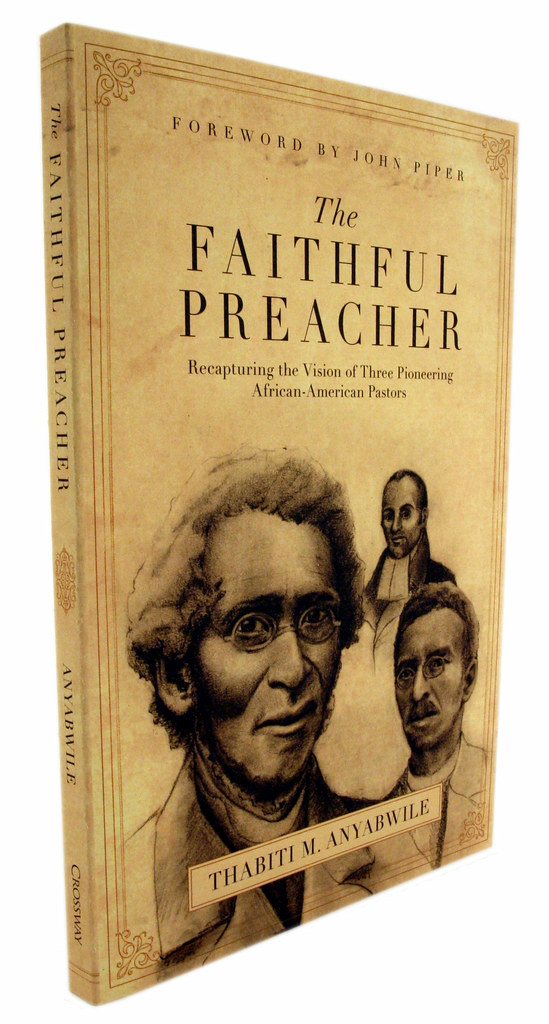
“They were Puritans,” Anyabwile writes of the three preachers. “They committed themselves to sound theology in the pulpit, theologically informed practice in the church, and theologically reformed living in the world.”

Thabiti Anyabwile is serving the greater church well by asking some hard questions but also – building from the lives and preaching of three African-American preachers – presenting a vision for black pastors to be radically Cross-centered. And that’s a vision predominantly white churches can learn from, too.

——————

Title: The Faithful Preacher: Recapturing the Vision of Three African-American Pastors
Reading level: 2.0/5.0 > easy
Boards: paperback
Pages: 191
Volumes: 1
Dust jacket: no
Binding: glue
Paper: normal
Topical index: yes
Scriptural index: yes
Text: perfect type
Publisher: Crossway
Year: 2007
Price USD: $15.99
ISBNs: 1581348274, 9781581348279


Humble Calvinism: Series index

02spurgeonhumcalvinism.jpg

Humble Calvinism: Full series index

——————————–

“A world-class theologian, a revered exegete, a renowned teacher, an ecclesiastical statesman, an influential Reformer — he was all of these and more. His name was John Calvin.”– Steven J. Lawson, The Expository Genius of John Calvin

——————————–

Humble Calvinism > Full Posts

1. John Calvin (1509-1564)
2. Why John Calvin?
(Why Calvinism? Why now?)
3. The Institutes > Intro
4. The Institutes > Knowing God and knowing self (1.1)
5. The Institutes > The all-sufficient God of Scripture (1.2)
6. The Institutes > The implanted knowledge of God (1.3)
7. The Institutes > Weaving a wicker basket god (1.4)
8. The Institutes > ‘Radical’ depravity (1.5)
9. The Institutes > Clinging to a thread (1.6)
10. The Institutes > The self-authenticated Word (1.7)
11. The Institutes > Proofs of Scripture’s authenticity (1.8 )
12. The Institutes > The “mutual bond” of God’s power and Word (1.9)calvininstitutes.jpg
13. The Institutes > Experiencing God (1.10)
14. The Institutes > The idol factory (1.11)
15. The Institutes > God is One (1.12)
16. The Institutes > God is Three (1.13)
17. The Institutes > Viewing God’s Theater (1.14)
18. The Institutes > The Spirit’s Application of the Gospel (3.1)
19. The Institutes > What is Faith? Pt. 1 (3.2.1-5)

——————————–

Books

1. Humble Calvinism Essentials (Institutes and McGrath bio)
2. New book > Calvin: The preacher A good corrective by Lawson
3. Review > Sermons on the Beatitudes by Calvin
4. Review > Calvin’s Teaching on Job by Derek Thomas
5. Review > Chosen for Life by Sam Storms
6. Quote > The importance of Calvinism by Steven Lawson
7. Quote > Calvinism and the redemption of counseling
by David Powlison

(Tim Challies has made the world fully aware of my biblio-photographic nerdiness. Thanks Tim for the humility. I need more of it!)

——————————–

Misc. articles and posts

1. D. Clair Davis > “What’s so good about being a Calvinist?
2. Journaling > A Day in the Life of a Humble Calvinist

3. 2007 Banner of Truth Ministers’ Conference details
4. Bonar > The Humble Calvinist in the work of God
5. Packer > Humble Calvinism and evangelism
6. Calvin > The weight, beauty and comfort of the Gospel
7. Kuyper > This all-embracing predestination

——————————–

tssimagecards.gif

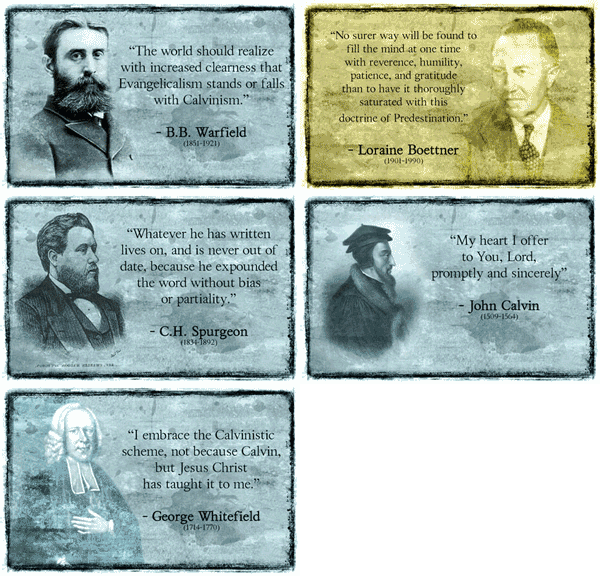
Humble Calvinism image cards: B.B. Warfield, John Calvin, Loraine Boettner, George Whitefield. Do you have a great Calvinism quote? Post it in the comments at the bottom of this post and it may become an image card.

——————————–

Reviews and notes

– The banner graphic was lifted straight from the creative minds of Sovereign Grace Ministries New Attitude group. Thanks for the graphic inspiration and the spiritual inspiration to live out humble orthodoxy! (2007.01.09)

02spurgeoncalvinsig.jpg

“Overlaying the Gospel”: Bonar on the temptation to be ashamed of the Gospel

“Overlaying the Gospel”: Bonar on the temptation to be ashamed of the Gospel

“The apostle so knew it, as to be able to say, ‘I am not ashamed of it,’ [Romans 1:16] — just as elsewhere, speaking of the cross, he says, ‘God forbid that I should glory, save in the cross of the Lord Jesus Christ’ [Galatians 6:14]. He was not ashamed of it at Jerusalem, or Athens, or Rome. Many things were there to make him ashamed of it — Jewish prejudice and Gentile pride. But these prevailed not. In spite of contempt and hatred, he held it fast.

We are apt to be ashamed of it. It looks weak, foolish, unintellectual, unphilosophical. It lags behind the age. It has become obsolete; or rather, it refuses to become obsolete. It is beginning to be supplanted by learning and eloquence. Men are apt to shun the gospel as a feeble, childish thing, that has done its work in time past, but is giving place to something higher, and more in accordance with the ‘deep instincts of humanity.’

There were some places in which the apostle might have been specially tempted to be ashamed of the gospel, or afraid of preaching it: at Jerusalem, for there the whole strength of Jewish ritualism rose against it; at Athens, for there it was confronted by the power of Grecian wisdom; at Ephesus, for there the dazzling subtleties of heathen magic rose against it; at Corinth, for there the torrent of human lust and pleasure rushed against it; at Rome, for there was the concentrated energy of earthly idolatry. Yet none of these things moved him. He was not ashamed of the gospel of Christ, though all that was intellectual, and eloquent, and sensual, and refined, and powerful in humanity protested against it, or mocked it as folly.

We are tempted in our day to be ashamed of the gospel. It is thought to be bare, unintellectual, almost childish, by many. Hence they would overlay it with argument and eloquence, to make it more respectable and more attractive. Every such attempt to add to it is being ashamed of it.”

Horatius Bonar, The Christian Treasury in The Life and Works of Horatius Bonar (CD-Rom, Lux Publications) pp. 828. (Posted with permission from publisher.)

Distressed by Culture

“While Paul was waiting for them in Athens, he was greatly distressed to see that the city was full of idols.” (Acts 17:16, NIV)

“His spirit was troubled and yet just a few verses later he walks into the Areopagus and proclaims the Gospel using the culture from which he came into and from which he was troubled. I think we need to have a troubled relationship with culture. It doesn’t mean – that because cultural relevance matters – that we just adapt culture without forethought or discernment. I think culture should disturb us. And the problem is that for many of us is that we are only disturbed by other people’s culture. I think there is part of our culture that should disturb us. There are sins and idols and hindrances and strongholds in our culture that ought to deeply concern us. So Paul’s spirit was troubled within him when he saw the city was full of idols … [But] context matters. The how of ministry is frequently determined by the who, and the when, and the where of ministry … If you are going to get the culture then part of the culture needs to trouble you. I’m concerned that for many right now in some emerging church circles that they are more troubled by the Gospel than they are by their culture. Brothers and sisters, I think we need to get troubled by the culture and rely on the Gospel.”

Ed Stetzer, from the third session of The Resurgence conference titled Breaking the Missional Code.

Reaching our cities with the Gospel


I think most pastors would admit that our churches can improve when it comes to reaching our community. Some of the most community-centered and creative ideas I see originate from the Acts 29 Network. Here in my home city of Omaha, NE the Acts 29 network planted a church East of 108th street, where Gospel-centered churches are quite rare (Core Community Church). Core ministers to the unfortunate, homeless and those wanting to learn English. They are doing tremendous work in the Eastern half of Omaha often neglected.

Recently I came across another impressive Acts 29 church: Oikos Fellowship in Washington. The church is producing an excellent monthly magazine for the lost of their city. As you will see the magazine is a creative way to gauge the local thoughts about Christianity and communicate the message culture needs (like Sinners in the Hands of an Angry God). The magazine also highlights local ministries. It appears all their writings, photos and graphics originated from their own people, too. You can download the August magazine here.

In a church culture often centered around programs for Christians, this ministry philosophy goes a long way, I think, in pressing the church from its comfortable weekly activities out and into the community.

Anyways, grace-centered props to Oikos Fellowship.

The overwhelming influence of the media and earnest preaching

We don’t live in the Stone Age or Bronze Age, our era is rightly called the Information Age. We are buried alive in books, blogs, emails, websites, magazines, etc. And so are the hearers of our sermons. So why is the message of the Bible more important than the latest war headline from CNN? The listeners to our sermons may not see a big difference between the two, especially as the Middle East is birthing the next world war and gas prices close in on $4 a gallon. And those seem to have more ‘real’ impact today on sinners then dangers of a spiritually loose life now and eternity to come. What is needed (no, required!) in the Information Age is earnest preaching. Long before blogs and websites John Angell James wrote the following:

“Will anyone deny that we want an earnest ministry to break in some degree the spell, and leave the soul at liberty for the affairs of the kingdom which is not of this world? When politics have come upon the minds, hearts, and imaginations of the people, for six days out of the seven, invested with the charms of eloquence, and decked with the colors of party; when the orator and the writer have both thrown the witchery of genius over the soul; how can it be expected that tame, spiritless, vapid common-places from the pulpit, sermons coming neither from the head nor the heart, having neither weight of matter, nor grace of manner; neither genius to compensate for the want of taste, nor taste to compensate for the want of genius; and what is still worse, having no unction of evangelical truth, no impress of eternity, no radiance from heaven, no terror from hell; in short, no adaptation to awaken reflection, to produce conviction, or to save the soul; how can it be expected, I say, that such sermons can be useful to accomplish the purposes for which the gospel is to be preached? What chance have such preachers, amidst the tumult, to be heard or felt, or what hold have they upon public attention, amidst the high excitement of the times in which we live? Their hearers too often feel, that listening to their sermons on the Sabbath, after what they have heard or read during the week, is as if they were turning from brilliant gas-light to the dim and smoking spark of tallow and rush [a candle].”

– John Angell James, An Earnest Ministry: The Want of the Times (Banner of Truth, 1847/1993) pp. 194-195.

“And I was with you in weakness and in fear and much trembling, and my speech and my message were not in plausible words of wisdom, but in demonstration of the Spirit and of power, that your faith might not rest in the wisdom of men but in the power of God” (1 Cor. 2:3-5, ESV).