C.J. Mahaney: “Trinitarian Pastoral Ministry”

Friday evening (4/13/07)
General Session #5
C.J. Mahaney: “Trinitarian Pastoral Ministry”

GAITHERSBURG, MD – The year 2007 will be remembered as an important year in the careful study of John Owen’s theology. With the recent release of Kelly Kapic’s Communion with God: The Divine and the Human in the Theology of John Owen (Baker: 2007) and the forthcoming release of Crossway’scj-mahaney.jpg retypeset edition of Owen’s Communion with the Triune God, I anticipate an increasingly balanced awareness of God as Father, Son and Holy Spirit. This beautiful Trinitarian balance of Owen was echoed and applied pastorally by C.J. Mahaney in the concluding address of the 2007 Sovereign Grace Ministries Leader’s Conference.

Mahaney began by cautioning pastors from allowing culture to define the model of ministry. The form and substance of pastoral ministry is defined by the character and work of the Triune God. The character and work of the Triune Godhead is displayed in the final verse of 2 Corinthians: “The grace of the Lord Jesus Christ and the love of God and the fellowship of the Holy Spirit be with you all” (13:14). Mahaney detailed each character and work of the Three Persons of the Godhead. The order here (Son, Father, Holy Spirit) seems to be ordered by our experience of Him.

“The Grace of the Lord Jesus Christ”

We first meet Christ. The Cross comes first. Paul never assumes the Gospel even up until the very last verse of 2 Corinthians. For Paul, everything comes back to the Gospel.

But to proclaim the grace of the Cross means we must proclaim sin. Proclaiming sin well – without concealing grace – takes a lot of work. Exposing sin is much easier than applying grace and exposing sin should never be done by men who cannot rightly apply grace. Grace is the message applied to sin. We can never take our eyes of Calvary. Once we lose sight of Calvary, we miss our path. In every sermon there will be a sighting of Calvary. That is Paul’s example in 2 Corinthians even as he confronts sin.

“The Love of God”

Secondly, the work of pastoral ministry is to convince others of God’s love, specifically God’s personal love for His children. Verbally and passionately position others to experience the Father’s love personally. Several other passages show the love of God in the salvation of sinners, “but God shows his love for us in that while we were still sinners, Christ died for us” (Rom. 5:8) … “See what kind of love the Father has given to us, that we should be called children of God; and so we are” (1 Jn. 3:1) … “Anyone who does not love does not know God, because God is love” (1 Jn. 4:8). The love of God is displayed in the Cross and in adopting sinners into His family!

It was the Father’s love that motivated the Cross. Christ died because God loved us! God initiated the Cross out of love. Sinclair Ferguson says, “We should almost think God loved us more than He loves His Son.” God persuades us of His love in the Cross.

To be right with God (justified) is a great thing, so too is being adopted by God the Father. Read Sinclair Ferguson’s Children of the Living God, J.I. Packer’s Knowing God (on adoption) and Trevor Burke’s Adopted into God’s Family: Exploring a Pauline Metaphor.

How do I leave my people on Sunday? Do they walk away with a deep sense of God’s love towards them?

“The Fellowship of the Holy Spirit”

There is a life of participation with the Holy Spirit. We are dependent upon the Holy Spirit and so we pursue His presence and His power with eagerness. We are called to grow, desire and pursue the power of the Holy Spirit as governed by the authority of Scripture. There is a tremendous breadth and diversity of this fellowship.

(It was at this point C.J. explained why he prefers the term “continuist” over “charismatic”). The power of the Holy Spirit is broader than the miraculous. We should understand the Holy Spirit in this broad diversity. In the Corinthian church, as evidenced in the two Pauline letters, there was a minimizing of some of the Holy Spirit’s work. The Corinthians held a fascination with the gift of tongues. And so on the list of gifts in 1 Corinthians 12:29 Paul places tongues last on the list of gifts. The spectacular does not happen every day and because of this we need to avoid the Corinthian error of being fascinated with some gifts and the minimizing of others. We need to celebrate the work of the Holy Spirit in its broad diversity without exaggerating the significance of one particular gift.

It’s important to become more perceptive to the work of the Holy Spirit in this diversity. For example, there is a proneness to placing authority in the prophetic gifts over Scripture. Beware of emphasizing one gift at the exclusion of the others.

The ultimate priority of the Holy Spirit’s work is to reveal the Savior and the blessings of the Gospel! The work of the Holy Spirit cannot be understood apart from the message of the Cross. As D.A. Carson writes, “To be spiritual is profoundly tied to the Cross.”

Conclusion

This final message from the Leader’s Conference left us with much for further meditation. The encouragement to work at presenting the Father in His love is a good challenge. It is easy to display God solely in His holy vengeance, so that for the Christian to think of Him as a loving, tender Father becomes (practically speaking) a foreign concept. I need to let my adoption by God capture more of my affection and experience, like the doctrine of justification has in the past. Mahaney’s statement that ‘exposing sin is much easier than applying grace, and exposing sin should never be done by men who cannot rightly apply grace’ continues to echo in my thoughts. It is a true statement and very humbling for this aspiring preacher. This message was a great challenge to define pastoral ministry within the balanced context of God’s Triunity.

I’m not sure who talks faster, C.J. or John Moschitta, so to get the full details I would once again suggest this message from the 2007 Sovereign Grace Leader’s Conference as worthy the sacrifice of a venti Americano.

Overall, the conference was an incredible experience. The content and structure of the breakout sessions and the general sessions were excellent. And to spend three nights being led in worship by Bob Kauflin, singing songs like “Before the Throne,” was certainly a glimpse into the eternal worship around the throne of the Lamb! Speaking of heavenly things, the bookstore was well-stocked and efficiently run. The conference carried an excellent blend of Bibles, theology, pastoral counseling, biography, children’s books and music. For me personally, the conference provided a great opportunity to grow closer to our friends who also traveled from Minneapolis and to see the generousness and loving care our church in Minneapolis continues to pour out on my wife and family! I can summarize the words of others, but trying to summarize the experience of the conference is really not possible. Thanks for reading the updates! -Tony

—————

Related 2007 SGM LC sessions:


1. 2007 Sovereign Grace Ministries Leadership Conference

2. R.C. Sproul: “The Holiness of God”

3. Rick Gamache: “Watch Your Devotional Life”

4. Mark Dever: “Watch the Past: Living Lessons from Dead Theologians”

5. David Powlison: “‘In the Last Analysis…’ Look out for Introspection”

6. C.J. Mahaney: “Trinitarian Pastoral Ministry”

7. 2007 Conference photographs

Mark Dever’s Canon of Theologians (Annual Reading Plan)

books.jpg

Thursday morning (4/12/07)
Breakout seminar #2
Mark Dever: “Watch the Past: Living Lessons from Dead Theologians”

GAITHERSBURG, MD – Being one who loves to read the books of dead theologians and preachers, Mark Dever’s session was a personal highlight. The point was to encourage us to broaden our theological and biographical reading to at least 12 different authors, each to be read for one month annually. Dever himself uses a yearly reading plan where he reads a specific author each month of the year (like Augustine in February). Then every April he moves on to John Calvin, reading a new biography or theological work. Each year the reading plan starts over.

For readers of the Together for the Gospel blog, this will sound familiar. On February 1, 2006 Dever wrote a short post titled “An apostolic agenda” outlining this very thing. On Thursday morning at the Sovereign Grace Ministries Leader’s Conference, Dever filled out the details.

Dever began with a lengthy quote from C.S. Lewis’ introduction to Athanasius’ On The Incarnation which outlines some reasons why old books are important. Lewis writes,

There is a strange idea abroad that in every subject the ancient books should be read only by the professionals, and that the amateur should content himself with the modern books. Thus I have found as a tutor in English Literature that if the average student wants to find out something about Platonism, the very last thing he thinks of doing is to take a translation of Plato off the library shelf and read the Symposium. He would rather read some dreary modern book ten times as long, all about “isms” and influences and only once in twelve pages telling him what Plato actually said. The error is rather an amiable one, for it springs from humility. The student is half afraid to meet one of the great philosophers face to face. He feels himself inadequate and thinks he will not understand him. But if he only knew, the great man, just because of his greatness, is much more intelligible than his modern commentator. The simplest student will be able to understand, if not all, yet a very great deal of what Plato said; but hardly anyone can understand some modern books on Platonism. It has always therefore been one of my main endeavours as a teacher to persuade the young that firsthand knowledge is not only more worth acquiring than secondhand knowledge, but is usually much easier and more delightful to acquire. …

The only palliative is to keep the clean sea breeze of the centuries blowing through our minds, and this can be done only by reading old books. Not, of course, that there is any magic about the past. People were no cleverer then than they are now; they made as many mistakes as we. But not the same mistakes. They will not flatter us in the errors we are already committing; and their own errors, being now open and palpable, will not endanger us. Two heads are better than one, not because either is infallible, but because they are unlikely to go wrong in the same direction. To be sure, the books of the future would be just as good a corrective as the books of the past, but unfortunately we cannot get at them.

With this introduction, Dever launched into his “canon of theologians.” He encouraged us to read on theological issues that are not a particular struggle at the time. Let the theologians talk about what they want to talk about. Dever then outlined his own personal reading plan.

The ‘canon of theologians’

JanuaryEarly church writings (1st-3rd centuries). Recommended reading: Many and various works and authors were mentioned like the Epistle of Dionysius, The Didache, Clement, The Martyrdom of Polycarp and the Penguin paperback, Early Christian Writings: The Apostolic Fathers (0140444750). When asked if he used the early church writings in his expositional research, he said ‘no.’ He is familiar with the Ancient Christian Commentary on Scripture but has not found them exegetically beneficial. [This helps answer an important question we asked earlier this year]. Dever’s use of the early church fathers is predominantly theological and historical.

FebruaryAugustine (354-430). The most influential extra-biblical theologian in the West. Recommended: City of God and The Confessions (Henry Chadwick edition). Dever’s disagreement: That the church is the conduit of salvation. “Augustine got it bad wrong on ecclesiology.”

MarchMartin Luther (1483-1546). Lessons learned: 1. Justification is by faith alone, all of sheer grace. Luther “cleanses the church from the barnacles of traditionalism.” 2. Luther’s boldness. Read biography Here I Stand. Recommended reading: 95 Theses and Bondage of the Will. You can read Bondage of the Will out loud to children and they will be engaged because of the vigorous prose and Luther’s name-calling towards Erasmus (Dever is very funny). Best bio being Here I Stand by Roland Bainton (0452011469).

AprilJohn Calvin (1509-1564). The greatest theologian of the Reformation period. Lessons learned: 1. God’s glory at the center of everything. The world is the “theater” of God’s glory. 2. Centrality of man’s depravity, shown especially in the heart’s perpetual idol production. 3. He was careful with Scripture. Calvin had a very rare combination of gifts that balanced the theological, linguistic, pastoral, and exegetical. 4. He filled both the offices of pastor and scholar. 5. The diligent training of his spiritual children even as he knew sending these pastors back into France would mean certain death [see the concept of “Calvin’s School of Death”]. Disagreements: That the state is responsible for the church. He confused the church and state, a distinction we take for granted today. Recommended: Sermons on the Ten Commandments, commentary on 1 Cor. 12-14, The Institutes of the Christian Religion and anything written by T.H.L. Parker. He does not recommend modern bios of Calvin and especially warned against McGrath.

MayRichard Sibbes (1577-1635). Lessons learned: 1. The tenderness of Christ. The Bruised Reed and Smoking Flax a great example of Jesus’ tenderness and it makes for a great read together with your spouse. Sibbes was able to point out evidences of grace very well. 2. “Diagnostic evangelism.” Sibbes continued to hold out the biblical truth of what a genuine Christian looks like and, by consequence, sorted out those who nominally professed faith. By authenticating the Christian life he naturally separated the sheep from the wolves and goats. He was clear that one’s salvation does not come through assurance but rather assurance comes from genuine salvation. Sibbes pointed those who were never converted to run to grace in the Cross. Disagreement: Infant baptism. Recommendations: Sibbes stuttered in his preaching so he kept his sentences relatively short and this makes him easier to read than his contemporaries. Start with the sermons in volume seven of his collected works.

June John Owen (1616-1683) and John Bunyan (1628-1688). John Owen is known for his argument on limited atonement in Death of Death. It’s a good book to scare Arminians, but there exist better exegetical ways to argue for limited atonement. Lesson learned: Linger with Scripture. “Diligent meditation reaps great rewards.” Dever especially recommends the Owen volumes by Kris Lundgaard (The Enemy Within and Through the Looking Glass) and those by Kapic and Taylor (Overcoming Sin and Temptation). … John Bunyan was a “pot-repairer with extraordinary preaching gifts.” Bunyan clearly expresses himself without the use of long, Latin sentences. His life was marked by a sincere pastoral concern. Recommended: Saint’s Knowledge of Christ’s Love, Grace Abounding to the Chief of Sinners (autobiographical) and The Pilgrim’s Progress. The Pilgrim’s Progress being a “great systematic theology” built around the “centrality of heaven.”

JulyJonathan Edwards (1703-1758). There are many lessons and warnings from the life of Jonathan Edwards. Lessons learned: 1. Diligent meditation. “Edwards can stare at an idea” and has “a powerful ability to think out and illustrate” that idea. An excellent example of this is Edward’s sermon The Excellency of Christ. 2. Edwards demonstrates a zeal for the purity of the church. 3. Understands the connection between his ministry and his congregation. In his Farewell Sermon, after Edwards was fired, he tells his congregation “I’ll see you before the throne.” Disagreements: 1. Infant baptism. 2. The logic of God’s centrality seemed a bit philosophical rather than always biblical. 3. He shows some pastoral carelessness especially with the “young folks’ Bible” controversy [see chapter 18 in George Marsden’s biography]. Nevertheless, Edwards demonstrates a powerful ability to think out and illustrate. Read his sermons and especially his sermon The Nakedness of Job which he wrote when he was 18 years old! As an interesting side note, Dever has preached an Edwards sermon to his congregation. On October 5, 2003 he took Sinners in the Hands of an Angry God, marked up the manuscript as he would his own and preached it. You can listen to the final product here.

AugustC.H. Spurgeon (1834-1892). Lessons learned: 1. Evangelism. Spurgeon preached the gospel from any and every text. “More than anyone else, I think of Spurgeon when I prepare my sermons.” Preach each sermon as though someone may be converted. 2. His life is filled with stories of God’s kindness upon his ministry. Read Spurgeon’s autobiography and be amazed at the stories. Spurgeon’s autobiography “may be the most fun thing to read apart from Scripture.” It will encourage you to see that we have a glorious God. 3. He had a lively faith. Spurgeon had “a heightened God-consciousness.” Even in the midst of a prolonged depression, Spurgeon shows that depression drives a faithful Christian to God. Read his Morning and Evening devotional.

SeptemberB.B. Warfield (1851-1921). “Warfield strengthens my faith.” Like John Calvin, Warfield had a wonderful mix of scholarship and piety. Disagreements include infant baptism and Presbyterian polity.

OctoberMartyn Lloyd-Jones (1899-1981). Not much in disagreement. Lessons learned: 1. Gave his life to preaching and lived confident in the power of God’s Word. 2. Deadly earnest. It was no light thing for him to preach. The pulpit was the “desk of God.” Recommended: Studies in the Sermon on the Mount, Preaching and Preachers, Spiritual Depression and his biography by Iain Murray.

NovemberC.S. Lewis (1898-1963) and Carl F.H. Henry (1913-2003). Because time ran short, Dever simply finished off his list of writers he reads in November and December without further comment or recommendation.

December – Contemporary authors like John Stott, J.I. Packer, Iain Murray, R.C. Sproul and John Piper.

Conclusions

This breakout session encourages me to pursue the study of the early church writers, although I’ve become more convinced that they will not prove as helpful in my expositional research and sermon preparation as others. It also encourages me to narrow my focus to a handful of great writers and focus attention on their writings each year. I’m in the process of creating my own “canon of theologians” for annual study.

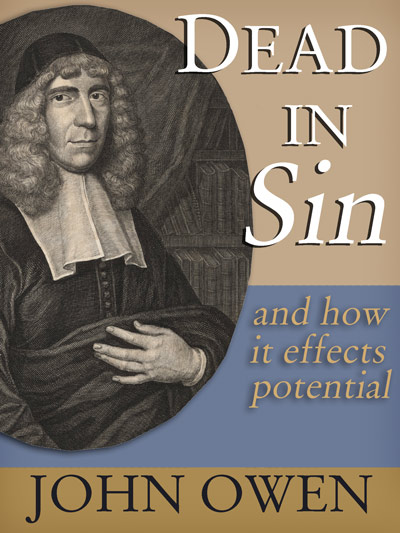
New John Owen title?

As Tominthebox has documented, John Owen’s works are on the verge of a popular swing. I’m certain Owen will be gaining millions of new readers with the new “Message” edition. In light of this amazing shift in contemporary publishing, I’m proposing a new Owen title that (no doubt) would be another blockbuster! A collection of quotes by Owen (modified into much shorter sentences) on the topic of sin within the pop-language of the day. Any takers?

johnowen.jpg

Communion with God by Kelly Kapic

Book announcement:
Communion with God: The Divine and the Human in the Theology of John Owen
Kelly Kapic

“I remember a time when a stereotype of the English Puritans as crude religious bigots held sway, and academic analysis and appreciation of their thought was virtually nonexistent. Accurate understanding of the magisterial Reformers was similarly at a discount, and the English translation of Calvin’s Institutes was out of print. But pendulums swing, and today the study of Reformation theology and of Lutheran and Calvinist scholasticism and of early European pietism and of the many-sided Puritan legacy has become a sizable cottage industry in academia’s larger world. Lecture courses, doctoral theses, journal articles, and printed books on the Puritans now abound, and the flow increases. Reissues of Puritan material constantly appear, and it is clear that more and more
Christians are coming to value this heritage. Some of us find that a very hopeful sign.

A cultural development in the West that has triggered some of this renewed interest in Puritan Christianity is our latter-day focus on experience, our longing for good experiences, and our awareness that experiences spawned by our sophisticated hedonism are mostly unsatisfying, not to say bad. Out of this has blossomed a fixation on personal spirituality, meaning a quest for self-discovery and self-transcendence, and this has led some to a fresh exploration of Christian spirituality―the theological, pastoral, communal, ethical, ascetic, doxological reality of communion with God in and through Jesus Christ in faith and hope and love. As a result, there is dawning a new appreciation of the supreme excellence in this field of Puritans such as John Bunyan, Richard Baxter, Jonathan Edwards, and John Owen.

Long regarded as Puritanism’s theological Everest, Owen was forgotten in the twentieth century until about twenty years ago. As Dr. Kapic’s bibliography shows, there have been some voyages around him, and some soundings of his thought on specifics, in recent years. None of these, however, come as close to Owen’s heart as Dr. Kapic himself does. For understanding, enjoying, and communicating communion with God was what Owen understood his life and ministry to be all about. His writings reveal him as not only an evangelical confessor and controversialist in the Reformed mainstream, but also as a Calvinist catechist, weaving in applicatory pastoral rhetoric at every point. Dr. Kapic coins the word anthroposensitive to characterize this aspect of his expository
method. It fits.

This is a landmark book in modern Puritan study, and it is a joy to commend it.”

J.I. Packer, Forward to Kelly M. Kapic, Communion with God: The Divine and the Human in the Theology of John Owen (©2007 Baker Academic, a division of Baker Publishing Group).

Communion with God by Kelly Kapic

Communion with God book details

For me no book has been more anticipated in 2007 than Kelly Kapic’s Communion with God: The Divine and the Human in the Theology of John Owen. It comes highly recommended from (among others) Joel Beeke and J.I. Packer. Kapic (PhD, King’s College, University of London) is associate professor of theological studies at Covenant College in Lookout Mountain, Georgia.

Baker is offering a 30-percent discount and Amazon is offering a 34-percent discount (making it $18.47). Monergism is now at 35-percent off. To download the publisher’s informational flier please click here. Also, a 50-percent discount is available for college and seminary professors. If you are interested, please email me with your position and school and I’ll send you more details (tony AT tonyreinke DOT com).

“This is a landmark book in modern Puritan study, and it is a joy to commend it.” – J. I. Packer

Terminating the Gospel on God

Terminating the Gospel on God
by Tony Reinke

Lord willing, if the 16-inches of snow expected in the Twin Cities holds off until tonight, I’ll be headed to the North Woods with some dear Christian brothers. It will be a weekend of fires, food, hiking, snowmobiles and (hopefully) millions of stars and the Northern lights. So a short post before I pack my hatchet, matches and camera.

Even coming into 2007, I eagerly anticipated that God would teach me many new things about communion with Himself. I cannot wait to finally get a copy of Kelly Kapic’s soon-to-be released, Communion with God: The Divine and the Human in the Theology of John Owen (Baker). And later this Winter Justin Taylor and Kapic will release Owen’s Communion with God in the same format as Overcoming Sin and Temptation last year (Crossway). Folks like myself are being stretched to capture the Puritan idea that our union with God drives our communion with Him. Discovering many contours of communion with God is my anticipation for 2007.

In The Pursuit of God, A.W. Tozer explained the danger of terminating on justification and thinking that union with God is the end of all things. Tozer writes, “We have been snared in the coils of a spurious logic which insists that if we have found Him, we need no more seek Him” (16). And earlier, “To have found God and still to pursue Him is the Soul’s paradox of love, scorned indeed by the too easily satisfied religionist, but justified in happy experience by the children of the burning heart” (14).

Recently another very helpful contour in this discovery came a quote from John Piper last Sunday at the Resolved conference in California. Here is the excerpt that grabbed my attention:

“I want God. Forgiveness just gets stuff out of the way between me and God. Forgiveness has value for one reason – it brings me to God reconciled. That’s what I want pastors to get to. I don’t want you to stop at justification. I don’t want you to stop at forgiveness. I don’t want you to stop at eternal life. I want you to push though all of those because the Bible does … ‘We rejoice in God through Jesus Christ, through whom we have received reconciliation’ (Rom. 5:11). But the point is we finally have gotten to the end and ‘we rejoice in God.’ Reconciliation is a means to the end of making God the Gospel! … We get out of the way everything that is an obstacle to enjoying God when we are forgiven. Take justification: ‘Therefore, having been justified by faith, we have peace with God through our Lord Jesus Christ, through whom also we have obtained our introduction by faith into this grace in which we stand; and we rejoice in hope of the glory of God’ (Rom. 5:1-2). That’s the point of justification. Who cares if we’re righteous? Do you want to be God? Is that why you want to be righteous? You want to boast in your righteousness? Why do you want to be righteous? … Because when you get righteousness you get God! You don’t get put in hell — you get God! … All the things we usually terminate on when we preach the Gospel we terminate one step early. We need in America a great awakening of radical God-centeredness … We need millions and millions of believers that are so oriented on ‘God as the Gospel’ they break through forgiveness to God, and through justification to God, and through reconciliation to God, and through eternal life to God.”

– John Piper, “God is the Gospel”, sermon (2007.02.18) 39:53-43:25

The warning that Piper and Tozer sound is a warning not to be a “too easily satisfied religionist.” We need to see that God, not justification, is the heart of the Gospel. I love books, and I love doctrine, and I love Calvinism, and I love the message of a God who covers sinners with His Own righteousness. I love these things! But all doctrines are intended to push us deeper into a relationship with Himself. Tozer was right when he wrote, “God waits to be wanted. Too bad that with many of us He waits so long, so very long, in vain” (17).

But reading books, biographies and diaries of men who followed hard after God is not communion. Spurgeon’s words challenge me here:

“My soul – never be satisfied with a shadowy Christ. … I cannot know Christ through another person’s brains. I cannot love him with another man’s heart, and I cannot see him with another man’s eyes. … I am so afraid of living in a second-hand religion. God forbid that I should get a biographical experience. Lord save us from having borrowed communion. No, I must know him myself. O God, let me not be deceived in this. I must know him without fancy or proxy; I must know him on my own account.”

To personally rejoice in God is the goal of the Gospel. Owen, Tozer, Piper and Spurgeon remind us that our spiritual vision is too small. We seek 15-minutes of prayer time when we should be asking to see more of God’s glory (Ex. 33:18), panting for more of Him (Ps. 42:1-2) and clinging tightly to Him (Ps. 63:8). That is communion.

So let the Gospel and Calvinism and all bible study and theology terminate in personal communion with Him. If we do, we’ll begin to understand what the Gospel is really all about.