“Beat the gospel into heads continually”

coke-machine

To a group of pastors in London, Tim Keller explained the inner workings of an old Coke machine in his Manhattan apartment building. After inserting the proper coinage, Keller explained, you must pound the side of the machine with your fist. After a couple of smacks the coins can be heard trickling down into the heart of the machine. A Coke falls into the bottom tray. Without beating the side of the machine, the coins don’t settle and the Coke will not fall.

Keller takes this metaphor into the pulpit. While preaching, he thinks of his audience as an assembly of Coke machines. His audience needs a little pound on the side of the head to get the truth of the gospel to sink into the heart and to produce spiritual fruit. He laughs when he says this, but the point is true.

Luther knew this centuries ago. He wrote,

“Here I must take counsel of the gospel. I must hearken to the gospel, which teacheth me, not what I ought to do, (for that is the proper office of the law), but what Jesus Christ the Son of God hath done for me: to wit, that He suffered and died to deliver me from sin and death. The gospel willeth me to receive this, and to believe it. And this is the truth of the gospel. It is also the principal article of all Christian doctrine, wherein the knowledge of all godliness consisteth. Most necessary it is, therefore, that we should know this article well, teach it unto others, and beat it into their heads continually.” *

I am thankful to God that I am surrounded by pastors, friends, and a wife who are skilled at swinging the gospel hammer. I’m always in need of it.

So who swings the gospel hammer in your life?

———

* Martin Luther, St. Paul’s Epistle to the Galatians (Smith, English & Co. 1860), p. 206.

Photo © RedMorris

Depression, Worldliness, and the Presence of God

Three years ago I was asked to preach Psalm 73 to the precious saints at Omaha Bible Church. This week I was asked to re-post it. Apparently the original audio file had become corrupted.

The original message is titled: “Depression, Worldliness, and the Presence of God.” My point was that our hearts are tempted towards depression when we envy the comforts and excesses of the ungodly (vv. 1-16). To help us out of depression—and protect us from it—we are reminded that God’s eternal judgment is near (vv. 17-23), and His presence is here (vv. 24-28).

It’s a rough message, and much of what I hear makes me wish I could re-preach it with what I now know about preaching. But alas, it is what it is. And for anyone interested, you can download the mp3 (21.7MB) or listen to the message here (47:26):

As always, I would benefit from your feedback.

15 Tools for Exegetical Research

I suppose most pastors reading this blog have a larger-than-average library of Christian books. But that does not mean you own every book you’d like to have, right? Raise your hand if you would like 15exegeticaltoolsto see your library doubled or tripled in size. And although I am personally blessed with a nice collection of books, I see many gaping holes in my basement library (I am weak in OT commentaries).
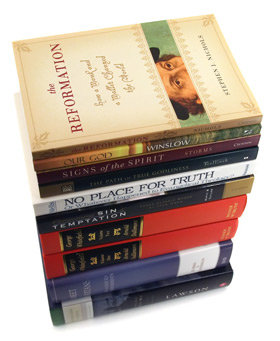
Despite their size, how do we best use our libraries in our exegetical research? Today I’ve attempted to assemble a number of places I go—some obvious and some perhaps less obvious—in my exegetical research.

I know there are many technically nuanced definitions of “exegesis.” However, here in this post I am very loosely defining exegetical research by the question, What have others said about my text?*

Now, some software programs will help you here. But assuming you don’t have a program on your computer, or if you are more comfortable with your printed books, or if you just want to better use the books you already own, there are a number of places to look for exegetical help.

My list of 15 useful tools for exegetical research:

1. Commentaries. What commentaries are available on my passage? I’ll begin with the most obvious. If you are a pastor you should have several biblical commentaries at hand. Technical exegetical commentaries are a great resource to better understand the original languages. Expositional and devotional commentaries will also help out. For example, on the epistle to the Ephesians I would consult Peter O’Brien (exegetical), Martyn Lloyd-Jones (expositional), and John Stott (devotional). BestCommentaries is an excellent website to find the best commentaries.

2. Grammar and syntax. What grammatical and syntactical particularities exist in my passage? I have just enough Greek to find my way around the more technical NT commentaries. But I have also discovered that Greek textbooks can provide a lot of help when studying a particular passage. Daniel Wallace’s Greek Grammar Beyond the Basics references thousands of NT passages, pointing to a host of grammatical anomalies that I might otherwise overlook.

3. Biblical theology. Where along the continuum of God’s unfolding plan of redemption does my passage sit? Very often in exegetical preparation I consult the scriptural indexes to the works of Geerhardus Vos, and especially his classic work Biblical Theology. Vos will help you see the development of Scripture. It’s rarely possible to understand a text of scripture without first understanding where it fits in the biblical storyline. This is the work of biblical theology.

4. Systematic theology. Does this passage play an important role in defining a particular doctrine? Consult the scriptural index in Calvin’s Institutes, Wayne Grudem, John Murray, Herman Bavinck, Concise Reformed Dogmatics, John Frame’s The Doctrine of God and The Doctrine of the Knowledge of God. Every couple of months or so I watch this video by Dr Derek Thomas to be reminded that when systematic theology is done well, you can preach it. Keep one eye on systematic theology as you study scripture verse by verse, and you may be surprised at how much doctrinal ground you can cover from the pulpit.

5. Creeds. Does my passage supply the biblical support for a particular doctrine defined and defended in the classic reformed confessions? Here I will consult the scriptural index of Reformed Confessions Harmonized by Beeke and Ferguson. I am surprised at the tonnage of biblical references underpinning the reformed confessions. Identify how your text has been used in church history. This discovery may shed light on the historical importance of your text, or open up new topical avenues for further study.

6. Apologetics. Does my passage help defend the Christian faith or inform the Church’s engagement of a fallen world? In seeking to engage non-Christian thought with scripture, it is useful to know which passages are most helpful in the dialogues and discussions. When studying a passage take a look at the scriptural index in books by guys like Cornelius Van Til, Greg Bahnsen, and Scott Oliphint and check if your text has been used and how.

7. Biblical counseling. Does this passage play an important role in any of my biblical counseling resources? Consult the scriptural index in CCEF books along with an electronic search of the CD-Rom version of The Journal of Biblical Counseling 1977-2005. In my research I heavily weigh any references to my text in solid biblical counseling resources. Guys like Powlison, Paul and Tedd Tripp, and Jay Adams will hold your hand and help you understand certain texts in light of marriage, parenting, specific sin struggles, and idols of the heart.

8. Ethics. Does this passage play a role in the study of biblical ethics? Consult the index in Joachim Douma, John Frame’s Doctrine of the Christian Life, and John Murray’s Principles of Conduct. What contemporary ethical issues does this passage address? Euthanasia, abortion, stem cell research, divorce, capitol punishment, pornography, corporate greed, etc.

9. Spurgeon. What did Spurgeon say about this text? While Spurgeon is no model of careful exegesis, he is wise, applicable, cross-centered, and quotable. You can find a list of his sermons arranged by biblical text here. And you can buy the complete works of Spurgeon on CD-Rom for about $20. Apart from flowers for your wife, there is no better reason to slap down an Andrew Jackson.

10. The Puritans. Have any of the primary Puritan authors preached on this passage? Consult Robert P. Martin’s A Guide to the Puritans and the PCA website of Puritan resources. Because of their trusted exegetical integrity, and because their complete works include a detailed scriptural index, I will individually consult the Works of John Owen, Thomas Goodwin, and Thomas Manton. I consult about a dozen Puritans, a list of which can be found in my Puritan Study series I developed a while back.

11. Jonathan Edwards
. Where has Edwards developed my text in his theology, books, and sermons? The new Works of Edwards Online website produced by Yale make a search of scriptural references a breeze (note the “Scripture Lookup” feature). And the resource is completely free. Try it for yourself.

12. Single-topic books. Is my text referenced in a topical book or monograph in my library? Here is where flipping through the scriptural index in any number of topical books will come in handy. Flip through the index in books by J.I. Packer, R.C. Sproul, D.A. Carson, John Piper, John MacArthur, Jerry Bridges, John Stott, etc. I think Knowing God by J.I. Packer could be quoted in half of all the sermons you could preach. Collect 10-30 topical books you really appreciate and use them in researching a particular text.

13. Audio messages
. Are audio messages available from respected preachers on my text? A wonderful, but often-untapped resource for exegetical research, are the thousands of free MP3 audio files available online. The Gospel Coalition has a wonderful collection of sermons all organized by scripture reference. As you are likely aware men like John MacArthur and John Piper have produced a wealth of sermons that are easy to locate. Occasionally you will find some gems at SermonAudio or Monergism.

14. Christian classics. What did Augustine or Chrysostom say about my text? Check out the Christian Classics Ethereal Library website. You can run a nifty little scriptural passage search of all their resources here. Always worth a look.

15. Google. For fun, throw a “hail Mary” and run a search string on your particular passage. You will not always find exegetical gems—but sometimes you will. Google search your text, say, “John 1:1-18” and see what you find. Also try the same search string in Google Books. It’s impossible to know what you will find—or if what you find will be worthy of your time to read—but it’s worth a shot.

Quality not Quantity

So why do I consult a broad chunk of my library in my exegetical research? I can tell you why I don’t. I don’t read broadly in order to jam every blog post and sermon with as much content as possible. Content saturation is not my goal. I research to ensure that I communicate the best-selected and most strategic content. I think maturity in communication is revealed by the quality of material you include in what you say, and by the large pile of “good” content that you leave behind.

Please remember that at every stage you must use careful biblical discernment. As you move into broad Google searches you are more likely to encounter unhelpful and confusing resources, or straight up error. So please read carefully and weigh the source of exegetical information. Do not assign the same authority you would attach to the Westminster Confession to a random online sermon.

What say you?

So what about you? What sources do you consult in your exegetical research? What tools, locations, and books would you suggest? Any single books you find helpful in your exegetical research? I’d love to hear from you in the comments.

Thanks for reading!

————

* I find this concept difficult to communicate with single terms like “scriptural,” “canonical,” “expositional,” etc. “Exegetical” seems to work best because of the nuance of “study,” although it’s not the perfect word, I admit. Strict paramiters must remain between what scripture originally meant from the contemporary application of that meaning. Here in this post these two tend to merge.

On Preaching Preparation

“I have a conviction that no sermon is ready for preaching, not ready for writing out, until we can express its theme in a short, pregnant sentence as clear as a crystal. I find the getting of that sentence is the hardest, the most exacting, and the most fruitful labour in my study. To compel oneself to fashion that sentence, to dismiss every word that is vague, ragged, ambiguous, to think oneself through to a form of words which defines the theme with scrupulous exactness—this is surely one of the most vital and essential factors in the making of a sermon: and I do not think any sermon ought to be preached or even written, until that sentence has emerged, clear and lucid as a cloudless moon.”

—J. H. Jowett, The Preacher: His Life and Work (Harper & Bros, 1912), p. 133.

“He made us face our sin”

Looking at our sin is an uncomfortable thing. Our natural impulse is to “love ourselves,” so when the preacher climbs into the pulpit to open the Word of God and to confront our sin through reproof, rebuke, and exhortation, we feel the discomfort (2 Tim 4:1-5). We’d rather not be reminded of our remaining sin. We’d rather accumulate teachers who avoid the topic of sin altogether. And they are easy to find nowadays.

But it is not hard to imagine how this itching-ears disorder effects the confidence of the Bible preacher. He feels the resistance from his congregation. “So,” he asks himself, “should I continue preaching about sin, or is it time to preach only gentler themes of the Christian life? Perhaps I have said enough, and they have heard enough, about sin?”

The notable Scottish preacher Alexander Whyte (1836-1921) wrestled with this question. He was faced with a crucial, ministry-defining, decision: continue preaching about sin, or leave the topic of sin and preach on the more gentle features of the faith? This moment of decision—a decision that would define the remainder of his ministry—is captured in G. F. Barbour’s classic biography. Listen to his description of Whyte’s struggle…

For ten days the loch and the late harvest-fields lay steeped in quiet sunshine, and the great hills towered higher in the faint haze. Twice within a week he disappeared for five hours, and on his return reported that he had walked some seventeen or eighteen miles over beautiful but mountainous roads. … It was on one of these walks—by the Strome Ferry road to where it overlooks Lochcarron, and then round by Plockton—that Dr. Whyte found himself wrestling with the question whether he should not, for the remainder of his ministry, preach more than he had been wont to do on the gentler and more hopeful aspects of Christian truth, and less on sin and its fruits. But, as he told his congregation when he returned to Edinburgh a fortnight later:

“What seemed to me to be a Divine Voice spoke with all-commanding power in my conscience, and said to me as clear as clear could be: ‘No! Go on, and flinch not! Go back and boldly finish the work that has been given you to do. Speak out and fear not. Make them at any cost to see themselves in God’s holy Law as in a glass. Do you that, for no one else will do it. No one else will so risk his life and his reputation as to do it. And you have not much of either left to risk. Go home and spend what is left of your life in your appointed task of showing My people their sin and their need of My salvation.’ I shall never forget the exact spot where that clear command came to me, and where I got fresh authority and fresh encouragement to finish this part of my work.” *

Whyte continued to show sinners their sin, in order to show sinners the saving grace of God.

Now fast-forward to a Sunday morning in 1921, just three days after Whyte’s death, and just two weeks before his 85th birthday. George Adam Smith stood in Whyte’s pulpit. During one section of his sermon, Smith recalled and commended Whyte’s imagination and creativity in describing the Christian’s ongoing struggle with indwelling sin. Smith said,

In Scottish preaching of the ‘seventies [1870s], sin had either with the more evangelical preachers tended to become something abstract or formal, or with others was elegantly left alone. But Dr. Whyte faced it, and made us face it, as fact, ugly, fatal fact—made us feel its reality and hideousness, and follow its course to its wages in death. He did this not only by his rich use of the realism of poetry, and fiction, and biography, but as we could feel through his experimental treatment of it, out of his own experience of its temptations and insidiousness, and of the warfare with it to which every honest man is conscript.**

Such a preacher like Alexander Whyte—faithful to persevere in preaching about sin until his dying breath—is, and always will be, a rarity. But if they don’t, who will? Without the reminder of our sin, how will we be reminded of God’s saving grace and who will push us each day to live under the shadow of the cross?

————-

Notes:
* G. F. Barbour, The Life of Alexander Whyte (Hodder & Stoughton 1924), pp. 531-532.
** G. F. Barbour, The Life of Alexander Whyte (Hodder & Stoughton 1924), p. 300.

The preacher and the “abiding wonder”

For most of us, Friday marks the beginning of the weekend. Time to relax, hang with friends, hit the pool, take the family somewhere fun. But the weekend is not so relaxing for the men who are preparing to preach God’s Word in their churches. By Saturday night–as we are in the middle of relaxation–the preacher is beginning to feel the heavy weight of his responsibility. Aware of this, I have tried used Fridays to encourage preaching pastors who read this blog. And I want to do that today.

The following quote originates from a long out of print book on preaching, The Preacher: His Life and Work by J. H. Jowett (1912). Tom Bombadil—this blog’s most insightful reader—recently recommended this book to me. Last night I started Jowett’s book and read about half of it, unable to put it down until sleep overtook me.

There are several poignant quotes on the importance of gospel-centered preaching, the importance of the pastor’s soul health, and the greatness of the pastoral calling. At one point Jowett speaks about grandeur of the calling to preach divine mystery. Listen to how Jowett puts it:

…a man who enters through the door of divine vocation into the ministry will surely apprehend “the glory” of his calling. He will be constantly wondering, and his wonder will be a moral antiseptic, that he has been appointed a servant in the treasuries of grace, to make known “the unsearchable riches of Christ.”

You cannot get away from that wonder in the life of the Apostle Paul. Next to the infinite love of his Saviour, and the amazing glory of his own salvation, his wonder is arrested and nourished by the surpassing glory of his own vocation. His “calling” is never lost in the medley of professions. The light of privilege is always shining on the way of duty. His work never loses its halo, and his road never becomes entirely commonplace and grey. He seems to catch his breath every time he thinks of his mission, and in the midst of abounding adversity glory still more abounds. And, therefore, this is the sort of music and song that we find unceasing, from the hour of his conversion and calling to the hour of his death:

“Unto me, who am less than the least of all saints, is this grace given, that I should preach among the Gentiles the unsearchable riches of Christ.”

“For this cause I Paul, the prisoner of Jesus Christ for you Gentiles, if ye have heard of the dispensation of the grace of God which is given me to you-ward!”

“Whereunto I am ordained a preacher, and an apostle, a teacher of the Gentiles in faith and verity!”

Do you not feel a sacred, burning wonder in these exclamations, a holy, exulting pride in his vocation, leagued with a marveling humility that the mystic hand of ordination had rested upon him? That abiding wonder was part of his apostolic equipment, and his sense of the glory of his calling enriched his proclamation of the glories of redeeming grace. If we lose the sense of the wonder of our commission we shall become like common traders in a common market, babbling about common wares.

I think you will find that all great preachers have preserved this wondering sense of the greatness of their vocation.

—J. H. Jowett, The Preacher: His Life and Work (Harper and Brothers, 1912), pp. 20-21.