A better video has surfaced of CJ Mahaney slammin’ on the drums at the Resolved Conference this summer with Enfield. Enjoy!
spurgeon
3 excellent new albums

I was blessed in the first half of 2008 to attend three separate conferences for college students. Each of the conferences were God-glorifying and soul-edifying and each of the conferences were marked by an 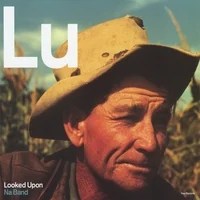 excellence in musical worship. And to my great delight, studio recordings of each conference band allow me to relive the musical worship. Here they are (with links to iTunes):
1) Lu, or, Looked Upon by the Na Band (Na Conference; Louisville, KY). Watching Devon Kauflin lead worship with his dad Bob supporting him on keys was a neat experience at the 2008 New Attitude conference in Louisville. The songs played live at the conference and recorded in the studio on this album are deeply rooted in the cross of Christ. Track 11, “All I Have is Christ,” is fabulous. Lu (short for Looked Upon) is Wg (that is, worth getting). A superb album. Cross centeredness: A+. [UPDATE: You can download several live recordings from the conference here.]
2) Adore and Tremble by Daniel Renstrom (Missio Dei conference; Wake Forest, NC). My first trip to Southeastern Baptist Theological Seminary. I had not heard of Daniel before the conference and really didn’t know him after the conference either. I thanked him in person for playing, and assumed he was *just* a gifted college ministry worship leader—until I returned home and received a copy of his album. I immediately recognized his songs featured at the conference. The lyrics include some beautiful, pure cross-centered statements. In the song “At the Cross” he sings, “At the cross, wrath was taken away, / and Christ was in our place. / What marvelous grace. / At the cross, justice was supplied, / by the blood of Christ.” And in the song “Where Could I Go” Daniel takes the cross and daily life and ties them together beautifully. Cross centeredness: A.
3) O For That Day by Enfield, the Resolved Band (Resolved Conference; Palm Springs, CA). The album features solid biblical lyrics and strings from beginning to end. And I listen to it from beginning to end on long drives and long walks. Hearing them play live was a great but the album itself sounds “live” too and you can get a sense of being at the conference (if you play the album loud enough). Though on the album you don’t get C.J. on drums like you do live. All said, it’s a great addition to a musical library (track 4 was written from Isaiah 6 and is worth the price of the entire album). Cross centeredness: B-.
Consider each of these three albums for your iPod as you seek to worship God throughout the day. Each will help foster worship to our gracious God. And each of these albums are reminders of the amazing depth of God’s gracious working in the hearts of a younger generation of Christians—in three diverse spheres in North America—who are writing, playing, and recording excellent God-exalting music.
How God must love to pour out the generous musical gifts (like those featured on these albums) to glorify Himself!
Brian Regan on Reading
New material from March 14, 2008.
[FYI-Not an endorsement of Letterman or YouTube. I don’t watch the first and rarely browse the second.]
Thomas Foxcroft, 1697–1769
 Puritan Thomas Foxcroft (1697–1769) was a Harvard graduate and pastored for 50+ years at the First Congregational Church in Boston, Massachusetts. Foxcroft supported the Great Awakening, and became a close friend, ally, and literary agent for Jonathan Edwards. But Foxcroft wrote books himself and one of these gems is being prepared for re-issue in August.
Foxcroft’s ordination sermon delivered in Boston on Wednesday, November 20, 1717 was originally collected and edited under the title A Practical Discourse Related to the Gospel Ministry. A new edition edited by Dr. Don Kistler will be published as The Gospel Ministry by Reformation Heritage Books next month [I’ll let you know here when it’s available].
In this book, Foxcroft exhorts ministers to focus the center of their sermons on Christ. His doctrinal summaries include: “Christ is the grand Subject which the ministers of the gospel should mainly insist upon in their preaching” and “In all their ministerial labors, pastors should make the conversion and edification of men in Christ their governing view and sovereign aim.”
Such Christ/cross-centeredness is not surprising to find in 18th century Boston region often visited by revival. As we have seen, Edwards himself was very carefully cross-centered in his preaching and application. But here Foxcroft is cross-centered in his public exhortation to all preachers. This exhortation to preach Christ and Him crucified shows us that ‘American’ Puritans were careful to preach Christ because they understood the cross was at the heart of the preachers formal public ministry responsibility.
And as we would expect, a robust understanding of the cross will work itself out in the application of the Christian life and pursuit of holiness. Foxcroft writes, “All the arrows of sharp rebuke are to be steeped in the blood of Christ; and this to prevent those desponding fears and frights of guilt which sometimes awfully work to a fatal issue.” Foxcroft’s statement not only shows concern over legalism and the necessity of the full atonement of Christ in light of personal holiness, but also provides an illuminating glimpse into 18th century ‘American’ Puritan homiletics.
I could go on, but this is a gem all readers of Puritans should read and a book all preachers will benefit from. And it will prove to be a book that will ax at the root of the awful misrepresentation that all Puritan preachers (English, Scottish, American or otherwise) were negligent to preach Christ and Him crucified.
I’ll close with an extended cross-centered excerpt from the RHB edition:

————-
“They who are friends of the Bridegroom, who have so learned Christ as He is taught in the school of the prophets and apostles, and with whom the truth of the gospel continues, are not ashamed to preach the cross, and count all things but loss for the excellency of the knowledge of Christ and Him crucified. “What is the chaff to the wheat? saith the Lord (Jer.23:28). What is the vain philosophy of the Greeks and the exact righteousness of the Pharisees but dung and dross to the riches of the glory of this mystery?
Jesus Christ is the Bread of Life, and nothing but this will suit the nature and inclination of the spiritual appetite; nothing but this will beget and maintain the vital flame of spiritual life. Everything else will prove either a stone or a serpent, unnatural and insubstantial or poison and pernicious.
Ministers then must study to feed their flocks with a continual feast on the glorious fullness there is in Christ; they must gather fruits from the branch of righteousness, from the tree of life for those who hunger, not feeding them with the meat which perishes, but with that which endures to everlasting life. They must open this fountain of living waters, the great mystery of godliness, into which all the doctrines of the gospel that are branched forth into so great a variety do, as so many rivulets or streams making glad the city of God flow and concenter.
They must endeavor to set forth Christ in the dignity of His Person, as the brightness of His Father’s glory, God manifest in the flesh; in the reality, necessity, nature, and exercise of His threefold office of Prophet, Priest, and King, in both His state of humiliation and exaltation; in the glorious benefits of His redemption, the justification of them who believe, the adoption of sons, sanctification, and an inheritance that does not fade away, reserved in heaven for the saints; in the wonderful methods and means in and by which we are called into the fellowship of the Son our Lord, and made partakers of the redemption by Christ; in the nature, and significance, the excellency and worth, of all the ordinances and institutions of Christ, with the obligations on all to attend upon them.
Whatever subject ministers are upon, it must somehow point to Christ.
All sin must be witnessed against and preached down as opposed to the holy nature, the wise and gracious designs, and the just government of Christ.
So all duty must be persuaded to and preached up with due regard unto Christ; to His authority commanding and to His Spirit of grace assisting, as well as to the merit of His blood commending—and this to dash the vain presumption that decoys so many into ruin, who will securely hang the weight of their hopes upon the horns of the altar without paying expected homage to the scepter of Christ.
All the arrows of sharp rebuke are to be steeped in the blood of Christ; and this to prevent those desponding fears and frights of guilt which sometimes awfully work to a fatal issue.
Dark and ignorant sinners are to be directed to Christ as the Sun of righteousness; convinced sinners are to be led to Christ as the Great Atonement and the only City of Refuge.
Christ is to be lifted up on high for the wounded in spirit to look to, as the bitten Israelites looked to the brazen serpent of old. The sick, the lame, and the diseased are to be carried to Christ as the great Physician, the Lord our Healer; the disconsolate and timorous are to be guided to Christ as the Consolation of Israel, and in us the hope of glory.
Every comfort administered is to be sweetened with pure water from this Well of salvation, which only can quench the fiery darts of the evil one. The promises of the gospel are to be applied as being in Christ “yea, and in Him Amen, unto the glory of God by us” (2 Cor. 1:20).
So the threatenings of the law are to light and flash in the eyes of sinners as the terrors of the Lord and sparks of the holy resentment of an incensed Savior, which hover now over the children of disobedience and will one day unite and fall heavy upon them.
The love of Christ for us is to be held forth as the great constraining motive to religion, and the life of Christ as the bright, engaging pattern of it.
Progress and increase in holiness are to be represented under the notion of abiding in Christ and growing up unto Him who is the Head, even Christ. Perfection in grace is the measure of the stature of the fullness of Christ, and eternal life is a being forever with the Lord where He is, beholding His glory and dwelling in our Master’s joy.
Thus, in imitation of the apostolic way of preaching, there must be a beautiful texture of references to Christ, a golden thread twisted into every discourse to leaven and perfume it so as to make it express a savor of the knowledge of Christ. Thus every mite cast into the treasury of the temple must bear this inscription upon it, which was once the humble language of a pious martyr in the flames, “None but Christ, none but Christ,” so that everyone, beholding in the Word preached as in a glass the glory of the Lord, may be changed into the same image, from glory to glory.
-Thomas Foxcroft, The Gospel Ministry (RHB: 1717, 2008 ) pp. 7-11.
on Evaluating Books

I recently completed The Road by Cormac McCarthy. What do I think of the book? Well, the dust has yet to settle.
I’ve learned to take a day or a month to step back from a book, go about normal business, and let “the dust settle.” This patient wait for clarity is a lesson I learned in college from the writings of Virginia Woolf (1882–1941).
I’m no fan of Virginia Woolf, but her understanding of how the mind evaluates books—especially novels and poetry—has taught me patience when I find myself surrounded by the blizzard of details to wait until all has settled on the floor of my mind. Resisting the impulse of immediate critique allows a critical brain-simmer between the period a book is competed and when the book’s value becomes clear. This wait allows for a constructive subconscious process where fragmented thoughts are reshaped into a unified whole.
And Woolf encourages us to critique slowly because this process provides the necessary continuity to evaluate new books to the very best old books. Such is logical. Why would we ever read new books without reference to the superior books of the past?
Enough of me. Here’s how Woolf articulates these ideas:
The first process, to receive impressions with the utmost understanding, is only half the process of reading; it must be completed, if we are to get the whole pleasure from a book, by another. We must pass judgment upon these multitudinous impressions; we must make of these fleeting shapes one that is hard and lasting. But not directly. Wait for the dust of reading to settle; for the conflict and the questioning to die down; walk, talk, pull the dead petals from a rose, or fall asleep. Then suddenly without our willing it, for it is thus that Nature undertakes these transitions, the book will return, but differently. It will float to the top of the mind as a whole. And the book as a whole is different from the book received currently in separate phrases. Details now fit themselves into their places. We see the shape from start to finish; it is a barn, a pigsty, or a cathedral. Now then we can compare book with book as we compare building with building.
But this act of comparison means that our attitude has changed; we are no longer the friends of the writer, but his judges; and just as we cannot be too sympathetic as friends, so as judges we cannot be too severe. Are they not criminals, books that have wasted our time and sympathy; are they not the most insidious enemies of society, corrupters, defilers, the writers of false books, faked books, books that fill the air with decay and disease? Let us then be severe in our judgments; let us compare each book with the greatest of its kind. There they hang in the mind the shapes of the books we have read solidified by the judgments we have passed on them— Robinson Crusoe, Emma, The Return of the Native. Compare the novels with these—even the latest and least of novels has a right to be judged with the best.
And so with poetry—when the intoxication of rhythm has died down and the splendour of words has faded, a visionary shape will return to us and this must be compared with Lear, with Phèdre, with The Prelude; or if not with these, with whatever is the best or seems to us to be the best in its own kind. And we may be sure that the newness of new poetry and fiction is its most superficial quality and that we have only to alter slightly, not to recast, the standards by which we have judged the old.
-Virginia Woolf, “How Should One Read a Book?”
on Coffee
 Two tidbits I learned today about the burnt beans …
(1) From Claudia Roden’s book Coffee: A Connoisseur’s Companion:
In Italy it was the priests who appealed to Pope Clement VIII to have the use of coffee forbidden among Christians. Satan, they said, had forbidden his followers, the infidel Moslems, the use of wine because it was used in the Holy Communion, and given them instead his “hellish black brew.” It seems the Pope liked the drink, for his reply was: “Why, this Satan’s drink is so delicious that it would be a pity to let the infidels have exclusive use of it. We shall cheat Satan by baptizing it.” Thus coffee was declared a truly Christian beverage by a farsighted Pope. (p. 14)
(2) J.S. Bach wrote Coffee Cantata (c. 1734) a comic opera about a father concerned over his daughter’s coffee consumption:
Oh! How sweet the coffee tastes,
Lovelier than a thousand kisses,
Mellower than muscatel wine.
Coffee, coffee I must have,
And if someone wants to refresh me,
Ah, let him give me coffee!
Learn more about it here. Read the full text here. Funny stuff.
(3) UPDATE … Dean, a faithful blog reader in NC, recommends sipping java with david m. bailey’s album Coffee With The Angels playing in the background. Check out track 3, Java Junkie. “The Cubans drink it sweet. The Turkish drink it strong. Me? I just drink it all day long.”
 Tony Reinke