100,000 hits!

100,000 hits!

Party time! Today or tonight will mark the 100,000th hit at The Shepherd’s Scrapbook blog. To celebrate were giving away free books (sorry no blank bibles this time). I’ve got three wonderful book prizes in front of me …

1. The Valley of Vision paperback
2. John Piper’s newest book Amazing Grace in the Life of William Wilberforce
3. A.W. Pink’s classic The Doctrine of Sanctification

Here’s how you win. You’ll need to know how to take computer screenshots. As soon as the 100,000th hit takes place, take a screen shot of the TSS hit counter (see “Blog Stats” on the right sidebar). Send us the picture. The nearest to 100,000 wins and the next closest (ex. 100,003) gets second place and so on. Three prizes … three winners. First place chooses between the 3 books, second place chooses between two books and the third winner gets what’s left.

Please don’t just re-load the page and please don’t PhotoShop manipulate images either. :-)

Blessings to you all and thank you for reading and supporting The Shepherd’s Scrapbook! I do appreciate the many friendships this blog has initiated over the past several months. Thank you!

Tony

tony AT tonyreinke DOT com

——————————————–

And the winners are …

1. James T. (London)

2. Gareth R. (Nottingham, England)

3. Jeff C.

Humble Calvinism: (12) The Institutes > The “mutual bond” of God’s power and Word (1.9)

02spurgeonhumcalvinism.jpg

Part 12: The “mutual bond” of God’s power and Word (1.9)

For John Calvin, the connection between the power of God’s Spirit and God’s Word are inseparable. It is the Spirit’s confirming power in our unbelieving hearts that authenticates the divine origin of the Word of God. No proofs or philosophical reasoning could ever seal this01spurgeoncalvin5.jpg truth in a dead and blind soul.

But this chapter brings us to one of the first places Calvin points out those who are in error (something Calvin does not shy away from). These “Libertines” were introducing “a heinous sacrilege” and a “devilish madness” (93). Apparently these “rascals” had begun believing that the Spirit works independently of the Word of God and that those who continued to follow the old Scriptures were “simple” and too limiting of the Spirit.

Now before we get into the debate a little more (and why its important for us today) we should take a moment to notice how Calvin teaches theology. Calvin frequently uses antithesis. He first teaches what Scripture teaches and then he reveals the doctrinal antithesis and those who contradict. Calvin teaches us about truly divine knowledge, true revelation, the true worship of God, the Trinity and biblical anthropology in these first chapters of the Institutes. But along the way he will point out the false ways to know God, the nature idolatry, false views of the Trinity and anthropology. (For an excellent chart on the antithetical arguments see Analysis of the Institutes by Battles, pp. 19-23). Calvin keeps the antithesis in view at all times.

According to the arguments of Calvin, we learn that these Libertines believed the Word of God was “fleeting or temporal” and that over time the Holy Spirit would succeed Scripture in relevance. The Spirit would be newer and more original, Scripture would become less important and less relevant. Calvin will rebuke the Libertines with Scripture.

According to what we have seen recently in the Institutes, there can be no separation between God’s power and God’s Word. Calvin calls this a “mutual bond” (95). We’ve seen in the past two chapters that it’s the Holy Spirit Himself that confirms the authenticity of the written Word. At least for apologetics and evangelism, the two go hand-in-hand. But in this chapter Calvin will broaden his language beyond evangelism and apologetics.

The major argument of Calvin grows from John 16:13 where Jesus says “When the Spirit of truth comes, he will guide you into all the truth, for he will not speak on his own authority, but whatever he hears he will speak, and he will declare to you the things that are to come.” Therefore Calvin writes, the Spirit “has not the task of inventing new and unheard-of revelations, or of forging a new kind of doctrine, to lead us away from the received doctrine of the gospel, but of sealing our minds with that very doctrine which is commended by the gospel” (94). The Spirit’s work is intimately concerned with Scripture.

Specifically, we see the power of the Spirit is unleashed when He seals our minds with the doctrine of the gospel (94). The mighty power of the Spirit is unleashed when sinners are brought under conviction of their sin and see the freedom and beauty of Christ dying as their perfect substitute! God’s power and God’s Word work hand-in-hand. Thus drawing people away from the gospel towards new revelation undermines the very work of the Spirit Himself.

God’s Word and God’s Spirit cannot be separated in apologetics and evangelism (as we see in chapters 7 and 8). But in this chapter Calvin broadens the language to say, “we ought zealously to apply ourselves both to read and to hearken to Scripture if indeed we want to receive any gain and benefit from the Spirit of God” (94). So here in this chapter the language is broadened to say that “any gain and benefit” we receive from the Spirit comes through the Word of God.

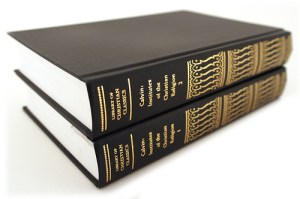
It appears the Word creates a sort of boundary to the Spirit’s work. And it should be this way, Calvin argues, because how would we ever authenticate the work of the Spirit if not by the guide of Scripture? Wouldn’t we be assaulted by Satanic counterfeits of the Spirit’s work if Scripture does not provide ‘parameters’ for the work of the Spirit? How will we know the Spirit is at work, not Satan, if not through “a most certain mark” (94)?calvininstitutes.jpg

Thus Scripture gives us a guide to the work of the Holy Spirit so we may “embrace the Spirit with no fear of being deceived when we recognize him in his own image, namely, in the Word” (95). If the Spirit works beyond Scripture, we have no way of discerning the authenticity of that work.

Back to the Libertines. Calvin argues that spiritual experiences do not negate the authority and sufficiency of the Word. Was not Paul taken to the third heavens and yet he could say “All Scripture is breathed out by God and profitable for teaching, for reproof, for correction, and for training in righteousness, that the man of God may be competent, equipped for every good work” (2 Tim. 3:16-17). Paul’s experience of the Spirit of God did not shake his confidence in the sufficiency of Scripture. Did not Peter hear God’s direct voice from heaven? Yet he confirms the sufficiency of God’s Word (2 Pet. 1:18-19). The power of the Spirit confirms the Word; it never makes Scripture obsolete.

Therefore only when “proper reverence and dignity are given to the Word does the Holy Spirit show forth his power” (95). When we revere God’s Word it becomes the “word of life” whereby the Holy Spirit revives life to dead souls (Phil. 2:16, Ps. 19:7, Luke 24:27,45).

In evangelism, apologetics, or any other time when the Spirit is at work, there is no separation between the power of the Spirit and the words of Scripture! They abide together in a “mutual bond.”

Calvinistic meditations …

1. Emphasize the Spirit and the Word together. Rarely will you find churches and preachers de-emphasize the power of God’s Spirit. But daily I hear of churches that de-emphasize the importance of Scripture. We need to be reminded that by de-emphasizing Scripture we are de-emphasizing the Spirit’s power at the same time. The two walk hand-in-hand in a “mutual bond.” Expect the full power of the Spirit to come alongside the full preaching of the Word. If we preach a tiny bit of Scripture we should expect a tiny bit of the Spirit. Ironically, it’s weakening churches that typically abandon most of Scripture, the one God-given balm to their downward slide. The Spirit and Word go together (see John 3:34, 6:63, Acts 4:31, 10:44, 1 Cor. 2:4,13, Eph. 6:17, 1 Thes. 1:5-6, Heb. 4:12).

2. Beware of discontent with Scripture. Church history teaches us that great errors are introduced into the church when its leaders grow discontent with Scripture. The intrusion of psychological language and methods that replaced the concepts of sin and sanctification is one great example. To this day, the church is still weeding out this intrusion of decades past. Our job is not to add power or relevance to Scripture. We are called to rest by faith that God’s power will come through God’s Word. It’s through the Word that the Spirit will “show forth His power” (95). God responds in power to those who tremble at His Word (Isa. 66:2).

3. Cling to the sufficiency of Scripture. By tying the power of God to the Word of God, Calvin has made a strong case for the sufficiency of Scripture. The discontent and impatience with Scripture will only happen if we have abandoned a commitment to the sufficiency of Scripture. If God’s Word is sufficient to transform dead souls, does it lack anything (see Ps. 19:7, Jam. 1:18, 1 Pet. 1:23)? The overall sufficiency of Scripture is a major theme (read Ps. 19, 119 and 2 Tim. 3:15-17). A practical denial of the sufficiency of Scripture leads to discontent with Scripture, which leads to a failure to understand Scripture, which opens the door for Satanic deception. Like a handful of rock on the side of a cliff, we must cling to Scripture’s sufficiency or there will be no end to the fall.

(Warning! Bandwagon approaching…)

4. Let Scripture define the work of the Spirit. Read 1 Corinthians 14 and see how the strength of the New Testament church rests upon the continuing prophetic gifts. Don’t limit the Spirit’s work in the church to something less than biblical. Re-think Cessationism. [Much love to my disagreeing brothers!] :-)

Bottom line: The power of God and the Word of God walk together in a “mutual bond.” Don’t expect the Spirit to be unleashed where the Word is not preached. And pray in expectation that as you preach His truth, His power will change lives forever! This reverence towards the Word and expectation of the Spirit’s power are at the heart of Humble Calvinism.

————————–

Click here to access previous posts in the Humble Calvinism index.

————————–

Humble Calvinism: (11) The Institutes > Proofs of Scripture’s authenticity (1.8)

02spurgeonhumcalvinism.jpg

Part 11: Proofs of Scripture’s authenticity (1.8)

As we travel through the Institutes of the Christian Religion by John Calvin (1559 edition) I am amazed by its contemporary significance. We have much to learn and apply to our own churches and evangelism today.
01spurgeoncalvin2.jpg
Through our study, Calvin has recently reminded us that until and unless the Holy Spirit confirms Scripture’s authenticity in our hearts, we will not give our lives and our hopes over to its message. God does this by breaking through and confirming Scripture in our hearts directly, not by indirect proofs (we saw this last time).

Today we see that there are sufficient proofs of Scripture’s authenticity, but we must first have faith to comprehend them. So God must first give us the conviction that Scripture is truly from God before these proofs make sense. This is why Calvin can close the chapter with an evangelistic plea by writing, “those who wish to prove to unbelievers that Scripture is the Word of God are acting foolishly, for only by faith can this be known” (92). We can share the gospel message with any unbeliever, but until Scripture is seen as the place where “divine majesty lives and breathes,” any proofs of Scripture’s authenticity are unfruitful (80). We rest upon the Spirit to work this confirmation into other hearts.

So here is the clarification from the last chapter: There are inherent proofs within Scripture to prove its uniqueness. Most of this chapter is given to this theme. “What wonderful confirmation ensues when, with keener study, we ponder the economy of the divine wisdom, so well ordered and disposed; the completely heavenly character of its doctrine, savoring of nothing earthly; the beautiful agreement of all the parts with one another” (82).

For Calvin, the evidences of divine origin center around the conciseness of its content, its heavenly nature, that it was written by the least expected authors, it carries a consistent theme, and because its message predates all other existing theological systems.

But the proof is also seen in the unflattering accounts Moses writes of his own family. You have the embarrassment of Levi (Gen. 49:5-6) and his brother Aaron and sister Miriam (Num. 12:1). Was Moses speaking “from the feeling of his flesh, or that he is obedient to the command of the Holy Spirit?” (85). Such embarrassment is not published from a desire to elevate Moses’ fame.

Also, the content of Scripture is heavenly. There is a vision of the unseen realities. The prophets are “crammed with thoughts that could not be humanly conceived” (83). And these prophecies are filled with events that would not be fulfilled until after the death of the prophet himself (1.8.7).

But there is an “almost rude simplicity” of Scripture (82). It was written by men like Matthew, Mark, Luke, Peter and John – “all of them rude, uneducated men” (91). It was not ordained with the jewels of ornate eloquence, but its divine truths are communicated in simplicity. For Calvin, a man familiar with literature and philosophy, can say that in comparison the words of God “surpass all gifts and graces of human endeavor, breathe something divine” (82).

And there is Saul, a man filled with rage against the church who was converted asevidence.gif Paul and the writer of much of the New Testament. His change shows that “he was compelled by heavenly authority to affirm a doctrine that he had assailed” (91).

Calvin argues that Scripture’s age, the miracles of Scripture, the preservation of Scripture through eras in which books were commonly burned, and the blood of the martyrs all show Scripture to be more than another book. These arguments comprise the bulk of the chapter.

All of these “secondary aids” confirm scripture’s authenticity only after “the chief and highest testimony” of the Spirit (92). God must supernaturally convince us of Scripture’s authenticity before the secondary “aids” and “props” are convincing (92). So Calvin ends the chapter by warning us not to try and win converts by persuading them with philosophical evidences of Scripture’s authenticity. We must pray that the Spirit would break into the depravity and rebellion of sinners and give them a taste of Scripture’s sweetness. Then they can taste the evidences in Scripture for themselves.

There are proofs, no doubt. But Calvin reminds us to let these proofs follow the Spirit-wrought conviction!

Calvinistic meditations …

1. Faith precedes reason. Anselm (1033-1109) understood well that faith must come before true understanding. In the introduction to Proslogium, the editor summarizes Anselm’s view in this way: “The unbelievers … strive to understand because they do not believe; we, on the contrary, strive to understand because we believe. They and we have the same object in view; but inasmuch as they do not believe, they cannot arrive at their goal, which is to understand the dogma. The unbeliever will never understand. In religion, faith plays the part that experience usually plays in the understanding of the things of this world. The blind man cannot see the light, and therefore does not understand it; the deaf-mute, who has never perceived sound, cannot have a clear idea of sound. Similarly, not to believe means not to perceive, and not to perceive means not to understand.”

Faith is not unreasonable, but faith must come first before the evidence. It is surely hard to grasp in the realm of spiritual truth that confirmation comes before the proof, but that is how Calvin, Anselm and Scripture itself explains this reality. The Spirit must convince us first through His power and then the evidences begin to make sense. Until the Spirit works, there are not enough proofs to cause a faith that reveres and trusts God as the genuine author. Convincing others that Christianity is legitimate is not a process or a seminar, but a point in time when the Sovereign touches a dead heart and causes it to pulse. This is why Jesus can say, “To you it has been given to know the secrets of the kingdom of heaven, but to them it has not been given” (Matt. 13:11). The evangelist, apologist and preacher all center their messages around the gospel, waiting patiently for the life-giving blood to begin pulsing in others at the sovereign timing of God. More about this in a moment.

2. Our understanding of God and the Gospel are the fruit of His “gracious will.” Our understanding of the divine mysteries has everything to do with a Sovereign God (Matt. 11:25-26 see also Matt. 16:17; Mark 4:11; Luke 8:10; John 7:17; 1 Cor. 2:9-10, 14; 2 Cor. 4:4; Col. 1:26-27; 1 John 2:27). That we understand anything is merely from His “gracious will” to reveal them to us! What amazing grace, that sinners are given eternal wisdom! If we truly understand the message of the gospel, this fact alone should be a powerful means of humility in us. To truly grasp Calvinism is to be a very Humble Calvinist. All divine light comes from God’s gracious sovereignty.

3. The message is the method. Not only is the gospel the message of salvation, but it is also the “the power of God for salvation” (Rom. 1:16). The Old Testament prophets understood this, too. “Is not my word like fire, declares the LORD, and like a hammer that breaks the rock in pieces?” (Jer. 23:29). God’s Word is a living and active force, piercing and discerning our hearts (Heb. 4:12). But specifically, Paul understands the life-changing power in the message of the Cross. That is why Paul can say the gospel is “the power of God for salvation” (Rom. 1:16), that “faith comes from hearing, and hearing through the word of Christ” (Rom. 10:17), and that “the word of the cross is folly to those who are perishing, but to us who are being saved it is the power of God” (1 Cor. 1:18). So it’s no wonder Paul fights for the clarity of the gospel (2 Cor. 10:4-5; Gal. 1:6-2:21). The clear and accurate gospel message of the Cross is where both the message and the Spirit’s effectual power to save sinners from hell reside!

So don’t try to change lives through gimmicks. The power of God is not introduced to sinners through props and proofs and philosophy and arguments and seeker-sensitive devices. Place your trust in God. He alone displays His power to awaken sinners through the message of the gospel! Talk about depravity, talk about sin, talk about the wrath of God coming upon all unrepentant sinners, talk of Christ who satisfied the wrath of God and Whose work is our only hope to substitute for our sin and unrighteousness! Seek to center everything about your ministry here on the Cross.

This one gospel is the only self-sustained, self-powered and self-authenticated message to awaken and transform sinners. What glorious freedom is there for the preacher and evangelist who understand Calvinism. Preach with power by preaching Christ and Him crucified (1 Cor. 1:23, 2:2)!

————————–

Click here to access previous posts in the Humble Calvinism index.

————————–
Sermon Notes: The Nature of Man (Anthropology)

Last night I had the honor of preaching/teaching at a youth gathering here near the Twin cities. The group is progressing through a study of systematic theology and I had the opportunity to teach on the nature of man (otherwise known as theological anthropology). I summarized anthropology in this way:

Purpose: We were created in the image of God – as humble dust and eternal spirit – to see God face-to-face.

In the message I traced out the nature of the dust (our bodies) and our need for resurrection. Then on to the image of God in the soul and how God restores this image through conversion, sanctification and glorification. The punch-line is this: God restores our image perfectly (in glorification) so we can once again see God’s glory face-to-face as Adam once did when God walked in the garden in the cool of the day.

Download …

1. The full lesson notes (PDF)
2. The lesson handout (PDF)

————————————

Note to preachers: My biggest preaching challenges come in the context of preaching through systematic theology. In comparison to straight expositional preaching, I seem to amass a greater amount of content as various themes and threads are brought to light from Scripture (handouts like the ones above have become a critical part of preaching systematic theology).

As the systematic themes develop they begin to broaden and so the challenge in systematics is not stepping on the toes of other categories (at least not stepping too far on their toes). A study of the resurrection of the body really belongs in eschatology. The depravity of the soul belongs in harmartiology. The restoration process of the marred image of God believers go through belongs to soteriology and sanctification. But somehow anthropology really reaches out into all these categories.

It seems the demands of doctrinal content, limiting the category, focusing on the Cross, illustrating straight doctrine and keeping it all on a level accessible to a younger audience is a real trick. I seem to over-compensate the increased logos with increased pathos. It’s a fun challenge, but a challenge it remains.

Question for the preachers: Have you preached through systematic theology or a reformed catechism? What did you notice about the difference? Any help would be appreciated! – Tony

Humble Calvinism: (10) The Institutes > The self-authenticated Word (1.7)

02spurgeonhumcalvinism.jpg

Part 10: The self-authenticated Word (1.7)

Sinners are in bad shape. We neglect as much of God’s glory as we can and the unmistakable evidence we do see is quickly suppressed and ignored. We want to live autonomously. We want to be independent from God, making our own decisions and choosing what we think is good for us. We are not merely ignorant of God, we are01spurgeoncalvin1.jpg enemies of God (Rom. 5:10). We let our worldly, temporal appetites guide our lives and become enemies of the Cross in the process (Phil. 3:18-19). We are not ignorant biology students needing more information, we are sinners actively resisting truth and rebelling against God.

So when the Roman Catholic catechism of 1997 (π 154) teaches, “Trusting in God and cleaving to the truths he has revealed is contrary neither to human freedom nor to human reason” I can only shake my head. It contradicts both depraved bondage and a mind that suppresses truth like a boot suppresses an empty pop can.

The big question of the day is this: For the sinner to give the Word of God the full weight of her reverence and obedience, God must first burn these convictions supernaturally into her heart. For the Word of God to truly impact our lives, God must abduct us! He must convince us of the authenticity of His Word. He must convince us that His words are “sweeter than honey to my mouth” (Ps. 119:103). We must be given “the mind of Christ” (1 Cor. 2:16).

Once again, it goes back to the sovereign intervention of God. He alone can cause His elect to submit to the full authority of the Word by convincing them of the authenticity of the Word. This is exactly what God does.

The church and religious authority are insufficient (1.7.1-3)

The church does not have the authority to authenticate the Word. In Calvin’s day (and to our day), Roman Catholicism believed the authority of Scripture was authenticated via the authority of the papacy. This is impossible. According to Ephesians 2:20 the Word of God’s authority and authenticity preceded the church! No church ruler, pope, cardinal or pastors can authenticate the Word because the Word preceded the church.

In fact, no human authority can authenticate the Word. Calvin writes, “what will happen to the miserable conscience seeking firm assurance of the eternal life if all promises of it consist in and depend solely upon the judgment of men?” (75). It is absurd to think that the authenticity of Scripture rests upon council or decree.

Here’s the punch line: “Scripture exhibits fully as clear evidence of its own truth as white and black things do of their color, or sweet and bitter things do of their taste” (76). Scripture is self-authenticated!

Where “divine majesty lives and breathes” (1.7.4-5)

No sinner gives their life to the biblical God and the doctrines and truths contained in the Word until they are “persuaded beyond doubt that God is its Author” (78). And later, “For even if it wins reverence for itself by its own majesty, it seriously affects us only when it is sealed upon our hearts through the Spirit” (80). In other words, you can take the “Bible as Literature” course in college and be amazed at the literary styles and structure of the Bible and yet never be changed by the eternal truths contained within. God must sovereignly burn the authenticity of the Word into our hearts. He must authenticate in our own rebellious hearts that God is the Author. He must give us spiritual eyes and tongues to see and taste that God’s Word is what it claims.

Calvin references Isaiah 43:10: “’You are my witnesses,’ declares the LORD, ‘and my servant whom I have chosen, that you may know and believe me and understand that I am He.’”

We must rest upon a divine power stronger than rational evidence and scientific proofs because even if the Word is authenticated by rationalism and proofs we will “ever waver among many doubts.” Rather, “those whom the Holy Spirit has inwardly taught truly rest upon Scripture, and that Scripture indeed is self-authenticated; hence, it is not right to subject it to proof and reasoning” (80). The authenticating power of the Spirit is “more excellent than all reason” (79).

By not resting in proofs and human reasoning, the authority and authenticity of Scripture rest upon something higher and stronger. “We seek no proofs, no marks of genuineness upon which our judgment may lean; but we subject our judgment and wit to it as to a thing far beyond any guesswork” (80). When the Holy Spirit confirms Scripture in our hearts “we feel that the undoubted power of his divine majesty lives and breathes there. By this power we are drawn and inflamed, knowingly and willingly, to obey him, yet also most vitally and more effectively than by mere human willing or knowing!” (80).

In summary, Calvin teaches us that Scripture is self-authenticated (Gk. autopiston). Its authenticity rests in the truth that Scripture is where God’s “divine majesty lives and breathes” (80). And every sinner God chooses to invade, abduct, and transform will experience the burning authenticity of the Spirit.

This does not mean there are no proofs and reasons for the authenticity of Scripture. There are, and Calvin will give us many to ponder in the next chapter. But proofs are not enough to convince spiritually dead enemies of God. Humble Calvinism teaches it that if I am going to understand God and obey His Word, He must invade my heart and burn a conviction of its truth into my heart.

Calvinistic meditations …

1. Watch your evangelism. How do we prove the authority and authenticity of God’s Word to sinners? We don’t. This truth will radically impact our evangelism. As you probably know, there is a tremendous pressure in our church culture to use rational proofs and arguments to “convince” sinners of the truth of Scripture. If this is your evangelistic strategy, you and your audience will always be haunted by the next ‘proofs’ and ‘arguments’ of the opposing views. Christianity is a call for sinners to believe in eternal things. There is no proof. How do you prove the perfect righteousness and resurrection to one who wants scientific data? As A.W. Tozer once said, “To seek proof is to admit doubt, and to obtain proof is to render faith superfluous” (Knowledge of the Holy, p. 19). Press sinners to embrace mystery, preach the gospel and let God take the responsibility of burning this truth upon sinner’s hearts. Your main concern is with presenting biblical truth accurately. The gospel – not proofs or rationalism – is the power of God to save depraved sinners (Rom 1:16).

2. Remember the depravity of our hearts. Churches that attempt to convince sinners of the truth with rationalism have fundamentally misunderstood our depravity so clearly stated in Romans and Ephesians. We need to ever remind ourselves of the state of the sinful human heart. Evidence can demand a verdict from sinners suppressing the truth in unrighteousness, but such verdict will never come (Rom. 1:18).

3. Expect rejection. Some preachers hide behind rationalism and human wisdom to avoid being rejected by sinners. Rejection and acceptance is not your responsibility – preaching the whole counsel of God is! If your audience is split over the gospel – some see it as the power of God and some see the gospel as foolishness – you are probably doing something right (1 Cor. 1:18-2:16). Keep boasting in the Cross! Some sinners will rest their hopes in signs and wonders alone, and they will never have signs or wonders enough. Some will want wisdom and proof and they will always waiver and struggle. But we are called to “preach Christ crucified, a stumbling block to Jews and folly to Gentiles, but to those who are called, both Jews and Greeks, Christ the power of God and the wisdom of God” (1 Cor. 1:23-25). If we are running from rejection we will mold church methods with fatal flaws and replace the gospel with something less foolish.

“For who knows a person’s thoughts except the spirit of that person, which is in him? So also no one comprehends the thoughts of God except the Spirit of God. Now we have received not the spirit of the world, but the Spirit who is from God, that we might understand the things freely given us by God. And we impart this in words not taught by human wisdom but taught by the Spirit, interpreting spiritual truths to those who are spiritual. The natural person does not accept the things of the Spirit of God, for they are folly to him, and he is not able to understand them because they are spiritually discerned” (1 Cor. 2:11-14).

So when you speak to other sinners, speak the truth in love. Pray that God would give them spiritual eyes to see that the “undoubted power of His divine majesty lives and breathes” in the Word. Oh, how it burns!

————————–

Click here to access previous posts in the Humble Calvinism index.

————————–

The scope of Calvin’s impact

The scope of Calvin’s impact

“Islam’s triumphant global march was halted by the sudden appearance of the freedom fostered by biblical Christianity in the sixteenth century in Western Europe. This occurred particularly as a result of Calvin’s, not Luther’s, insistence on the church’s freedom from the state and the state’s freedom from the church that in turn also eventually produced disciplined capitalism, science and technology, and economic prosperity. In yet another way, then – in the political freedom the Western nations enjoy now over against what would have possibly been military subjection to an Islamic theocracy – we here in the West are indebted to the providentially-arranged thought and activity of John Calvin.”

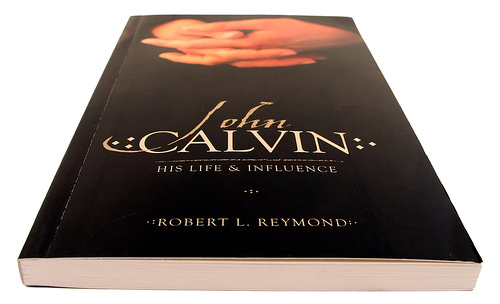
– Robert L. Reymond, John Calvin: His Life and Influence (Christian Focus: Great Britain) 2004. Page 143.

1857929667.jpg

book photo © 2007 Tony Reinke, The Shepherd’s Scrapbook

Title: John Calvin: His Life and Influence
Author: Robert L. Reymond
Boards: paper
Pages: 152
Binding: glue
Paper: good
Topical index: yes
Scriptural index: no (unnecessary)
Text: perfect type
Publisher: Christian Focus
Year: 2004
Price USD: $12.99/$9.99 at Monergism
ISBNs: 1857929667, 9781857929669