John Ploughman’s Letter on the War

In early 1870 tensions were sizzling between Napoleon, emperor of the French, and William, King of Prussia. On April 1, 1870 an open letter was published by John Ploughman, aka C. H. Spurgeon. The following excerpt is not intended to be a political statement about war per se as much as a fine example of Spurgeon’s literary gifts, his wit, and his punchy prose (Spurgeon once said “soft words are for soft heads”). Here’s an excerpt from that open letter to Napoleon and William:

If you must have a fight, why don’t you strip and go at it yourselves as our Tom Rowdy and Big Ben did on the green; it’s cowardly of you to send a lot of other fellows to be shot on your account. I don’t like fighting at all, it’s too low-lived for me; but really if it would save the lives of the millions I would not mind taking care of your jackets while you had a set-to with fisticuffs, and I would encourage you both to hit his hardest at the gentleman opposite.

I dare say if you came over to Surrey the police would manage to keep out of your way and let you have a fair chance of having it out; they have done so for other gentlemen, and I feel sure they would do it to oblige you. It might spoil your best shirts to have your noses bleed, and I dare say you would not like to strip at it, but there are plenty of ploughmen who would lend you their smock frocks for an hour or two, especially if you would be on your honour not to go off with them.

Just let me know, and I’ll have some sticking plaster ready, and a bason of water, and a sponge, and perhaps our governors will let Madame Rachel out of jail, to enamel your eyes, if they get a little blackened.

I’ve just thought of a capital idea, and that is, if you will both drop a line to the keepers of the Agricultural Hall, where they have those Cumberland wrestling matches, they would let you have the place for a day, and give you half the takings, and I’ll be bound there would be a crowd, and no mistake. So you see you could get glory and ready-money too, and nobody would be killed. …

Why you, the king of the Germans, want to go into the butchering line I don’t know; but if you are at the bottom of this it shows that you are a very bad disposed man, or you would be ashamed of killing your fellow creatures. When war begins hell opens, and it is a bad office for either of you to be gate-opener to the devil; yet that’s what one of you is, if not both.

Did either of you ever think of what war means? Did you ever see a man’s head smashed, or his bowels ripped open? Why, if you are made of flesh and blood, the sight of one poor wounded man, with the blood oozing out of him, will make you feel sick.

I don’t like to drown a kitten; I can’t bear even to see a rat die, or any animal in pain. But a man! Where’s your hearts if you can think of broken legs, splintered bones, heads smashed in, brains blown out, bowels torn, hearts gushing with gore, ditches full of blood, and heaps of limbs and carcasses of mangled men? Do you say my language is disgusting? How much more disgusting must the things themselves be? And you make them!

How would you like to get a man into your palace-garden, and run a carving-knife into his bowels, or cut his throat? If you did that you would deserve to be hanged; but it would not be half so bad as killing tens of thousands, and you know very well that this is just what you are going to do. Do you fancy that your drums and fifes, and feathers and fineries, and pomp, make your wholesale murder one whit the less abominable in the sight of God?

Fourteen weeks later, on July 19, 1870, the long-expected Franco-Prussian War erupted. Over 230,000 soldiers would die.
Good will and compassion

Thomas Boswell today in The Washington Post:

Baseball umpire Jim Joyce made a hideously incorrect ruling Wednesday night that cost Detroit Tigers pitcher Armando Galarraga one of the rarest achievements in the sport: a perfect game. But 15 hours later, when Galarraga made his way to home plate before Thursday afternoon’s game to present his team’s lineup card to Joyce, the umpire’s reception was just as clear-cut. The fans in Detroit cheered, and baseball and sport had one of its most inspiring and least expected moments. …

Fans of the recession-scalded Motor City brought themselves to cheer for a man who admitted his mistake, which had denied one of their own a perfect game, a feat accomplished just 20 times since 1858. And, everywhere, observers shook their heads that a thing that was so sad and screwed up late Wednesday night could, simply by good will and compassion, be turned into something sparklingly fresh, unexpectedly strong and best-of-baseball by Thursday afternoon.

The End Times

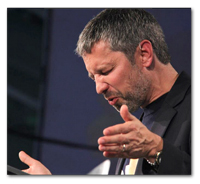
Jeff PurswellThe NEXT 2010 conference this past weekend was characteristically outstanding. Jeff Purswell’s message on eschatology was a fitting close to the conference (amil-).
Teaching from 1 Thessalonians 4:13–5:11 Jeff developed five points:

  1. Eschatology is rooted in the gospel of Jesus Christ.
  2. Eschatology is centered on the return of Christ.
  3. Eschatology looks forward to perfect fellowship in the presence of God.
  4. Eschatology pronounces the coming justice of God.
  5. Eschatology provides hope and motivation for our daily lives now.

You can download the message—“The End Times”—here, or stream it here:

Here’s a handful of gems:

  • “Here’s how we can sum up the thrust and import of eschatology: Eschatology assures us that God’s purposes will prevail and it motivates us to live faithfully until those purposes are fulfilled.”
  • “Eschatology is not intended to be an add-on to your theology. In many ways eschatology is the crown of theology. It answers questions that other doctrines raise.”
  • “We want to avoid the extremes of obsessing about the end times—eschato-mania; or reacting to that and just saying, ‘I’m scared and I don’t want to talk about it’—eschato-phobia; or somewhere in the middle, just shrug our shoulders and say it doesn’t matter what you believe.”
  • “Creation is like a beautiful castle. A riot broke out and furniture was thrown around and paintings were defaced and the place went nuts. But Jesus is coming back and he’s going to set everything right. He’s going to put all the furniture back in place. He’s going to kick all the rebels out. He will restore all the paintings. He’s going to make it beautiful again. He is going to set it right.”
  • “When the New Testament deals with eschatology, it is much more concerned with the last One than the last things. The early church looked not so much for a succession of events as they did for the arrival of a Person. It was very personal for persecuted Christians. It should be very personal for us as well. Let me put this in theological terms: Eschatology is thoroughly Christological. It’s about Jesus. Christ’s return is like the hub of a wheel and all the other stuff is like spokes coming off that wheel. And they only have meaning relative to the hub, relative to Christ’s return. That’s not our normal tendency when it comes to this topic. Our tendency is to be fascinated with times and seasons and charts and graphs, the events of the end, the when and the how. The Bible is primarily concerned with the Who. When the last One arrives, the succession of events will matter little.”

Good News, Doubled

Jesus died on the cross to atone for the guilt of our sin before a holy God. This is amazingly good news. But the cross of Christ also liberates us from our enslavement to sin’s power. Peter captures this when he writes, “He himself bore our sins in his body on the tree, that we might die to sin and live to righteousness” (1 Peter 2:24).

On one hand we rejoice in our legal justification before God. On the other hand we rejoice that we have been liberated from the tyranny of sin, liberated to obey, liberated to pursue godliness, liberated to holiness. This is good news. Or is it?

In a 1994 sermon, John Piper asked:

Does this feel like good news to you? Or does it feel like the good news of the cross is being given with one hand and taken away with the other. Does it feel like good news that the message of the cross on the one hand is a lifting of guilt and on the other hand is a laying on of burden? …

There are many people today who feel the first work of the cross as liberating good news and who feel the second as burdensome bad news. For them, the grace of the cross is one thing: liberation from guilt and shame. And when they hear that the grace of the cross is not just liberation from the guilt of sin, but is also liberation from the power of sin, it doesn’t feel as good. …

Yet, he writes,

the design of the cross to liberate from the enslaving power of sin as well as the guilt of sin does not diminish the good news; it doubles it.

Plugged In

Another gem from the writings of Dr. J.I. Packer. This one is from his book Growing in Christ (Crossway, 1996), page 120:

God’s eternal Son became Jesus the Christ by incarnation; to put away our sins he tasted death by crucifixion; he resumed bodily life for all eternity by resurrection; and he reentered heaven’s glory by ascension. This is the Christ-event. It is truly historical, for it happened in Palestine 2,000 years ago. Equally true, however, it is trans-historical, in the sense of not being bounded by space and time as other events are: it can touch and involve in itself any person at any time anywhere. Faith in Jesus occasions that involving touch, so that in terms of rock-bottom reality every believer has actually died and risen, and now lives and reigns, with Jesus and through Jesus. This is the new creation aspect of our link with Jesus. …. The way to express it is that in the Jesus to whom we go in faith the power of the whole Christ-event resides, and that in saving us he not only sets us right with God, but also, so to speak, plugs us in to his own dying, rising, and reigning. Thus we live in joyful fellowship with him, knowing ourselves justified by faith through his death, and finding therewith freedom from sin’s tyranny and foretastes of heaven on earth through the transforming power within us that his dying and rising exerts. This is an over-short statement of an overwhelming truth.

The magnitude of Christ’s work is mind-numbing. And the thought that I am now “plugged in” to his completed work causes me to marvel at God’s grace!

Church Props

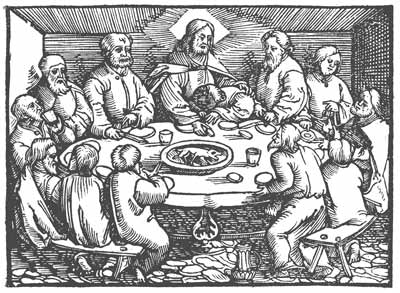
Kevin DeYoung’s latest book The Good News We Almost Forgot: Rediscovering the Gospel in a 16th Century Catechism (Moody, 2010) is good—real good. Kevin triggers the megaphone and provides us with a nice guided tour through the scenic Heidelberg Catechism. In the following quote Kevin speaks about the God’s appointed visual aids in the church and especially the importance of the Lord’s Supper. This is from page 138:

Too many churches overlook God’s preferred visual aids—the sacraments—and jump right to video, drama, and props to get people’s attention. We are making a big mistake when we think these “signs and seals” will be anywhere as effective as the ones instituted by Christ Himself. Pastors who don’t explain the sacraments and very rarely administer them are robbing their people of tremendous encouragement in their Christian walk. We can hear the gospel every Sunday, and eat it too.

Of course, this eating and drinking must be undertaken in faith. The elements themselves do not save us. But when we eat and drink them in faith, we can be assured that we receive forgiveness of sins and eternal life. More than that, we get a picture of our union with Christ. As we eat His flesh and drink His blood, we literally have communion with Him, not by dragging Christ down from heaven but by experiencing His presence through His Spirit. Shame on parishioners for coming to the Lord’s Supper with nothing but drudgery and low expectations. And shame on pastors for not instructing their people in the gospel joy available to us in Communion.