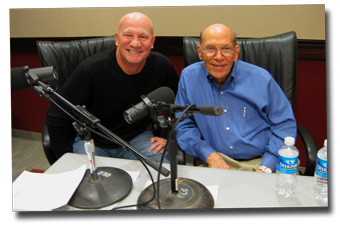
 A quick post to let you know that C.J. posted his interview with Jerry Bridges. Go listen here.
Have a blessed Thanksgiving!
Tony
A quick post to let you know that C.J. posted his interview with Jerry Bridges. Go listen here.
Have a blessed Thanksgiving!
Tony
“Feeling sorry for yourself is one of the strongest, most addictive narcotics known to man. It feels so good to feel so bad. Self-pity arises so easily, seems so plausible, and proves so hard to shake off.”
– David Powlison, Journal of Biblical Counseling (Summer 2007, Vol. 25, No. 3) p. 7.
It’s about 11:00 PM Saturday night. After a productive weekend in Orlando I’m looking forward to being home tomorrow afternoon. But tonight I’m thinking about church. One thing I appreciate about the local church (alongside the coffee, godly friends, and a well-stocked bookstore) is the chance to learn theology together. In the kindness of God’s curriculum for my soul, I can recount a number of times in my life that reading a particular theological work on a particular topic coincided with a sermon. For me many of these “coincidences” were the moments when the theology, once only engrafted in paper, spread wings and lifted off the 17th century page and animated to life like some dusty Aztec cave opening its secret treasure with the push of a hidden button in an Indiana Jones movie.
During these sermons the theology clicked and sticked.
This is true of the most monumental sermons early in my Christian life. I’ll never forget Pastor Phil Green’s sermon on John 10:1-21 (Jesus the Good Shepherd). It was in that message that the sovereignty of God in salvation became clear and I from thence was happy to be identified as a Reformed, Calvinist, Anti-Pelagian, Soteriological Augustinian, Biblical Predestination-ite-er. Whatever label you want, from then on I was formally consenting with a man (Calvin) whose theology is said to drive men insane (according to Chesterton).
But my convictions were forged (and are sustained) not ultimately due to the fact that I was reading Calvin’s Institutes or Boettner’s Reformed Doctrine of Predestination. I saw the truth of scripture laid plain in an expositional sermon at church. There the secondary literature clicked and sticked.
And this was true later on in my Christian life when I heard Rick Gamache preach a sermon on God’s adopting grace or when Joshua Harris preached a message on Christ uniting all things in Himself. The list could go on.
My point is that I think this is the way I think our Savior intends for me to learn theology—together with others. Not (as I often think) as an over-caffeinated bibliophile at a round table in Starbucks and with wires curving from my ears as if I could attempt to manufacture an audiological deserted island (or shack) to learn about God. It’s not that reading alone is wrong, it’s just that I often place an over-exaggerated hope that in secret I will discover the most effective place for the truths of scripture to click and stick.
Should we read and learn and study on our own? Yes, of course. But our anticipation should be awaiting how God will affirm what we’re reading as we gather together as a local church to learn truth and have our souls fed. And this is especially true as we seek to discover the depths of God’s love revealed in the cross. I pray that we “may have strength to comprehend with all the saints what is the breadth and length and height and depth, and to know the love of Christ that surpasses knowledge, that you may be filled with all the fullness of God” (Ephesians 3:18-19).
For this understanding of Christ’s love we need more than our own table in Starbucks. We need God to bless us with corporate strength and unity (Eph. 3:18). We anticipate Sunday because it’s in the church that he has called us to learn theology together.
Tuesday afternoon C.J. recorded an interview with Dr. Jerry Bridges, author of so many excellent cross-centered books like The Discipline of Grace and The Gospel for Real Life. I’ll let you know when the audio is posted online.
It was humbling to sit in the studio and listen to them talk about the importance of the cross. When it comes to learning what it means to live a cross-centered life, God has more effectively used no two living authors in my life than C.J. Mahaney (on the left) and Jerry Bridges (on the right). Sitting in the studio and listening to these men talk about the cross ranks as one of my life’s highlights.
A friend snapped this photo during the recording.

In the last post I wrote: “Showing people sin is the easy part. Showing people the grace of God is not so easy.”
A profound—but plagiarized—thought.
The simple truth is that convincing someone of personal sin is not hard. I remember reading the story of a horror film writer on opening night of his movie sitting in the front row and watching the ghastly evil on the screen and realizing that this entire movie had been born in his heart. It was a sort of Ah-ha moment of his own sin. He was no Christian and I’m not certain he ever became a Christian. Every sinner knows that they are sinful, this is a truth none of us can escape–we can only suppress its reality.
And for those of us who are Christians, who have openly and honestly looked into the eye of that heinous beast of sin residing in all our hearts, a preacher can convict us of sin with little trouble. But if we are more aware of sin than grace the conviction of sin can easily dominate and suffocate a more important truth of the person and work of Jesus Christ.
In the last post, this led Tom post this comment: “As a pastor I desire to present Christ in all His goodness and glory in such a way that He is beautiful desirable, attractive and appealing, and yet I feel I so often fall short. You would think that it would be easy to present Christ in such a way that people would have a natural hunger and yearning for Him, yet I find it to be a great challenge and am frustrated that I fall so short of proclaiming Christ’s glory winsomely, fruitfully and effectively.”
Great thoughts, Tom. Its worth taking a moment to understand how we can better communicate the grace of the gospel.
And I begin by realizing that I will never sufficiently communicate the glorious gospel. We live by faith now, which has its inherent limitations. But one day we will look at Jesus and be overwhelmed with affection like never before. Yet the promise holds true to us that although “you have not seen him, you love him. Though you do not now see him, you believe in him and rejoice with joy that is inexpressible and filled with glory” (1 Pet. 1:8).
But how?
Three topics come to mind when I read your comment.
1. Study the Gospel
It may be that the content of messages could be improved. And for this the solution is fairly straight: Read Scripture and read excellent books on the cross. What better way to saturate our words with grace than by filling up our hearts and affections with appreciation for what Christ has accomplished for me on the cross!?
Thankfully there are dozens of excellent books on the gospel. My friend C.J. Mahaney—the author of my personal favorite book on the gospel, Living the Cross-Centered Life—has published a list of recommended books on this topic of supreme importance. Reading these books frequently, and slowly enough to be personally affected by the gospel on a regular basis, will fill your soul with love for the cross and that will be communicated.
But I would caution us from thinking that the key to better communicating the gospel of Jesus Christ is only about speak more frequently, affectionately, clearly, or eloquently about the gospel. I think there are two other critical factors that help determine (promoting or limiting) the effective transmission of the gospel to others.
2. Assault Legalism
We are all prone to think God is pleased with us to the degree we pleased him during the week. If I didn’t do so well, I’m more likely to be shut off from the gospel and words of grace. And if your hearers do not understand the depth and severity of legalism in their hearts they will be gullible to a hardness towards the grace of God (and may not even know it). A while ago I posted an outstanding excerpt from Sinclair Ferguson on the importance of ministers preaching strong indicatives (the gospel) to support the imperatives (commands) of Scripture. I encourage you to read it.
Because the simple truth is that if we think God’s approval of us pivots upon our spiritual performance—and not what Christ accomplished on the cross—our appreciation for the gospel will never seriously affect us.
3. Communicate Christ’s Affections
Paul tells the church in Philippi that he loves them with the affections of Christ Jesus. His exact words: “For God is my witness, how I yearn for you all with the affection of Christ Jesus” (Phil 1:8). Paul’s affections towards the Philippians is an extension of the affection of Christ to the saints. Which means (if I’m reading this correctly) that ministers have an opportunity to communicate, to some (obviously) imperfect level, the affection of Christ to their people.
A genuine Christian who is unfamiliar with the joy of Christ and the gospel may (notice I said may) have a pastor that does not reflect, model, and communicate a Christ-centered love to them. Those people with loving, caring, humble, sacrificial pastors who tell them how much they love them—and from an unconditional love unhinged from their responsive performance—will more likely be familiar with the unconditional love of Christ displayed in the gospel.
So could it be that a church unfamiliar with the unconditional love of Christ—as displayed in the gospel—have not experienced the affection of Christ through their pastor?
Two great questions to ask yourself are these: (a) Upon what condition does Christ’s love for me depend? (b) Upon what condition does my love for ______ rest upon what he/she does or does not do? And this love is obviously one that has first escaped the entrapment of legalism.
Conclusion
So those are three categories I would raise for your consideration, Tom. Read and study fill your own soul with the gospel, assault legalism in your heart and church, and seek to incarnate the love of Christ in caring for your flock. In all things praying the Holy Spirit would burn hot so your church will gather and sing with tear-filled eyes:
O the deep, deep love of Jesus, vast, unmeasured, boundless, free!
Rolling as a mighty ocean in its fullness over me!
Underneath me, all around me, is the current of Thy love
Leading onward, leading homeward to Thy glorious rest above!
Yes, I am. The past several days have included quite a lot of travel for me, an unexpected few days in the hospital with an ailing (but fully-recovered) child, and just a busy schedule of late. But I appreciate your patience with me as this blog may feel at times like a ride in a Manhattan taxi—lurching in a capricious rhythm of acceleration and brake.
I’ve been waiting for a moment to write because two weekends ago I traveled to New Orleans. It was my first trip to the city. And time allowed for a drive through the Lower Ninth Ward, an impoverished neighborhood that took a hurricane Katrina flood surge blow to the jaw. It remains a gloomy scene of destruction even three years later. Where the floodwaters broke through the concrete flood barriers, homes were completely washed away. The area now looks like a road-gridded field of tall weeds and the remains of a few concrete stones that once held a home a foot off the ground to keep it dry. Away from the direct target of the rushing water there sit rows of destroyed homes.
In the Lower Ninth Ward a number of homes are gone and many more are gutted and boarded up. Practically all of the houses that remain standing have been vacated. Each remaining house bears a white “x” on the front of the house, a government-sanctioned graffiti mark for the findings of an emergency crew that surveyed the home after Katrina. The “x” is a grid to document information like the date the home was searched, the search team ID, and the number of fatalities in the home. These white “x” marks, painted by crews in anticipation of what destruction was awaiting them on the inside of the home, are now faded, but visible on nearly all the remaining homes.
The drive was sobering. It was as if the floodwaters of Katrina had just dried and a large vacuum descended from the sky to suck away all the loose debris. The big debris remains. Homes are falling down, windows are busted out, front doors are gone, roofs are collapsing, weeds are growing.
The area is largely abandoned, but the entry doors to several homes are gone–the only factor that gives the neighborhood a feeling of neighborly welcome. But these open doors work only to reveal an unobstructed view to the stripped studs on the inside. What was a low-income neighborhood is now a largely abandoned ghost town. A few homes have been rebuilt, but most have not, and it appears the Lower Ninth Ward is now most used as a large and quiet park for gawking tourists to view the destructive remains of Katrina.
Had I only toured the Ninth Ward, it would have been a depressing trip.
But the highlight was a celebration with a local church the grand opening of their new building after their last one was destroyed in the hurricane. The trip was a sober reminder of death and destruction contrasted with new life and restoration. The gospel is advancing and this local church is filled with hope.
So I’m back. And it is really great to be back.
BTW, did you read Tom Brouwer’s question on the last post? It’s a good one. And while I’m not an expert on these things, I’m planning to write a post in response to share what I have learned along the way. That’s for next time. Anyway, it’s great to be home.
 Tony Reinke