Happy Birthday Thomas Boston

Puritan minister and author Thomas Boston was born on this day (March 17) 335 years ago [ht: Nathan Sasser]. Just about everything Boston wrote is worth reading, but especially the personal covenant that he wrote at the outset of his pastorate:

A Personal Covenant
by Thomas Boston
August 14, 1699

I, MR. THOMAS BOSTON, preacher of the gospel of Christ, being by nature an apostate from God, an enemy to the great JEHOVAH and so an heir of hell and wrath, in myself utterly lost and undone, because of my original andthomasboston.jpg actual sins, and misery thereby; and being, in some measure, made sensible of this my lost and undone state, and sensible of my need, my absolute need of a Savior, without whom I must perish eternally; and believing that the Lord Jesus Christ, the eternal Son of the eternal God, is not only able to save me, by virtue of his death and sufferings, but willing also to have me (though most vile and ugly, and one who has given him many repulses), both from my sins, and from the load of wrath due to me for them, upon condition that I believe, come to him for salvation, and cordially receive him in all his offices; consenting to the terms of the covenant.

Therefore, as I have at several opportunities before given an express and solemn consent to the terms of the covenant, and have entered into a personal covenant with Christ; so now, being called to undertake the great and weighty work of the ministry of the gospel, for which I am altogether insufficient, I do by this declare, That I stand to and own all my former engagements, whether sacramental, or any other way whatsoever; and now again do RENEW my covenant with God; and hereby, at this present time, do solemnly COVENANT and ENGAGE to be the Lord’s and MAKE a solemn resignation and upgiving of myself, my soul, body, spiritual and temporal concerns, unto the Lord Jesus Christ, without any reservation whatsoever; and do hereby give my voluntary consent to the terms of the covenant laid down in the holy scriptures, the word of truth; and with my heart and soul I TAKE and RECEIVE Christ in all his offices, as my PROPHET to teach me, resolving and engaging in his strength to follow, that is, to endeavor to follow his instructions.

I TAKE him as my PRIEST, to be saved by his death and merits alone; and renouncing my own righteousness as filthy rags, I am content to be clothed with his righteousness alone; and live entirely upon free grace; likewise I TAKE him for my ADVOCATE and INTERCESSOR with the Father: and finally, I TAKE him as my KING, to reign in me, and to rule over me, renouncing all other lords, whether sin or self, and in particular my predominant idol; and in the strength of the Lord, do resolve and hereby engage, to cleave to Christ as my Sovereign Lord and King, in death and in life, in prosperity and in adversity, even for ever, and to strive and wrestle in his strength against all known sin; protesting, that whatever sin may be lying hid in my heart out of my view, I disown it, and abhor it, and shall in the Lord’s strength, endeavor the mortification of it, when the Lord shall be pleased to let me see it. And this solemn covenant I make as in the presence of the ever-living, heart-searching God, and subscribe it with my hand, in my chamber, at Dunse, about one o’clock in the afternoon, the fourteenth day of August, one thousand six hundred and ninety-nine years.

T. BOSTON
The Beauty of God’s Holiness

What is beauty?

This is an important question and one that Jonathan Edwards (1703–1758) addresses in his classic book Religious Affections. There in his third point on the nature of holy affections he argues that personal delight in God’s holiness is the evidence of God’s active grace. This point, and how it connects to beauty, is one that needs to be unpacked.

To set up this point Edwards contrasts God’s natural attributes and his moral attributes. God’s (so called) natural attributes are his grandeur, strength, and power. It is entirely possible, Edwards writes, to stand amazed by these natural attributes and yet remain unconverted. “’Tis possible that those who are wholly without grace, should have a clear sight, and a very great and affecting sense of God’s greatness, his mighty power, and awful majesty; for this is what the devils have … [yet] they are perfectly destitute of any sense of relish of that kind of [his] beauty.”

He continues.

A sight of the awful greatness of God, may overpower men’s strength, and be more than they can endure; but if the moral beauty of God be hid, the enmity of the heart will remain in its full strength, no love will be enkindled, all will not be effectual to gain the will … whereas the first glimpse of the moral and spiritual glory of God shining into the heart, produces all these effects, as it were with omnipotent power, which nothing can withstand (2:264­–265).

For Edwards, genuine conversion is marked by something deeper than reverence for God’s natural attributes. A believer will actually find what no non-believer will find—delight in God’s moral attributes, namely his perfect holiness.

God’s holy beauty is where all genuine and saving Theology begins.

Edwards further develops his argument by revealing how holiness and beauty are inseparable. For example:

  • The Savior is altogether lovely because he is altogether holy (Rev. 3:7). “All the spiritual beauty of his human nature, consisting in his meekness, lowliness, patience, heavenliness, love to God, love to men, condescension to the mean and vile, and compassion to the miserable, etc. all is summed up in his holiness.”
  • Heaven is sweet because it is the holy Jerusalem where the holiness of Christ is celebrated (Isa. 63:15, Rev. 4:8, 21:2, 10–11).
  • God’s word is sweet because the doctrines are holy doctrines. This explains the Psalmist’s delight (Pss. 19:7-10; 119:140).
  • The gospel is a sweet because it is a holy gospel.

These themes merge even closer in three Old Testament passages that highlight the beauty, splendor, and attractiveness of God’s holiness (1 Chr. 16:29, Pss 29:2, 96:9):

Worship the LORD in the splendor of holiness

These passages seem to rest at the core of Edwards’ argument. Divine holiness is the very definition of supreme beauty. And once the heart is given a sweet taste of God’s moral perfections, the redeemed heart cannot but be attracted to the beauty of God’s holiness.

As Gerald R. McDermott writes [Reformation and Revival, vol. 6:1, 109-10]:

This is what sets the saint apart from all others. Others may also see divine things, but they don’t see their beauty or glory. … The unregenerate may see or know divine things (some don’t ever see divine things at all) but they never see their beauty—which is the beauty of holiness. According to Edwards, this is the glory that the Bible says is the central thing that makes God and His ways attractive—that lures humans in love to Him. This is the light that makes the person of Jesus so ravishingly beautiful, that has drawn the hearts of millions to Himself for the last two millennia. This is the brightness that all saints see in comparison to which their own hearts appear filthy.

In our visually-driven world, where beauty is measured by a worldly fad or by some subjective visual response, these theological ideas carry enormous consequences.

For example, we learn that standards of aesthetic beauty in art and literature cannot ever be divorced from God’s moral holiness: holiness is beautiful. Sin cannot be anything other than ugliness. Or consider personal renewal. What we so often mistake as drudgery when we think about battling sin is actually our personal participation in God’s own striking holiness (1 Pet. 1:16). Which is why it’s not surprising that feminine beauty is shaped and defined by God’s holiness (1 Pet. 3:1–6). The implications to this beauty-holiness connection are nearly endless.

At its root, the point Jonathan Edwards makes in Religious Affections is an important one: the splendor of God’s holiness is the pinnacle of all beauty. And it is a beauty that should tug at the strings of our affections.

Moonwalking, Einstein, and Book Reading

Joshua Foer in his new bestseller, Moonwalking with Einstein: The Art and Science of Remembering Everything (Penguin, 2011) writes, “I don’t think I’m an exceptionally bad reader. I suspect that many people, maybe even most, are like me. We read and read and read, and we forget and forget and forget” (148). Yes, that sounds like the testimony of an average reader, myself included. However, he writes:

When the point of reading is remembering, you approach a text very differently than most of us do today. Now we put a premium on reading quickly and widely, and that breeds a kind of superficiality in our reading, and in what we seek to get out of books. You cant read a page a minute, the rate at which you are probably reading this book, and expect to remember what you’ve read for any considerable length of time. If something is going to be made memorable, it has to be dwelled upon, repeatedly. (147)

Yes, reading requires reflection. But I’m not convinced this proves the danger of reading quickly and broadly, at least not with non-fiction books. In fact I encourage readers to read various types of books at many different reading speeds—including very quick speeds. When it comes to retention I think the bigger problem is that a typical book reader has a hard time isolating the critical selections of a book. The fact remains that we remember only about 1% of what we read, a lesson from the life of a relatively slow reader, John Piper.

See I think the reason we forget what we read is not because we read too fast but is because, as Foer writes, “Few of us make any serious effort to remember what we read” (148). In my forthcoming book I explain how I attempt to remember what I read by locating the most important points within a book (which requires that you determine why you are reading a particular book in the first place). Then I mark those sections as I read with marginal notes and then return and invest a disproportionate amount of time dwelling on the particular isolated points, repeatedly. In this way I continue to read quickly and yet I also develop my focus and increase my retention. I cannot remember 99% of what I read, so I don’t try.

Okay, so how exactly do you isolate a concept in a book? I guess I just did.

A Spike-Torn Hand Twitched

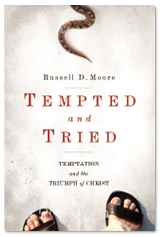
The following is my favorite excerpt from one of my favorite books of 2011: Tempted and Tried: Temptation and the Triumph of Christ by Russell Moore (Crossway, 2011). The quote is worthy of a slow and careful read (from pages 124-125):

Part of the curse Jesus would bear for us on Golgotha was the taunting and testing by God’s enemies. As he drowned in his own blood, the spectators yelled words quite similar to those of Satan in the desert: “Let the Christ, the King of Israel, come down now from the cross that we may see and believe” (Mark 15:32). But he didn’t jump down. He didn’t ascend to the skies. He just writhed there. And, after it all, the bloated corpse of Jesus hit the ground as he was pulled off the stake, spattering warm blood and water on the faces of the crowd.

That night the religious leaders probably read Deuteronomy 21 to their families, warning them about the curse of God on those who are “hanged on a tree.” Fathers probably told their sons, “Watch out that you don’t ever wind up like him.” Those Roman soldiers probably went home and washed the blood of Jesus from under their fingernails and played with their children in front of the fire before dozing off. This was just one more insurrectionist they had pulled off a cross, one in a line of them dotting the roadside. And this one (what was his name? Joshua?) was just decaying meat now, no threat to the empire at all.

That corpse of Jesus just lay there in the silences of that cave. By all appearances it had been tested and tried, and found wanting. If you’d been there to pull open his bruised eyelids, matted together with mottled blood, you would have looked into blank holes. If you’d lifted his arm, you would have felt no resistance. You would have heard only the thud as it hit the table when you let it go. You might have walked away from that morbid scene muttering to yourself, “The wages of sin is death.”

But sometime before dawn on a Sunday morning, a spike-torn hand twitched. A blood-crusted eyelid opened. The breath of God came blowing into that cave, and a new creation flashed into reality….

Astonishing.

Dr. Moore’s book will be released in April.

With Our Arms About Their Knees

These words from Charles Spurgeon were originally preached to Christian parents of unbelieving children and to wives of unbelieving spouses. The quote is from his sermon on Jeremiah 4:20 (sermon #349) delivered on 9 Dec 1860:

Oh my brothers and sisters in Christ, if sinners will be damned, at least let them leap to hell over our bodies and if they will perish, let them perish with our arms about their knees, imploring them to stay, and not madly to destroy themselves. If hell must be filled, at least let it be filled in the teeth of our exertions, and let not one go there unwarned and unprayed for.

New-Old Calvinism

Kenneth J. Stewert, Ten Myths About Calvinism: Recovering the Breadth of the Reformed Tradition (IVP/Apollos, 2011), pages 288–289:

What is true of us individually is also true of the particular movements we are part of now. We need to see that every resurgence of the Reformed faith is, in fact, new-old; that is, it is a fusion of elements from long ago with contemporary elements. That blend is important because the quality and staying power of any particular wave of Calvinism will lie, in large measure, in how these two factors are held in creative tension. If a Calvinist movement stresses only the reiteration of ideas and doctrines from long ago, its tendency will be antiquarian and fogyish; its devotees might actually wish to be living in a different time and place! On the other hand, if a Calvinist movement glories chiefly in its affinities with the contemporary scene (whether these affinities are musical, in the arts, the trappings of pop culture, etc.), the necessary link with historical markers of the movement may be very hard to locate.