Humble Calvinism: (6) The Institutes > The implanted knowledge of God (1.3)

02spurgeonhumcalvinism.jpg

Part 6: The implanted knowledge of God (1.3)

There is no proper understanding of culture, man, belief, unbelief, evangelism, sin and preaching without a theological substructure. A truly effective methodology of ministry must begin with truly biblical theology. Calvin understood this well.01spurgeoncalvin4.jpg

If you are a pastor, evangelist, or just a Christian who loves the lost, your great conviction is to share the truth of God to others. Before we begin considering how others come to know God as their Savior (and even how we ourselves came to know God as Savior) it’s critical to understand how God communicates Himself to all sinners. In chapters 3-9, Calvin forces us to wrestle with a biblical understanding of the knowledge of God. If we miss this foundation, we will seek to communicate God to others in a way built upon a false method of ministry.

The knowledge of God is etched on every soul (1.3.1)

We will soon look at Calvin’s understanding of a universal knowledge of God in the hearts of all sinners. But first Calvin tells us why God has “etched” this knowledge into every heart. “To prevent anyone from taking refuge in the pretense of ignorance, God himself has implanted in all men a certain understanding of his divine majesty” (43).

The word “theology” literally means “knowledge of God.” I remember a pastor sitting in my living room just after God sovereignly saved my soul at the age of 22. I told the pastor I wanted to learn theology. He said, “you already have a theology, you mean you want to foster a biblical theology.” Yes! He was exactly correct. Since birth I have understood something of God. Theology is not a big book with lots of Scripture references, but something we are born with. Why?

God implants this knowledge in all sinners to “prevent anyone from taking refuge in the pretense of ignorance.” So ask a sinner, “Why do you not love and follow God?” Sinners can say they love sin more than God, they can say they hate God, they can say they want to live without God’s authority in their lives, but NO sinner can say ‘I don’t follow and love God because I don’t know anything about Him.’ The argument of ignorance is “pretense.”

Calvin writes, “a sense of deity” is “inscribed in the hearts of all” (p. 44). Thus, because “one and all perceive that there is a God and that he is their Maker, they are condemned by their own testimony because they have failed to honor him and consecrate their lives to his will” (p. 44).

As sinners, we are all aware of God and know we must submit and love Him. We respond by running away from Him. We, who are created to worship God, substitute Him with the worship of money, sex, alcohol, work, children, and religion.

Proven by the masses and wicked (1.3.2)

Because some knowledge of God is etched in the hearts of all men, women and children, it follows that we should see evidences of this in our culture. We see this first in the masses who are drawn to religion. The “inclination toward religion springs as from a seed” (p. 45).

Lenin and Marx both said religion is the “opiate of the people.” But religion would fall on deaf ears without first the seed of God implanted the heart. The most persuasive deceptions come from religious leaders (like some TV evangelists and all false religions) who foster lies from the religious inclinations of people. Masses of people will follow the “opiate,” false religions and deceptive false teachers, only because they first know God exists. (However, it should be noted that following false religions shows a sinner seeking to appease his conscience without repenting to the true God.) All sinners know something of God.

Second, Calvin says even the most wicked, God-ignoring sinners are (at times) overwhelmed with a sense of God’s judgment. They seek to erase the thought from their minds and run from God but the sense of His judgment ever returns into their conscience and “rushes in with new force” (p. 45). “The impious themselves therefore exemplify the fact that some conception of God is ever alive in all men’s minds” (p. 45).

Impossibility of atheism (1.3.3)

A sense of God is permanently etched into the souls of sinners. We cannot erase it! Atheism – being convinced God does not exist – may sound pleasing to the ear of the unrepentant sinner but it will never bring peace to the “etched” conscience.

The knowledge that God exists is “not a doctrine that must first be learned in school, but one of which each of us is master from his mother’s womb and which nature itself permits no one to forget, although many strive with every nerve to this end” (p. 46).

Sinners are fully aware that God exists, that by not submitting to Him we are all worthy of judgment. So what prevents every sinner from coming to God, repenting and worshipping Him? That’s what Calvin addresses in the next chapter.

Calvinistic meditations …

Like Calvin said, learning about God is unlike academic learning. For example, a biology student begins in ignorance and through training begins to understand more and more of the field. Knowledge of God is different because sinners begin with the knowledge of God etched within their hearts! We are all fully aware that God exists and that His judgments are real. Unlike academic studies, there is no true ignorance of the subject. Sinners suppress the truth of God in unrighteousness (Rom. 1:18-32). To say there is no God is not intellectually ignorant, but morally foolish (Ps. 14:1). Without this foundation, we will treat sinners as ignorant learners, like those entering Biology 101 for the first day of class.

Scripture prevents anyone from “taking refuge in the pretense of ignorance” (p. 43). The truth is that all sinners know of God, but push Him away in their sin. This pushing away truth in preference of sin is the basis for God’s judgment of all sinners (John 3:19-20). We are not ignorant people needing further proof of God, but sinners who need the power of God to break us under our sinfulness. Our failure to seek God and submit to Him is “without excuse” (Rom. 1:20).

When we treat sinners as largely good people who are indifferent towards God, we introduce significant lies into our methodologies. We forsake the preaching of truth on Sunday mornings and use it as a time to introduce non-Christians to fuzzy stories and vague principles. We begin treating sinners as largely ignorant of God, rather than fully aware of God. We begin thinking elementary knowledge and proofs of God’s existence can replace pleading with sinners to repent from their morally culpable suppression of God’s self-evidence.

The methodology of the church is always bound with the theology of the church. That God etched a knowledge of Himself into every heart must be at the foundation of everything we do and say.

Only when we stop treating sinners as first-year biology students will we seek the sovereign power of God to open hard hearts through His means alone! That is exactly what Calvin was driven towards. And it is exactly why (by God’s generous grace) Humble Calvinism is so necessary today.

————————–

Click here to access previous posts in the Humble Calvinism index.
Book announcement > Outrageous Mercy by Wm. P. Farley

Book announcement

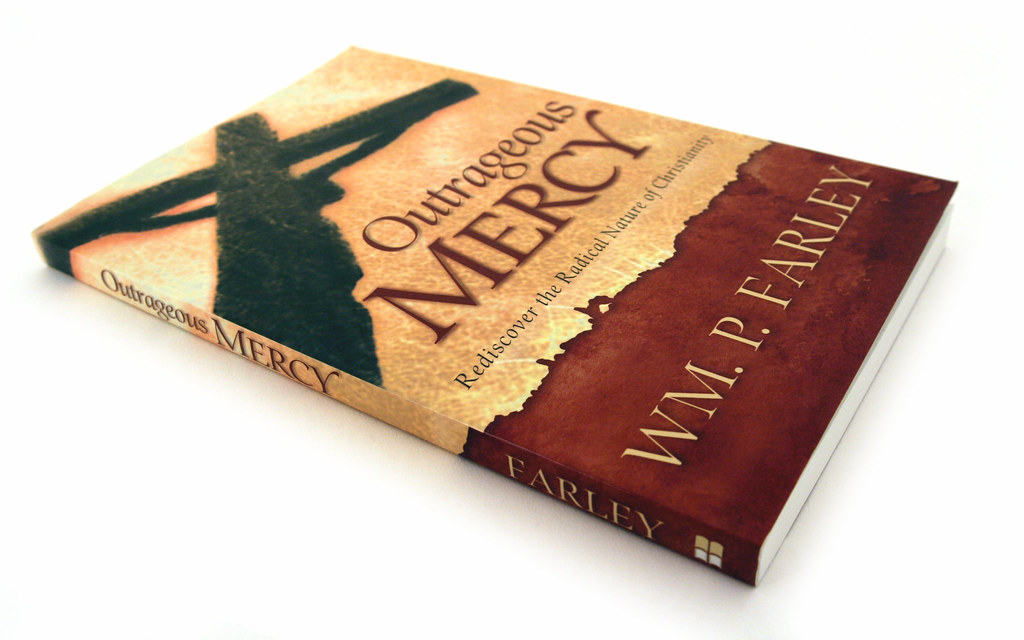
Outrageous Mercy by Wm. P. Farley

Given the fact that my favorite book apart from the Bible (The Precious Things of God) is out of print, I’m accustomed to promoting books that are hard to find. Add this one to a growing list of excellent but (sadly) out-of-print books.

Published in 2004, Outrageous Mercy by Wm. P. Farley is a powerful, Cross-centered book. I especially appreciate the straightforwardness of the content. The fact is that we are surrounded by a church culture that does not routinely value the Cross. Farley does a good job explaining how churches degenerate but he also does a great job showing the biblical basis and daily implications of the Cross.

It was originally published by Baker and may take some time to locate. Here are a few quotes that stand out …

“We can put the cross on the back shelf and still be Christians, but the slide will continue. The children of those who accept a Christianity centered in something other than the cross won’t put the cross on the back shelf; they will put Christianity on the back shelf. And the next generation might even forget the faith altogether” (p. 35).

“’I wish I had a deeper experience of the love of God,’ we complain. Well, look at the cross. That is where God’s love is displayed. It appears nowhere else with such clarity. Meditate on it. Run to the glorious God revealed there. Put your trust in him. He is intensely interested in your eternal happiness” (p. 46).

“At the cross, the love of God and the wrath of God shake hands; the mercy of God and the justice of God embrace; and the holiness of God and the sinfulness of humanity appear in stark contrast. The cross teaches us to fear God and delight in his love at the same time” (p. 53).

I’ll be posting a very powerful quote about John Newton soon (and a few other quotes from this book next week). Bottom line: any effort to find this book will be richly rewarded!

——————————-

Title: Outrageous Mercy: Rediscover the Radical Nature of Christianity
Author: Wm. P. Farley
Boards: paper
Pages: 184
Binding: glue
Paper: normal
Topical index: no
Scriptural index: no
Text: perfect type
Publisher: Baker Books (out-of-print)
Year: 2004
Price USD: ?
ISBNs: 0801064929

——————————-

Chapters

1. The Centrality of the Cross
2. Foundations
3. God 101
4. The Worst of Sinners
5. For God’s Glory
6. Crucified Flesh
7. God’s Spiritual Boot Camp
8. I Will Boast No More
9. The Foolishness of God’s Wisdom
10. The Supreme Sufferer in the Universe
11. The Heart of Worship

Books > New book on Calvin: The preacher

New book on Calvin: The preacher

I am well aware that Calvin was not perfect but I find criticisms of his preaching style to be misleading. If you read Calvin’s sermons you will see that he is a very clear, powerful and persuasive preacher. In Lectures on the History of Preaching, John Broadus writes that Calvin’s preaching was “practically destitute of imagination” (p. 119). What?! These types of statements have historically cast Calvin’s preaching in a negative light and (in my opinion) makes him one of the most under-appreciated preachers in church history.

So I’m excited to see that Steven Lawson is coming to a defense of Calvin the preacher. In Lawson’s new book he writes,

“Although some think of him as stiff and awkward in his pulpit ministry, [are you ready for this?] Calvin was well-equipped in the creative aspects of effective communication. Although he was certainly not a great orator, he was more than just a skilled exegete. Standing in the pulpit with an open Bible, Calvin skillfully painted with many bold brushstrokes of colorful human language. The resplendent hues of effective communication were on his preaching palette, ready for his use. At his disposal was an array of vivid figures of speech, rhetorical questions, biting sarcasm, compelling language, colloquial expressions, and the like. Such are the tools of the art of vivid preaching, and their effective use often separates mediocre exposition from good and even great pulpit work.”

– Steven Lawson, The Expository Genius of John Calvin (Reformation Trust) pp. 84-85. [Note: The anticlimactic emphasis is mine, as is the bold lettering and special emphasis where both bold and italic are use on the word “creative.”]

The Expository Genius of John Calvin will be published in March by Reformation Trust (Ligonier). Preachers will find Lawson’s principles on exegesis and homiletics very helpful. Thank you Dr. Lawson for this encouraging (and history-straightening) book!

————————–

Click here to access previous posts in the Humble Calvinism index.

————————–

Humble Calvinism: (5) The Institutes > The all-sufficient God of Scripture (1.2)

02spurgeonhumcalvinism.jpg

Part 5: The all-sufficient God of Scripture (1.2)

So we lay in the dust of a dark cave in our filthy rages, covering our eyes to flee the presence of a perfect God. We are shattered. Our self-sufficiency has been replaced with a dread of God and our self-righteousness has been muffled by hopelessness. We lay in naked perversity before the holy God of the universe.

01spurgeoncalvin3.jpgIf we understand God and understand ourselves we become painfully aware of our empty hearts. In the last chapter Calvin wrote, “Each of us must, then, be so stung by the consciousness of his own unhappiness as to attain at least some knowledge of God” (p. 36). As sinners we become aware of our insufficiency. We cannot produce our own joy. We must fearfully seek our joy in the all-sufficient, unchanging God of Scripture.

Seeking the sufficient God (1.2.1)

Piety forms the foundation for all of Calvin’s theology. Piety is “that reverence joined with love to God which the knowledge of his benefits induces” (p. 41). Prior to understanding God’s motives and plans we must love and fear Him.

We will not run towards God until we are convinced that our joy depends upon it! Calvin writes, “it will not suffice simply to hold that there is One whom all ought to honor and adore, unless we are also persuaded that he is the fountain of every good, and that we must seek nothing elsewhere than in him … unless they [men] establish their complete happiness in him, they will never give themselves truly and sincerely to him” (p. 40).

It is here that Calvin showcases his experiential understanding of faith. We worship what promises to satisfy us. If we believe sex will satisfy us we worship sexual sin. If we think a beautiful appearance will bring us satisfaction we worship the outward beauty of others. If we think religion will satisfy us we worship our self-righteousness. We worship what holds the promise of our satisfaction. We will only come to God after being fully convinced our entire good rests in Him alone.

True piety is expecting full joy from God alone. Here Calvin says we seek knowledge of God by recognizing His all-sufficiency. So the act of seeking this all-sufficient God is not to be confused with saving grace. “It is one thing to feel that God as our Maker supports us by his power, governs us by his providence, nourishes us by his goodness, and attends us with all sorts of blessings – and another thing to embrace the grace of reconciliation offered to us in Christ” (p. 40).

But don’t miss this! Calvin has not yet brought us to the place where sinners are reconciled to God. That will come later. A conviction that God is our all-sufficient source of joy is not saving faith. It’s no wonder that Calvin lays great importance upon the sovereign grace of God opening the eyes of blind sinners like myself.

Seeking the revealed God (1.2.2)

Piety is seeking our sufficiency in the true God (not a god of our imagination). Piety involves a fear of God because God is what He is and not what the sinner deems appropriate.

Calvin uses one especially powerful example: Do we truly believe the “punishment of the impious and wicked and the reward of life eternal for the righteous equally pertain to God’s glory” (p. 43)? Clearly Calvin is building from Romans 9:22-23.

The god I naturally imagine is a politician polishing his persuasive speeches because his success rests upon a popular applause. This politician/god gets no glory from his enemies. Not so with God. Impenetrable divine wisdom uses the judgment of unrepentant sinners to exalt God’s own glory.

True piety pursues this sovereign God of Scripture, not the democratic god of my imagination. Calvin writes, “the pious mind does not dream up for itself any god it pleases, but contemplates the one and only true God. And it does not attach to him whatever it pleases, but is content to hold him to be as he manifests himself” (p. 42).

Without seeking the Scriptural God, a true fear will be replaced by “vague general veneration” of God (p. 43). Sinners can show respect for God without a fear of God. Here’s where the mere outward display of veneration in religious ceremonies becomes dangerous. A sinner may tip his hat at God without fearing Him. Without a genuine fear of God there is no genuine piety and without piety we will never truly know the saving knowledge of God.

We must fear and seek after God as He reveals Himself. Again, seeing this in the backdrop of my blinding, deadening sin I cry out as a helpless sinner dependent upon the sovereign work of God!

Calvinistic meditations …

1. A genuine fear of God authenticates our pursuit of the one, true God
. True piety fears God because God is altogether different than we naturally imagine. The god of my imagination is a lot like myself. I don’t fear those who are like me (I only fear people who are larger than me!). “You thought I was altogether like you. But I will rebuke you and accuse you to your face” (Psalm 50:21, NIV). What shock must overwhelm the damned soul to be trampled under the winepress of God’s wrath after thinking He was a 5-foot-8 pushover.

Use your fear of God to gauge how well your imagined god is replaced by the sovereign God! It’s good to ask: Do I live with a healthy fear of God or a “vague general veneration” of God? Fear is piety, vague veneration is pride.

2. We must never rest content in general notions of God as our source of all joy. Every sinner using natural revelation and a natural sense of the divine can make this conclusion. It is something altogether different when sinners confess Christ is our “wisdom and our righteousness and sanctification and redemption” (1 Cor. 1:30).

In a secularized culture, the church naturally lowers its expectations of faith. If someone believes God is the source of their entire good, can’t we assume that they are genuine Christians? No. What false religion advertises an insufficient god? Believing God is all-sufficient is not itself saving. Salvation comes through faith in the very specific revelation we call the gospel. Jesus Christ died my death to pay for my sin by bearing my wrath to free me from the power of my sin.

The Reformed/Puritan tradition used the phrase “almost Christian” to designate those drawn to the all-sufficient God but who had not “closed” with Christ. When a vague understanding of God’s sufficiency is mistaken for saving faith in the Cross the phrase “almost Christian” becomes foreign, the doctrinal core of the gospel becomes vague, religious relativism runs rampant and the church begins reading books by mystics because they mistake an author’s seeking of joy alone in God with authentic Christianity. Humble Calvinism will not allow it.

We must not grow content with an ecumenical journey of desire but press on in pursuit of an all-satisfying righteousness that comes by faith alone, in Christ alone, from the Cross of Christ alone!

————————–

Click here to access previous posts in the Humble Calvinism index.

————————–

Humble Calvinism: Series index

02spurgeonhumcalvinism.jpg

Humble Calvinism: Full series index

——————————–

“A world-class theologian, a revered exegete, a renowned teacher, an ecclesiastical statesman, an influential Reformer — he was all of these and more. His name was John Calvin.”– Steven J. Lawson, The Expository Genius of John Calvin

——————————–

Humble Calvinism > Full Posts

1. John Calvin (1509-1564)
2. Why John Calvin?
(Why Calvinism? Why now?)
3. The Institutes > Intro
4. The Institutes > Knowing God and knowing self (1.1)
5. The Institutes > The all-sufficient God of Scripture (1.2)
6. The Institutes > The implanted knowledge of God (1.3)
7. The Institutes > Weaving a wicker basket god (1.4)
8. The Institutes > ‘Radical’ depravity (1.5)
9. The Institutes > Clinging to a thread (1.6)
10. The Institutes > The self-authenticated Word (1.7)
11. The Institutes > Proofs of Scripture’s authenticity (1.8 )
12. The Institutes > The “mutual bond” of God’s power and Word (1.9)calvininstitutes.jpg
13. The Institutes > Experiencing God (1.10)
14. The Institutes > The idol factory (1.11)
15. The Institutes > God is One (1.12)
16. The Institutes > God is Three (1.13)
17. The Institutes > Viewing God’s Theater (1.14)
18. The Institutes > The Spirit’s Application of the Gospel (3.1)
19. The Institutes > What is Faith? Pt. 1 (3.2.1-5)

——————————–

Books

1. Humble Calvinism Essentials (Institutes and McGrath bio)
2. New book > Calvin: The preacher A good corrective by Lawson
3. Review > Sermons on the Beatitudes by Calvin
4. Review > Calvin’s Teaching on Job by Derek Thomas
5. Review > Chosen for Life by Sam Storms
6. Quote > The importance of Calvinism by Steven Lawson
7. Quote > Calvinism and the redemption of counseling
by David Powlison

(Tim Challies has made the world fully aware of my biblio-photographic nerdiness. Thanks Tim for the humility. I need more of it!)

——————————–

Misc. articles and posts

1. D. Clair Davis > “What’s so good about being a Calvinist?
2. Journaling > A Day in the Life of a Humble Calvinist

3. 2007 Banner of Truth Ministers’ Conference details
4. Bonar > The Humble Calvinist in the work of God
5. Packer > Humble Calvinism and evangelism
6. Calvin > The weight, beauty and comfort of the Gospel
7. Kuyper > This all-embracing predestination

——————————–

tssimagecards.gif

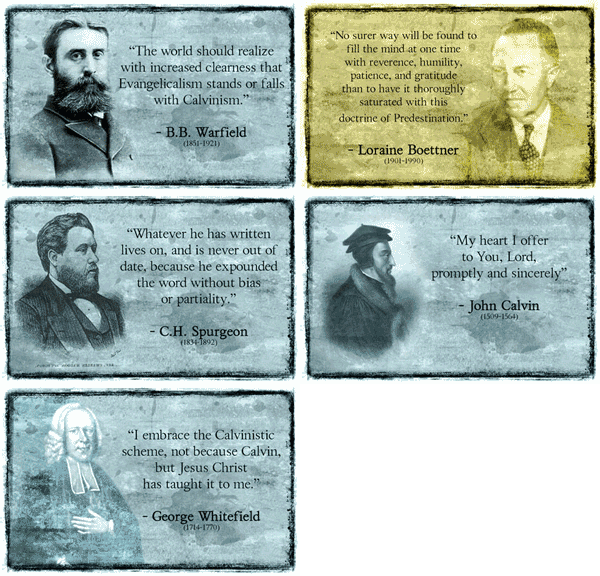
Humble Calvinism image cards: B.B. Warfield, John Calvin, Loraine Boettner, George Whitefield. Do you have a great Calvinism quote? Post it in the comments at the bottom of this post and it may become an image card.

——————————–

Reviews and notes

– The banner graphic was lifted straight from the creative minds of Sovereign Grace Ministries New Attitude group. Thanks for the graphic inspiration and the spiritual inspiration to live out humble orthodoxy! (2007.01.09)

02spurgeoncalvinsig.jpg

Humble Calvinism: Books > Essentials

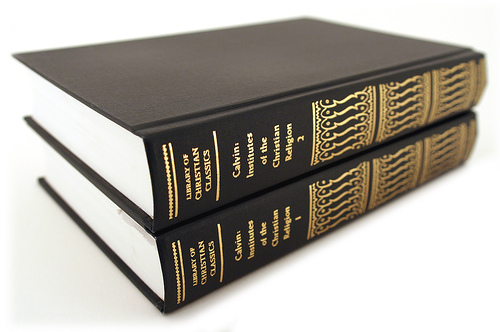
We will be looking at a number of books by and about John Calvin in the next few months. At this stage, the following three volumes are most important. I’m tracing Calvin’s thought using the Institutes of the Christian Religion (1559 edition) in the form of the 1960 McNeill and Battles translation (because I’m told its the best). The 2-volume work is published by Westminster John Knox Press (ISBNs 9780664220280, 0664220282). I’m told the cloth version pictured below is no longer available.

calvininstitutes.jpg

I am told this hardcover edition (no dust jackets) is the standard issue now …

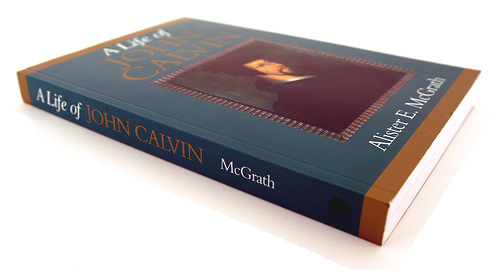
A Life of John Calvin is an excellent biography by Alister McGrath. It has been very useful in understanding Calvin’s life, his theological development, the central themes of his theology and the broader cultural impact of Calvinism. A Life is a limiting title for the scope of the book. It was published by Blackwell in 1990 (ISBNs 0631189475, 9780631189473).

calvinbio.jpg

————————–

Click here to access previous posts in the Humble Calvinism index.

————————–