‘Of my own accord’: The Eager Redeemer (pt. 2)

‘Of my own accord’: The Eager Redeemer (pt. 2)
by Tony Reinke

“For this reason the Father loves me, because I lay down my life that I may take it up again. No one takes it from me, but I lay it down of my own accord.” (John 10:17-18a)

Last time we discovered that Jesus must be more than a suitable Redeemer; He must also be a willing Redeemer. In the light of His willingness and eagerness we learn the depth of our Savior’s love.

The most common phrase of Jesus willingness to lay His life down for sinners is to say Jesus “gave Himself” for us (Gal. 1:4, 2:20; Eph. 5:2, 5:25; 1 Tim. 2:6; Titus 2:14). The phrase drips of volition and purpose and of knowing exactly what He was getting Himself into. This willingness is so precious.

Today we look specifically at John 10 and the consequences of Jesus as the Good Shepherd. I call this section “The Heartbeat of an Eager Shepherd.”

Personal pronouns

One striking feature of John 10 is the emphasis on the individual sheep. Listen to how personally Jesus explains the relationship between the sheep and the Shepherd. Jesus says,

“The sheep hear his voice, and he calls his own sheep by name and leads them out … A stranger they will not follow, but they will flee from him, for they do not know the voice of strangers. … If anyone enters by me, he will be saved and will go in and out and find pasture … For this reason the Father loves me, because I lay down my life that I may take it up again. No one takes it from me, but I lay it down of my own accord. I have authority to lay it down, and I have authority to take it up again. This charge I have received from my Father. … My sheep hear my voice, and I know them, and they follow me. I give them eternal life, and they will never perish, and no one will snatch them out of my hand.”

We cannot miss the context of Jesus’ willingness to die. He was willing to die because He personally loved each one of His sheep. When we forget about the willingness of the Shepherd to die, we think of Him as a “hired hand” who came to die by the command of another, dying an impersonal death for some faceless, nameless sheep. Never! Jesus contrasts His own heart with that of a “hired hand” who does not care individually for the sheep (John 10:11-15). “I am the good shepherd. I know my own and my own know me, just as the Father knows me and I know the Father; and I lay down my life for the sheep.” Jesus lived and died for His specific sheep.

Couched within the willingness of Christ to redeem sinners is the demonstration of Christ’s love towards His individual sheep. Charles Spurgeon writes, “Love delights in personal pronouns … He died for his flock, and for each one of his sheep in particular; so that we may each one say to-day, ‘He loved me, and gave himself for me’ [Gal. 2:20]; and each one know that for himself, with special intent, the Lord Jesus bore the agony and bloody sweat, the cross and passion” (sermons, vol. 35).

If you are one of His sheep, know that the Shepherd Himself willingly gave Himself for you. He knew you, loved you, died for you, suffered for you, bore your wrath, and now protects you and comforts you! Christ was eager to redeem each of His sheep. Be moved by the personal pronouns.

Christ willingly pursues us

Notice what motivates the free willingness of the Son. The Father takes pleasure in the Son’s free offering of Himself (John 10:17). This alone is worthy of much reflection. The Father finds delight in Christ for His willing offering of Himself. Amazing!

Secondly, Christ is moved to eagerness because He loves His sheep. How do we become His sheep? If I understand the context of John correctly, there is nothing you can do to be one of His sheep. This designation rests upon the free, unmerited sovereign grace of God. Jesus said, “but you do not believe because you are not part of my flock” (v. 26). Belief or unbelief are not the determining factor. The determining factor was God’s electing will in placing us in one sheepfold or another. To put it another way, my faith, my obedience, my sinful wretchedness, my love, my character, my successes, my failures do not determine or undermine Christ’s love for me. His was an unconditional love for each sinful sheep in His care.

Because Christ loves depraved sinners like us, calls each of us by name, and willingly gives Himself, we can safely conclude: The Good Shepherd pursues each of His sheep. It’s here that we see the eagerness of the Son. He was motivated to pursue me willingly and of His own freedom. He pursued me. Say that out loud … “He pursued me!”

In Luke 15 the Pharisees came to Jesus and ridiculed Him for “receiving sinners.” They were wrong. Jesus does not receive sinners, He pursues sinners. He pursues sinners like a shepherd pursues a lost sheep (vv. 4-7), like a woman pursues her lost coin (vv. 8-10), like a father runs after his lost son (vv. 11-32). With binoculars and a flashlight in hand, Jesus runs in pursuit of sinners.

Horatius Bonar writes, “in his work of saving, Christ is aggressive and compulsory. He goes out in order to find them. He is ever on the outlook. He does not merely sit above on his throne, willing to receive the applications of those who come. He comes down amongst us. He goes to and fro in the earth; He walks up and down in it. His daily, hourly work is going in quest of sinners” (Light and Truth).

The willingness of Christ reveals the deep love of Christ for you and I. Willingly, eagerly, freely, and aggressively He is in quest of sinners like me. This is grace in its purest form.

Deepest love, deepest comforts

The willing pursuit of your soul by Christ is the source of all comfort in this world. There is no dark cloud that can hide the sun of Christ’s love.

Octavius Winslow writes, “Are you wounded? Does your heart bleed? Is your soul cast down within you? Is your spirit within you desolate? Still Jesus is love, is loving, and loves you. He has suffered and died for you; and, were it necessary, He would suffer and die for you yet again. Whatever blessing He sees good to take from you, Himself He will never take. Whatever stream of creature love He sees fit to dry, His own love will never fail. Oh, can that love fail — can it cease to yearn, and sympathize, and soothe, and support, which brought Jesus from heaven to earth to endure and suffer all this for us? Be still, then, lie passive and low — drink the cup, and let the surrender of your sin, your obedience, and yourself to Him be as willing and as entire as was the surrender of Himself for you. Then shall you, in a blessed degree, be ‘able to comprehend with all saints what is the breadth, and length, and depth, and height, and know the love of Christ, which passes knowledge, filled with all the fullness of God’” (Daily Walking with God).

Conclusion

We must grasp the willingness of Christ. In His willingness we comprehend the depth of Christ’s love. He pursues sinners. If we are of His sheepfold — found resting in His righteousness alone, saved when He found us drinking from polluted cisterns and lost on the path of destruction — there can be no life situation too dark or too hopeless.

In one of my favorite contemporary books, Instruments in the Redeemers Hands: People in Need of Change Helping People in Need of Change, Paul David Tripp writes, “Biblical personal ministry is more about perspective, identity, and calling than about fixing what is broken” (p. 185). To say it another way, helping others see the willingness of Christ to endure the Cross and His relentless pursuit of His sheep may be one of the most life-transforming, problem-clearing, darkness-breaking truths you will bring to a counseling situation.

Dwell frequently upon Christ’s eagerness.

A Personal Covenant by Thomas Boston

A Personal Covenant
by Thomas Boston
August 14, 1699

I, MR. THOMAS BOSTON, preacher of the gospel of Christ, being by nature an apostate from God, an enemy to the great JEHOVAH and so an heir of hell and wrath, in myself utterly lost and undone, because of my original andthomasboston.jpg actual sins, and misery thereby; and being, in some measure, made sensible of this my lost and undone state, and sensible of my need, my absolute need of a Saviour, without whom I must perish eternally; and believing that the Lord Jesus Christ, the eternal Son of the eternal God, is not only able to save me, by virtue of his death and sufferings, but willing also to have me (though most vile and ugly, and one who has given him many repulses), both from my sins, and from the load of wrath due to me for them, upon condition that I believe, come to him for salvation, and cordially receive him in all his offices; consenting to the terms of the covenant.
Therefore, as I have at several opportunities before given an express and solemn consent to the terms of the covenant, and have entered into a personal covenant with Christ; so now, being called to undertake the great and weighty work of the ministry of the gospel, for which I am altogether insufficient, I do by this declare, That I stand to and own all my former engagements, whether sacramental, or any other way whatsoever; and now again do RENEW my covenant with God; and hereby, at this present time, do solemnly COVENANT and ENGAGE to be the Lord’s and MAKE a solemn resignation and upgiving of myself, my soul, body, spiritual and temporal concerns, unto the Lord Jesus Christ, without any reservation whatsoever; and do hereby give my voluntary consent to the terms of the covenant laid down in the holy scriptures, the word of truth; and with my heart and soul I TAKE and RECEIVE Christ in all his offices, as my PROPHET to teach me, resolving and engaging in his strength to follow, that is, to endeavour to follow his instructions.

I TAKE him as my PRIEST, to be saved by his death and merits alone; and renouncing my own righteousness as filthy rags and menstruous cloths, I am content to be clothed with his righteousness alone; and live entirely upon free grace; likewise I TAKE him for my ADVOCATE and INTERCESSOR with the Father: and finally, I TAKE him as my KING, to reign in me, and to rule over me, renouncing all other lords, whether sin or self, and in particular my predominant idol; and in the strength of the Lord, do resolve and hereby engage, to cleave to Christ as my Sovereign Lord and King, in death and in life, in prosperity and in adversity, even for ever, and to strive and wrestle in his strength against all known sin; protesting, that whatever sin may be lying hid in my heart out of my view, I disown it, and abhor it, and shall in the Lord’s strength, endeavour the mortification of it, when the Lord shall be pleased to let me see it. And this solemn covenant I make as in the presence of the ever-living, heart-searching God, and subscribe it with my hand, in my chamber, at Dunse, about one o’clock in the afternoon, the fourteenth day of August, one thousand six hundred and ninety-nine years.

T. BOSTON

The Jesus ossuary controversy

The Jesus ossuary controversy

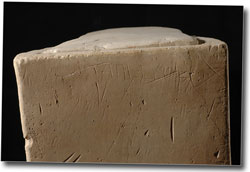
By now you’ve probably all heard about the supposed discovery of the bones of Jesus in Jerusalem (from here on I’ll be calling it the “Jesus-in-a-Box Controversy”). I’m not at all surprised someone is trying to make money off the find. But the claim of finding Jesus’ bones is serious because it calls the historical accuracy of the resurrection intostonesmall.jpg question. This itself is nothing new. Even in Paul’s day the bodily resurrection was attacked as a sham. Scripture reminds us that if the resurrection of Christ is bogus, our preaching of the gospel is vain, we lie about God, our faith is futile, our death is hopeless, and we are dead in our sins (1 Cor. 15:12-19). The resurrection is pretty important to the church.

But my personal concern is this: How do I as a Christian gauge this controversy? I want to take this (and other) controversies as opportunities to check my own heart condition. So here are a few thoughts for us to consider:

1. It’s a good reminder of the reality of deception. If Satan’s goal is deception, why wouldn’t he have carved a box with names and bones in an attempt to undermine the gospel? Have we forgotten we have a powerful enemy of the truth willing to take all efforts to subvert the Cross? In this situation, either Satan is a deceptive box crafter and/or he has convinced men of evil lies. Either way, Satan’s work in deception frequently goes unnoticed. Don’t wait for the local newspaper to uncover the Satanic deception — stay on your biblically-illuminated toes.

2. It’s a good reminder to keep our eyes on the gospel. The DaVinici Code was an excellent example how broad punches that land both in the Roman Catholic and Evangelical camps cause equally broad religious alliances. I assume the Jesus-in-a-Box Controversy is headed in the same direction. It will provide a platform for various religions to form alliances in a common goal of protecting the resurrection. The fallout of many years of this activity is that Christians and pastors can no longer discern between a self-righteous gospel and a self-renouncing gospel. Aren’t we on the same team? Honestly, it gets hard to tell the difference when various gospels stand hand-in-hand every year to battle the next cinematic heresy. The tendency will be to let the gospel fade into the background and become more obscure to a culture that largely hopes in self-righteousness. If I understand Paul correctly, it’s not the outright denial of the faith that poses the greatest dangers. The greatest dangers to the church are the subtle shifts in the message of the gospel (see Gal. 1:6-10, 2:11-21). So take this controversy as a great opportunity to rejoice in the self-renouncing Cross (Gal. 6:14). Don’t get thrown off-center.

3. It’s a good reminder to walk by faith and not by sight. Do you trust your eyes more than God’s Word? This question really surfaces in an event like this. If we find our faith shaking in front of the pictures, then it’s possible our faith has always been propped up by what we see with our eyes. We are called to walk by faith in Scripture as opposed to walking by sight (Rom. 10:17; 2 Cor. 5:7; Heb. 11:1). The argument you will read on this controversy is that there is no conclusive evidence these are the authentic bones of Jesus. The problem is there also remains the unlikelihood of proof that these are NOT the bones of Jesus. If we walk by sight we may inevitably come to an inconclusive standstill with the visible evidence. Controversies like this one are useful to gauge our own hearts with this question: Do I take God at His Word or not? “But in fact Christ has been raised from the dead” (1 Cor. 15:20).

4. It’s a good reminder of our propensity to worldly logic. As we’ve seen in our study of Calvin, a true understanding of the gospel exceeds the limits of depraved common sense. The Spirit seals the authenticity of the gospel on our hearts supernaturally (see part 10 of our Humble Calvinism series). Apart from God’s intervention, the gospel will seem foolishness to us; which means once we become Christians we are frequently placed in worldly situations where the true answer will be labeled ‘foolish.’ In this particular controversy, Christians should be free to respond by saying, “God revealed Himself in Scripture. Scripture says Jesus was raised from the dead. Jesus’ bones are in heaven with the rest of His resurrected body. Done.” I’ve read all types of arguments about DNA impossibilities, archaeologists refuting things and language experts making arguments to disprove the authenticity of the boxes. I’m certain lengthy books are already being written. Personally, I wonder how much of this is motivated by Christians seeking to defend their biblical faith without looking foolish to the world? I’m not saying it’s easy to be considered foolish, but it is the cost of devoting our minds and lives to God’s revelation. God has spoken. Take Him at His Word and boast in Him (1 Cor. 1:18-31).

Don’t get me wrong, I don’t disagree with the conclusion of those who deny scientifically or archaeologically that Jesus is in the box. I know He’s not (and honest science and forensic evidence will bear this out). Nor am I arguing for an anti-intellectual fundamentalism that hides from the hard questions. I’ll leave the hard questions for the experts.

My plea is for honesty. Bible-believing Christians and pastors should keep God’s revelation open and central in this controversy, no matter how foolish it appears to the world. We are not called merely to believe in the Cross privately but boast in the Cross publicly! It’s in the light of controversy we gauge our success here.

The bottom line is that I don’t need the testimony of an archaeologist or scientist or scholar to sleep well tonight. I trust in God’s revelation. Christ rose from the dead. God said so. And we must be willing to bear the label of ‘fool’ to stand on the only Rock that can withstand the Titanic breakers of Hollywood.

The Cross-centered (prayer) life

Octavius Winslow
The Cross-centered prayer life

“Until now you have asked nothing in my name. Ask, and you will receive, that your joy may be full” (John 16:24)

“A most powerful incentive to prayer is found in a close and realizing view of the atoning blood. What encouragement does it present to this blessed and holy life of communion with God! The atoning blood! The mercy seat sprinkled over! The High Priest before the throne! The cloud of incense constantly ascending! The Father well pleased! What can more freely invite the soul that pants for close and holy communion with God? And when the atoning blood is realized upon the conscience, when pardon and acceptance are sealed upon the heart by the Eternal Spirit, oh, then what a persuasion to draw near the throne of grace has the believer in Christ! Then, there is no consciousness of guilt to keep the believer back; no dread of God; no trembling apprehensions of a repulse. God is viewed through the cross as reconciled, and as standing in the endeared relationship, and wearing the inviting smile of a Father. With such an altar, such a High Priest, such atoning blood, and such a reconciled God, what an element should prayer be to a believer in Christ! Let the soul, depressed, burdened, tried, tempted, as it may be, draw near the mercy seat: God delights to hear, delights to answer. Taking in the hand the atoning blood, pleading the infinite merit of Christ – reminding the Father of what His Son has accomplished, of His own gracious promise to receive and favorably answer the petition endorsed with the name and presented in behalf of that Son – the feeblest child of God, the most disconsolate, the most burdened, may approach and open all the heart to a prayer-hearing and prayer-answering God. Let the atoning blood be strenuously pleaded, let the precious and infinite merit of Christ be fully urged, and the blessing petitioned for will be obtained.”

“May not this be assigned as a reason why so few of our petitions are answered, why so little blessing is obtained: The faint pleading of the atoning blood? There is so feeble a recognition of the blessed way of access, so little wrestling with the precious blood, so little looking by faith to the cross, the dear name of Immanuel so seldom urged, and when urged so coldly mentioned – oh, is it any marvel that our prayers return to us unanswered, the petition ungranted, the draft on the full treasury of His love unhonored? The Father loves to be reminded of His beloved Son; the very breathing of the name to Him is music; the very waving of the censer of infinite merits to Him is fragrant. He delights to be pressed with this plea; it is a plea at all times prevalent; it is a plea He cannot reject; it glorifies Himself, honors His Son, while it enriches him who urges it. And, oh, in the absence of all other pleas, what a mercy to come with a plea like this! Who can fully estimate it? No plea has the poor believer springing from himself: he searches, but nothing can he find on which to rest a claim; all within is vile, all without is marred by sin; unfaithfulness, ingratitude, departure do but make up the history of the day. But in Christ he sees that which he can urge, and in urging which God will hear and answer.”

– Octavius Winslow (1808-1878), Daily Walking With God, June 12th.

John Calvin > The weight, beauty and comfort of the Gospel

John Calvin
The weight, beauty and comfort of the Gospel

Recently I came across a stunning preface John Calvin wrote for Pierre Robert Olivétan’s French translation of the New Testament (1534). To my knowledge the01spurgeoncalvin4.jpg English translation of this preface is found only in Joseph Haroutunian’s work, Calvin: Commentaries [a strange place to find it since this preface is not part of the commentaries]. Anyways, in it Calvin traces out the biblical storyline and the Messianic promises throughout Scripture, shows the supernatural unity of the bible’s message and the significance of the gospel message revealed in Scripture. He writes,

“Without the gospel everything is useless and vain; without the gospel we are not Christians; without the gospel all riches is poverty, all wisdom folly before God; strength is weakness, and all the justice of man is under the condemnation of God. But by the knowledge of the gospel we are made children of God, brothers of Jesus Christ, fellow townsmen with the saints, citizens of the Kingdom of Heaven, heirs of God with Jesus Christ, by whom the poor are made rich, the weak strong, the fools wise, the sinner justified, the desolate comforted, the doubting sure, and slaves free. It is the power of God for the salvation of all those who believe …” (66)

Because of the weight of this gospel revealed in Scripture, it’s no surprise that Calvin closes this preface with words for preachers: “O you who call yourselves bishops and pastors of the poor people, see to it that the sheep of Jesus Christ are not deprived of their proper pasture; and that it is not prohibited and forbidden that any Christian feely and in his own language to read, handle, and hear this holy gospel…” (72).

These two quotes – one on the centrality of the gospel and the second on the importance of preaching – really reveal the heart of John Calvin as a man riveted to the Cross.

But I was especially struck by the following section where Calvin shows us that all the Christian’s comfort and hope rests in the person and work of Jesus Christ. He writes,

“It follows that every good thing we could think or desire is to be found in this same Jesus Christ alone. For, he was sold, to buy us back; captive, to deliver us; condemned, to absolve us; he was made a curse for our blessing, sin offering for our righteousness; marred that we may be made fair; he died for our life; so that by him fury is made gentle, wrath appeased, darkness turned into light, fear reassured, despisal despised, debt canceled, labor lightened, sadness made merry, misfortune made fortunate, difficulty easy, disorder ordered, division united, ignominy ennobled, rebellion subjected, intimidation intimidated, ambush uncovered, assaults assailed, force forced back, combat combated, war warred against, vengeance avenged, torment tormented, damnation damned, the abyss sunk into the abyss, hell transfixed, death dead, mortality made immortal. In short, mercy has swallowed up all misery, and goodness all misfortune. For all these things which were to be the weapons of the devil in his battle against us, and the sting of death to pierce us, are turned for us into exercises which we can turn to our profit. If we are able to boast with the apostle, saying, O hell, where is thy victory? O death, where is thy sting? it is because by the Spirit of Christ promised to the elect, we live no longer, but Christ lives in us; and we are by the same Spirit seated among those who are in heaven, so that for us the world is no more, even while our conversation [life] is in it; but we are content in all things, whether country, place, condition, clothing, meat, and all such things. And we are comforted in tribulation, joyful in sorrow, glorying under vituperation [verbal abuse], abounding in poverty, warmed in our nakedness, patient amongst evils, living in death. This is what we should in short seek in the whole of Scripture: truly to know Jesus Christ, and the infinite riches that are comprised in him and are offered to us by him from God the Father.” (69-70)

These are beautiful words! The introduction as a whole is a masterpiece, taking the reader from the biblical storyline and the Messianic promises to the gospel itself, showing that our eternal life and present comforts rest in Christ alone. Then he finishes with an exhortation that preachers be diligent to proclaim this Word.

It is good for us to remember the grace of God in revealing His Word to ungrateful truth-suppressors and and illuminating His Word to blind sinners. Let us remember that, “Without the gospel everything is useless and vain” and let us study Scripture seeking to “truly to know Jesus Christ, and the infinite riches that are comprised in him and are offered to us by him from God the Father.”

So how do you persuade the French people towards Reformation theology? You point them to Scripture and specifically to the complete and perfect work of Jesus Christ on the Cross. Calvin persuaded masses because his message was Scripture-saturated, grace-filled, and Cross-centered. The gospel was everything! With this in mind, French readers could read right into Matthew and the rest of the New Testament on a quest to see Christ’s glory for themselves.

————————–

Click here to access previous posts in the Humble Calvinism index.

————————–

Humble Calvinism: Series index

02spurgeonhumcalvinism.jpg

Humble Calvinism: Full series index

——————————–

“A world-class theologian, a revered exegete, a renowned teacher, an ecclesiastical statesman, an influential Reformer — he was all of these and more. His name was John Calvin.”– Steven J. Lawson, The Expository Genius of John Calvin

——————————–

Humble Calvinism > Full Posts

1. John Calvin (1509-1564)
2. Why John Calvin?
(Why Calvinism? Why now?)
3. The Institutes > Intro
4. The Institutes > Knowing God and knowing self (1.1)
5. The Institutes > The all-sufficient God of Scripture (1.2)
6. The Institutes > The implanted knowledge of God (1.3)
7. The Institutes > Weaving a wicker basket god (1.4)
8. The Institutes > ‘Radical’ depravity (1.5)
9. The Institutes > Clinging to a thread (1.6)
10. The Institutes > The self-authenticated Word (1.7)
11. The Institutes > Proofs of Scripture’s authenticity (1.8 )
12. The Institutes > The “mutual bond” of God’s power and Word (1.9)calvininstitutes.jpg
13. The Institutes > Experiencing God (1.10)
14. The Institutes > The idol factory (1.11)
15. The Institutes > God is One (1.12)
16. The Institutes > God is Three (1.13)
17. The Institutes > Viewing God’s Theater (1.14)
18. The Institutes > The Spirit’s Application of the Gospel (3.1)
19. The Institutes > What is Faith? Pt. 1 (3.2.1-5)

——————————–

Books

1. Humble Calvinism Essentials (Institutes and McGrath bio)
2. New book > Calvin: The preacher A good corrective by Lawson
3. Review > Sermons on the Beatitudes by Calvin
4. Review > Calvin’s Teaching on Job by Derek Thomas
5. Review > Chosen for Life by Sam Storms
6. Quote > The importance of Calvinism by Steven Lawson
7. Quote > Calvinism and the redemption of counseling
by David Powlison

(Tim Challies has made the world fully aware of my biblio-photographic nerdiness. Thanks Tim for the humility. I need more of it!)

——————————–

Misc. articles and posts

1. D. Clair Davis > “What’s so good about being a Calvinist?
2. Journaling > A Day in the Life of a Humble Calvinist

3. 2007 Banner of Truth Ministers’ Conference details
4. Bonar > The Humble Calvinist in the work of God
5. Packer > Humble Calvinism and evangelism
6. Calvin > The weight, beauty and comfort of the Gospel
7. Kuyper > This all-embracing predestination

——————————–

tssimagecards.gif

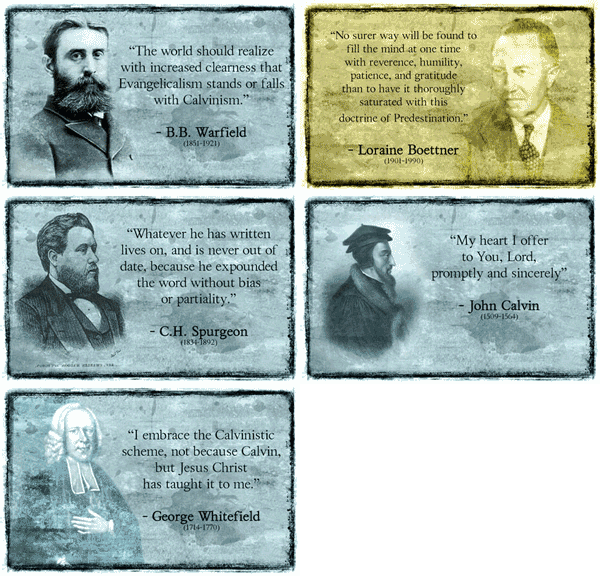
Humble Calvinism image cards: B.B. Warfield, John Calvin, Loraine Boettner, George Whitefield. Do you have a great Calvinism quote? Post it in the comments at the bottom of this post and it may become an image card.

——————————–

Reviews and notes

– The banner graphic was lifted straight from the creative minds of Sovereign Grace Ministries New Attitude group. Thanks for the graphic inspiration and the spiritual inspiration to live out humble orthodoxy! (2007.01.09)

02spurgeoncalvinsig.jpg