Slate Magazine gives us a very interesting read: “Happy Crossmas! Why Easter stubbornly resists the commercialism that swallowed Christmas” (by James Martin).
Cross of Christ
Hallgrímur Pétursson
Having blogged for a few years on a blog generating over a half-million hits, I’ve enjoyed one of the great fruits of the labor–building relationships with readers. A number of readers have become friends of a sort. They interact on the blog to challenge my arguments, clarify my fuzziness, correct my errors, provoke ideas, and build with encouragement. I have a number of these readers and many I’ve been blessed to meet in person. Thank you for your input!
I must say that one of the my favorite readers is Tom Bombadil (a curiously Tolkienian username). Tom has posted a number of comments over the past year. He has wisely challenged me (on the value of patristic authors), entertained me (by reminding us of the ever-valuable Calvinus beer website), shocked me (by out-weighing the new 100-ounce Works of Andrew Fuller with his shelf-splintering, 126-ounce Bauer/Danker lexicon), and encouraged me with consistent kindness.
But I think it’s his last comment that I consider his most valuable. In the last post on cross-centered books, Tom posted the lyrics to two hymns by Hallgrímur Pétursson, a 17th century Lutheran poet, hymnwriter, priest/pastor, from Iceland. I pulled the quotes out of the comments in case you missed them.
Tom cites the origin of these quotes from Pétursson’s, Hymns of the Passion: Meditations on the Passion of Christ (1666 edition translated by Arthur C. Gook, 1978). The book is long out of print, rare, and expensive.
So, Tom, I know you’re reading. Thanks for these excerpts. Keep posting comments. I learn from the correction, I’m humored at the funny-business, edified by your cross-centeredness, and blessed by your kindness.
Here are the excerpts posted by Tom.
—————
‘Arise, my soul, my heart, my mind,
And all that I within me find,
Come, help me, tongue, my Lord to own
And make His wondrous passion known!Paul, the Apostle, chose the theme;
To preach it was his task supreme–
The Passion of the Crucified,
That sinners might be justified.Since Jesus gave His latest breath
To save me from eternal death,
Should not the powers He thus renewed
Show forth to Him my gratitude?At last repentance rends my heart,
How poorly have I played my part!
What Jesus suffered in my place
I oft forget, –to my disgrace!My soul, behold the sacrifice
which paid our trespass’ awful price,
Restored the rebel sinner’s state–
What joy on this to meditate!—————
In sin’s dark dungeon lying
A helpless captive I,
My conscience crucifying,
Heave sigh on weary sigh.
My mortal wound no balm can find,
No help I see around me,
Or solace for my mind.The Law with heavy lashes
Chastised me for my sin,
Brought me to dust and ashes
With cruel discipline.
No hope I saw; my case was lost,
My heart was bowed with sorrow;
My spirit tempest-tossed.But Thou dist hear my groaning
And hasting to my aid,
For Thy poor child atoning
Thy sacrifice was made.
The spotless soul was chastened sore
That I should be delivered –
Reclaimed forevermore.My pains by Thee were taken,
That healing might be mine.
In darkness Thou, forsaken,
Gav’st light on me to sine.
The chastisement on Thee was laid,
Wounded for my transgressions,
And thus my debt was paid.My heart with grief is stricken
When I survey Thy woes.
Oh! That my love may quicken
To guage how much it owes!
The grief I caused Thee I lament,
My sin has brought Thee sorrow.
Oh! How I now repent.
Some lesser-known, Cross-centered books
 Recently, a good friend emailed me for recommendations on my favorite books on the cross. He wanted me to focus on books God has used to make a profound impact on my soul. When I sent the list, it included great titles like The Cross of Christ by John Stott, Living the Cross Centered Life by C.J. Mahaney, and several titles by John Piper. But as I scanned through my shelf of books on the cross, I realized that over the past few years I’ve come across a number of lesser-known, but richly valuable, books. And so in my list for a friend I added a subcategory of books that have great value in meditating on the cross, but don’t get much attention or are now out-of-print.
So here are five of those titles (in no particular order):
1. Christ Crucified: The Marrow of the Gospel in 72 Sermons on Isaiah 53 by James Durham (Naphtali Press; $30). I’ve written a more extensive review of this volume so I’ll keep this description brief. Christ Crucified is a precious Puritan work on the work of Christ. Yet when this volume appeared in print in 2001, it had not been previously published since 1792! In 72 sermons Durham slowly walks through Isaiah 53:1-12, pulling out the doctrine of the cross and calling the reader to respond with praise, joy, and obedience. The editor behind this contemporary edition did an outstanding job of making the text clean and easy to navigate. In the front cover of his personal copy, C.H. Spurgeon simply wrote, “Much prized.” I would agree.
2. Caleb’s Lamb by Helen Santos (Reformation Heritage; $7.50). A family favorite, my wife and I read this book with our children. The 100-page chapter book is the story of Caleb, a reluctant boy forced to work with his shepherd dad. Caleb personally despises the sheep. The narrative develops within the context of the Old Testament Israelites in the months leading up to the Exodus. Long story short: Caleb rescues a spotless, newborn lamb from wilderness danger and his dad passes on to Caleb a personal responsibility to care for this sheep. The story progresses around Caleb’s growing maturity and his growing bond with lamb. But rumors are stirring of Moses and a coming deliverance from Egypt. Every household must prepare for the coming angel of the Lord by sacrificing a spotless lamb. It’s a sobering yet wonderful story for children capturing the substitutionary atonement of Christ.
3. The Precious Things of God by Octavius Winslow (Soli Deo Gloria; out of print, buy used, read online). For a while now, I have considered Winslow to be one of the most influential writers on my soul. This book—The Precious Things of God—has the unique distinction of being classified as my most personally life-transforming book (apart from Scripture itself). The chapter on the preciousness of Christ’s blood really opened my eyes to the fuller experience of the cross within the Christian life. It impacted my life at a time when I needed to get away from very technical theology books and simply needed someone to remind me again of the cross. A faithful friend pointed me towards Winslow. And this precious book was a success. Here is one excerpt.
Keep your heart, O believer, much beneath the cross, your conscience in frequent and close contact with the blood, and the slightest touch of sin will make you restless and unhappy until you have confessed, and God has forgiven. This is the secret—which, alas! few see, or care to know—of preserving the garments white amid pollution, the mind serene amid turmoil, the heart happy amid sorrow, the life radiant and transparent as the sun, and the spirit, temper, and carriage Christ-loving, and Christ-like. Oh the wonders of the precious blood of Christ! Who can exalt it too highly, adore it too profoundly, love, magnify, and honor it too deeply and exclusively? Will it not constitute the theme of our study, the burden of our song, and the source of our bliss as ages roll on, and never cease to roll? Beloved, the surprise then will be, that here below we should have prized it so little, traveled to it so infrequently, and glorified it so imperfectly, and have regarded it with an affection so fickle and so cold! (pp. 178-179)
4. The Fullness of Christ by Octavius Winslow (Reformation Heritage: $12.00, read online). Drawing his framework around the history of Joseph and his brothers, Winslow captures the sufficiency of Christ. You may not agree with Winslow’s hermeneutic but through the framework he is faithful to the character and work of Christ. It’s a unique work and a treasure I return to often I my personal devotional time. Here is one choice excerpt:
In Him, this Divine, this wonderful Being, ALL FULLNESS dwells. In whom could all the fullness of the Godhead—all the mediatorial fullness of the Church dwell, but in the Son of God! But take the “fullness” particularly spoken of in this passage, the mediatorial fullness of Christ; and in whom, other than a being essentially God, could all fullness of merit, all fullness of righteousness, all fullness of grace, all fullness of pardon, all fullness of sanctification, all fullness of wisdom, all fullness of love, all fullness of sympathy, all fullness of compassion, in a word, all fullness of all supply, possibly dwell? …And in what does this fullness consist? A fullness of dignity to atone, a fullness of life to quicken, a fullness of righteousness to justify, a fullness of virtue to pardon, a fullness of grace to sanctify, a fullness of power to preserve, a fullness of compassion and sympathy to comfort, and a fullness of salvation to save poor sinners to the uttermost; in a word, ALL fullness; a fullness commensurate with need of every kind, with trial of every form, with sorrow of every depth, with sin of every name, with guilt of every hue, yes, with every conceivable and possible necessity in which the children of God may be placed; fullness of grace here, and fullness of glory hereafter; a fullness which the Church on earth will live upon; and boast of until time be no more; a fullness which will be the delight and glory of the Church in heaven to behold, until eternity shall end. In whom could all this fullness be enthroned? (pp. 55-57)
This quote captures the passion, skill, and articulation of Octavius Winslow. What a treasure!
5. Outrageous Mercy: Rediscovering the Radical Nature of Christianity by William P. Farley (Baker; out of print). Pastor Farley has become a friend over the years. His book, which briefly appeared in 2004 from Baker, is a gem. This is one book on the cross that you should make sacrifices to find. Here is one excerpt:
We can know all about the cross, and we can believe in the cross, but we can also relegate it to a back shelf in our thoughts and priorities. This is Christianity on the decline. If it is true of you and your church, you can reverse this trend. It is imperative that we do so. We can put the cross on the back shelf and still be Christians, but the slide will continue. The children of those who accept a Christianity centered in something other than the cross won’t put the cross on the back shelf; they will put Christianity on the back shelf. And the next generation might even forget the faith altogether (p. 35).
I’m hopeful Outrageous Mercy will be printed again in the future.
Conclusion
So those are some important, lesser-known books on the cross I would encourage you to incorporate into your library of resources and spiritual diet.
Now, what about you? What books have ministered the cross of Christ to your soul?
Tim Keller on Suffering and Evil
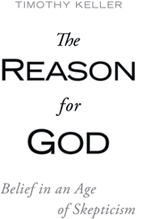 A choice excerpt from Tim Keller’s new book (written primarily for skeptics) …
“The death of Jesus was qualitatively different from any other death. The physical pain was nothing compared to the spiritual experiences of cosmic abandonment. Christianity alone among the world religions claims that God became uniquely and fully human in Jesus Christ and therefore knows firsthand despair, rejection, loneliness, poverty, bereavement, torture, and imprisonment. On the cross he went beyond even the worst human suffering and experienced cosmic rejection and pain that exceeds ours as infinitely as his knowledge and power excels ours. In his death, God suffers in love, identifying with the abandoned and godforsaken. Why did he do it? The Bible says that Jesus came on a rescue mission for creation. He had to pay for our sins so that someday he can end evil and suffering without ending us. … If we again ask the question: ‘Why does God allow evil and suffering to continue?’ and we look at the cross of Jesus, we still do not know what the answer is. However, we know what the answer isn’t. It can’t be that he doesn’t love us. It can’t be that he is indifferent or detached from our condition. God takes our misery and suffering so seriously that he was willing to take it on himself. … So, if we embrace the Christian teaching that Jesus is God and that he went to the Cross, then we have deep consolation and strength to face the brutal realities of life on earth.”
-Timothy Keller, The Reason For God: Belief in an Age of Skepticism (New York City: Dutton, 2008) p. 30.
Clarifying “Spirituality”
Of late, the religious culture of America has been abuzz with the word “spiritual.” And we can be encouraged that (at some level) there’s a growing interest in spirituality. Spearheading the spawning spirituality are pastors and authors willing to write, travel and speak on the topic. Talk of “spiritual journeys” and books on Celtic spirituality sprinkle the pop-religious scene. Last year one pastor successfully managed a 22-city, nationwide speaking tour under the banner: “Everything is Spiritual.” From what I hear, most of the venues sold out.
But I’ve also noticed when discussions focus on “spirituality,” biblical exegesis often takes a backseat (or gets trunked altogether). As you can imagine, the Bible has a lot to teach us about spirituality and can help us sift through the spiritually exaggerated lingo in our culture. Today I want to examine two of the “spiritual” exaggerations on my radar screen, (1) everyone is spiritual, and (2) everything is spiritual.
1. Everyone is spiritual
First is the popular assumption that everyone is spiritual. On the surface this seems accurate. We have a conscience to warn us ethically and a creativity that is manifested artistically. These are both the fruits of our spiritual makeup. And each of us has an eternal soul. That’s pretty spiritual!
Our initial response, then, is to affirm that everyone is spiritual. But Scripture cautions us of making this broad generalization. Let me explain.
The Apostle Paul gets at the heart of “spirituality” in 1 Corinthians 1:17-2:16. He answers some fundamental questions. Why do some believe in the cross and others laugh at the cross? Why do some ‘get’ the cross and others ‘stumble over’ the cross? These are the questions in Scripture that answer a broader question: What is genuine spirituality?
Here’s Paul’s main point: some people are spiritual, and some are natural. Quite obviously in these passages, the natural person is un-spiritual. They are easily attracted towards the glittering religious wisdom of the world, or quickly look towards the next miraculous expression. It may look like spirituality, but the natural soul is sustained by worldly wisdom and fleeting miracles that were never intended to sustain the soul. The gospel – the true power to sustain the soul – is written off as foolishness (1:18, 22-23).
This naturalism is a problem of interpretation. Paul writes: “The natural person does not accept the things of the Spirit of God, for they are folly to him, and he is not able to understand them because they are spiritually discerned” (1 Cor. 2:14). Literally, the natural person considers the gospel ridiculous because he/she is incapable of making decisions of spiritual discernment. Spiritual truths do not register where the saving work of the Holy Spirit is absent.
On the other hand, the spiritual person understands the gospel and places his eternal hope in the crucified Messiah. Those who are spiritual can interpret the “secret and hidden wisdom of God” and therefore believe in “Jesus Christ and him crucified” (2:2, 7). But this is not to the glory of the “spiritual,” it’s a work of God’s grace: “these things God has revealed to us through the Spirit” because “no one comprehends the thoughts of God except the Spirit of God” (2:10,11).
So the Bible carefully distinguishes between the spiritual and non-spiritual and it has everything to do with the saving work or absence of the Holy Spirit in one’s life.
Hold this thought for a moment.
2. Everything is Spiritual
A second exaggeration of the spirituality of the day is that everything is spiritual. Now, again this needs a brief word of clarification (because exaggerations are partly true). Believers can do all things for a spiritual end, even in the most basic things like eating and drinking (1 Cor. 10:31). For the spiritual, all things are spiritual.
The pop-talk of the day says the Old Testament has no word for “spiritual,” therefore we should assume that everything is spiritual. But the New Testament does have a word for “spiritual” and frequently uses this term in contrast with its terms for “natural” and “material” (see 1 Cor. 9:11 for example).
Perhaps it would be best to approach this from another angle altogether by asking: What is most spiritual?
When Paul explains the differences between the spiritual and the natural, his basis of discernment is the cross. All throughout the passage Paul’s message is of “the cross of Christ,” “the word of the cross,” “we preach Christ crucified,” “For I decided to know nothing among you except Jesus Christ and him crucified,” and the cross is the “secret and hidden wisdom of God.” As Paul begins to carefully distinguish between the spiritual and the non-spiritual, he comes back to the cross of Jesus Christ. For Paul, the cross is the gauge of genuine spirituality.
There may be spiritual implications to many things in our lives, but this does not mean everything is spiritual and certainly does not mean we are free to equalize all things as equally spiritual. When Paul seeks to explain the spiritual, he avoids broad and extensive categories to keep what is most spiritual in the spotlight.
We’ll return to this theme in a bit. But first are a few other points to ponder.
1. Paul’s distinction between ‘spiritual’ and ‘natural’ hearers directly impacted his method of outreach and style of preaching. It would be wrong for us to say the distinction between the ‘natural’ and ‘spiritual’ hearers is just a theoretical conclusion. These conclusions are richly practical.
Paul based his very ministry methodology on this careful spiritual discernment! When Paul entered a pagan city to preach the gospel, he entered with a pre-understanding that some people were spiritual, and some were non-spiritual. This dichotomy gave Paul the freedom to preach the “foolish” message of a crucified Messiah — even though Paul was aware of his personal weaknesses, fears, lack of lofty eloquence, and despite audience demands for signs and wisdom (1:17-2:5).
Paul’s ministry faithfulness – and our ministry faithfulness – depends upon the sobering reality that audiences are filled with “spiritual” and “natural” hearers. Only this theological foundation will free us to boldly center our ministries on the center of genuine spirituality: “Jesus Christ and him crucified” (1 Cor. 2:2). This sobering reality turns talkers into preachers.
2. Spirituality is not defined by our human nature, but by the saving activity of God’s Spirit. One myth circulating in this pop-“spirituality” is the assumption that to be a human being is to be a spiritual being. In reality, true spirituality depends upon the saving activity of God’s Spirit. Paul writes, “Now we have received not the spirit of the world, but the Spirit who is from God, that we might understand the things freely given us by God. And we impart this in words not taught by human wisdom but taught by the Spirit, interpreting spiritual truths to those who are spiritual” (2:12-13). True spirituality finds its basis in regeneration. There is no true spirituality apart from the New Birth because until the Spirit of God lives within us, we cannot comprehend the spiritual. The biblical definition of “spiritual” is a redeemed sinner who understands the cross of Christ. True spirituality exists only where the saving work of the Holy Spirit exists. Where the saving work of the Holy Spirit is absent, an understanding of the cross is absent, and thus spirit-uality is absent.
3. Spirituality is measured by the cross! Scripture does not define spirituality in vague and uncertain terms. Paul’s spirituality ministry is explained like this: “interpreting spiritual truths to those who are spiritual” (2:13). Spirituality has everything to do with properly interpreting the deep wisdom of God in His plan of redemption.
Notice how saturated with the gospel is this section of Scripture (see verses mentioned earlier). The spirituality question comes down to this: Are we captured by the cross? Then the Holy Spirit is at work and we are spiritual. Do we stumble over the cross in a pursuit of some other “spirituality”? Then the saving presence of the Holy Spirit is absent and we are natural (or non-spiritual).
By saying true spirituality is centered directly upon cross, Paul is saying the holiness of God, the demands of the Law, our personal guilt, and our saving faith in the blood of Christ that absorbed the wrath of God’s fury are all truths of vital importance to our spiritual vitality.
The biblical expectation is that talk of spirituality should be centered on the details of the gospel message. If I understand Paul correctly here, speaking of “spirituality” without reference to the cross is really just another form of naturalism.
Conclusion
Very clearly, Paul reserves the term “spiritual” for those who possess the saving work of the Holy Spirit and find their joy and hope alone in the cross of Jesus Christ. Spirituality has everything to do with God’s sovereign grace and everything to do with the power of the Holy Spirit because spirituality is not a journey to the gospel, it’s a life illuminated by the gospel.
I would encourage you to personally study 1 Corinthians 1:17-2:16 for yourself. I think Paul’s careful definition of “spirituality” will equip us to tread carefully among the contemporary discussions.
If you are spiritual – if your eternal hope is found in the cross of Christ – Paul would have you respond by praising God for His graciousness! This spirituality is the fruit of God’s electing grace in your life (1:24)! Be encouraged at Christ’s spiritual all-sufficiency. But also be deeply humbled:
“And because of him you are in Christ Jesus, who became to us wisdom from God, righteousness and sanctification and redemption, so that, as it is written, ‘Let the one who boasts, boast in the Lord’” (1:30-31).
The Law of Kindness by Mary Beeke
Today I have the honor of pointing you to Mary Beeke’s new book, The Law of Kindness: Serving with Heart and Hands (Reformation Heritage: 2007).
My wife and I have enjoyed brief but precious time with the Beeke family and have benefited from Mary’s display of kindness. As the mother of three kids and the wife of a busy seminary president, author, and pastor — Mary’s many duties are fulfilled in a display of selflessness and kindness. She is, in the words of Sinclair Ferguson, “Mrs. Kindness personified.”
Her new book was written to help the reader cultivate kindness. The book covers topics such as understanding kindness and its root (chs. 1-3), learning kindness as a wife, parent, or teacher (Mary was a teacher), and helping children and teens learn kindness (chs. 4-9). Finally, she concludes with chapters on the display of kindness: kind thoughts, kind words, and kindness displayed toward the needy (chs. 10-13).
It’s a book intended for a broad audience, not limited to wives and mothers.
The Kind Husband
The Law of Kindness features a very helpful chapter (ch. 5: “The Kind Husband”) written by Mary’s husband, Dr. Joel Beeke (also an example of kindness). His chapter sets out to help husbands understand and apply Ephesians 5:25-29. Dr. Beeke begins his chapter with a proper awareness of the Cross.
He writes:
We are to show our wives loving-kindness because we are to treat our wives the way Christ treats His bride, the church. This is what Paul is saying in Ephesians 5:25-29. Here are three ways we are to show our wives loving-kindness:
1. Absolutely. Christ gives “Himself” for His bride — His total self (v. 25). He holds nothing back. That is obvious from what He has done (think of Calvary), is doing (think of His constant intercession at the Father’s right hand), and what He will do (think of His Second Coming). We, of course, do not merit salvation for ourselves. But in terms of the consistent, absolute giving of loving-kindness, Christ is our mentor. We, too, are to give ourselves to our wives. That is a call to consistent, absolute loving-kindness.
2. Realistically and purposely. Christ shows kindness to His bride to sanctify her so that He might present her without spot or wrinkle to His Father (vv. 26-27). Christ realizes that His church is far from perfect; she has many spots and wrinkles. She has numerous shortcomings. So we as husbands are to love our wives as if they were perfect, even when we know they are not. Our call and challenge is not to show consistent loving-kindness to a perfect woman but to model Christ in showing consistent loving-kindness to an imperfect wife who has numerous shortcomings. Our purposeful goal must be to influence our wife to good, hoping that our kind love may remove some of the shortcomings, so that our partners may receive freedom to flourish, basking in our kindness.
3. Sacrificially. Christ nourishes and cherishes His bride at His own expense (vv. 28-29). So ought we husbands treat our wives at our own expense with the care that we treat our own bodies. If you have something in your eye, you don’t say to yourself, “I think I’ll take care of that tomorrow.” You give it immediate, tender care. So we ought to treat our wives, sacrificing, at times, our own time and desires. We must care for, protect, nurture, and respect our wives as we would our own bodies.
Are you showing your wife the exemplary loving-kindness of Christ absolutely, realistically, purposely, and sacrificially? “No,” you confess, “that is impossible.” You are wrong, my friend. Yes, you will always fall short of the mark of perfection since you are not Christ, but by Christ’s grace and His Spirit, you can learn to treat your wife with Christlike loving-kindness (pp. 72-73).
The majority of the chapter explains very practical ways that husbands can display loving-kindness towards their wives.
Conclusion
I believe The Law of Kindness is Mary Beeke’s first official book project. Her writing style is very energetic and engaging. She is unafraid to discuss personal issues and offers much practical advice for wives to display kindness towards their husbands and children. Her words in chapter nine challenge children and teens to display kindness, too. And her expressed appreciation for her husband is itself a model of kindness. For example, she concludes the introduction with these words:
“Words fail to express my gratitude to my dear husband, Joe, for his steadfast love and tenacious support of me. He has encouraged me to continue writing about this subject that I love so much, in spite of times when I felt completely unworthy to do so. He has overlooked dust and clutter and has offered to take the family out to eat more times than he probably should have, so I could have time to write. I am deeply grateful to God for this man who lives by the law of kindness” (p. 7).
Whether in wise counsel, practical illustrations, or even in the way they talk about one another in the book, the Beeke family displays the law of kindness. It’s a rich blessing for the church to now have their influence in book form.

Title: The Law of Kindness: Serving with Heart and Hands
Author: Mary Beeke with one chapter by Joel Beeke
Reading level: 2.0/5.0 > readable and engaging
Boards: paperback
Pages: 247
Volumes: 1
Dust jacket: no
Binding: glue
Paper: white and clean
Topical index: no
Scriptural index: yes
Features: 17-pages of study questions
Text: perfect type
Publisher: Reformation Heritage Books
Year: 2007
Price USD: $ 9.00 from RBH
ISBNs: 9781601780294
 Tony Reinke