The Vocation of a Lifetime

John Piper, article, “Teaching, Schooling and Reading” (September 1, 1974):

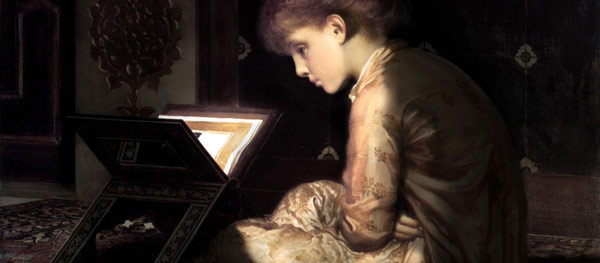
The person who has learned to read well is never dependent on living teachers to educate him. The growth of his mind and the betterment of his wisdom and his behavior is not connected with his being in or out of school. Because almost all the greatest thinkers of history have shared their wisdom in writing and because these great books are almost all available to be bought in stores or borrowed from libraries, the person who has trained himself in good, active reading and who cares about growing wiser, does not need live teachers or college classes, or daily assignments, or threatening exams. Instead, as a good reader and as one who is not enslaved to the television and radio, he has a lifetime of growth ahead of him.

It is of the utmost importance that college students stop trying to fill their head with facts and start trying to form the habit of fruitful, active reading. Almost all the facts will be forgotten. But the skill and discipline and love of good reading will go on bearing fruit 30, 60, 100 fold. It is a tragedy that on graduation day so many students look back with a pang of longing that they are leaving the place of so much discovery and stimulating growth, instead of feeling themselves at the end of a training period which has now fit them for an adventurous lifetime of stimulating reading and discovery. It is a dreadful deception that learning and mental growing are strictly associated with school. Good reading should be the vocation of a lifetime. Schooling — at least my classes — is a concentrated training process to help prepare you for that vocation.

Stabbing Public Pastoral Prayers

Pastor Thomas R. Mckibbens in his article to pastors, “Prayer In Corporate Worship,” [Faith and Mission (SEBTS), 7.2:22–23]:

At the risk of seeming to waste your time, consider reading great fiction, poetry, and drama. Go back and pick up those books which you know you “should have read” back there in college or even high school, but that you have secretly kept quiet about when the book was discussed in your hearing. I am speaking of Homer’s The Iliad and The Odyssey, and some of the Greek plays by Sophocles or Euripides. I am speaking of classics like Milton’s Paradise Lost and the great novels of Tolstoy.

Enjoy the imaginative writings of J. R. R. Tolkien or C. S. Lewis or Charles Williams. Or you may prefer to read American classics like Melville’s Moby Dick or Faulkner’s novels or contemporary writers like Walker Percy. I am not talking about forcing yourself to complete an agonizing book just so you can say you have read it; rather I am talking about leisure reading for fun! Why pollute your mind with junk novels when you could, with a little forethought, be reading the great works of the English language? After a number of years of this you will be surprised at how many of the great books you can call your friends.

The pleasure of all this reading is not only that it is fun, but also that you enrich your mind with a store of imagination. In the preparation of public prayer, it is a way of forming your sentences and shaping your thoughts which stabs the imagination of the congregation, and they are a vital part of the prayer you voice. It becomes their prayer, because you have said it just the way they wish they could have said it.

His point about the value of classic literature to sharpen (pun) one’s prayer language is a good one, as long as we do not underplay the value of the prayers, Psalms, and prophetic writings of Scripture to do the same.

How Jonathan Edwards Processed Theology

The new theology of Jonathan Edwards by Michael McClymond and Gerald McDermott is a magnificent achievement in bringing theological synthesis to the copious works of America’s most noteworthy theologian. Now that the works of Edwards are online and more accessible than ever, I’m sure other volumes of similar magnitude will follow in the future, but to date there’s nothing that compares to this new volume in scale and breadth. McClymond and McDermott’s work is to the theology of Edwards what Marsden’s work is to the life of Edwards, and unless the second half is a major disappointment it will be my book of the year in 2011. (Since it’s technically copyright 2012, it may be my selection next year, too!)

In one of the earliest sections of the book the authors explain the different ways Edwards processed different theological ideas (pages 10–12). Since my friend Andy recently dissected the theological brain of the greatest Canadian theologian, I thought I would write a summary of how the theological brain of America’s greatest theologian worked, a very brief one.

According to McClymond and McDermott, Edwards processed his theology on three fronts by juggling, connecting, and infusing ideas.

By juggling ideas, Edwards studied many different theological topics at the same time. His 1,400 recorded miscellanies testify to how well he captured and developed various ideas. It was to these notebooks that Edwards turned in developing books and sermons, a well to withdraw years of recorded and retrievable thoughts.

By connecting ideas, Edwards thoughts were not merely atomized, random miscellanies. The genius of Edwards is not only how deeply he thought with atomized topics recorded in his notebooks, but how he connected and cross-pollinated orthodox theological themes that led him to consider fairly novel conclusions. What he discovered was a nearly limitless interrelationship between the themes, tying strings to the various themes he had once juggled.

By infusing ideas, Edwards was able to take the major conclusions of his research and infuse those ideas into his larger theological picture. The topics he juggled in his mind, began to grow and connect, which he then worked into major themes – notably the brilliant idea that God’s passion for His own glory and man’s happiness are not at odds. In my mind infusing a key theme (or a few key themes) into the whole structure of one’s theological convictions is really the most difficult of the three, and something only a few exegetically-grounded, deep thinking theologians will achieve with much public success (think John Piper).

Yet for all his brilliance, Edwards leaves us a pattern that I find helpful. As those who research Scripture and theology we need (1) a place to record our developing thoughts, (2) time to see how themes of Scripture relate to one another, and (3) deeply-rooted convictions about major themes.

Il-Literacy, A-Literacy, and the Church

Pastor Timothy R. Nichols, from his article “Holding Center: The Theocentric Unity of Truth in the Postmodern World,” CTSJ, 11.1 (2005): 52–54:

In general terms, an aliterate person is able to read, but chooses not to. Most people today can read in the gross sense, i.e., they can understand the labels on packages at the store, learn from the marquee what time a movie is showing, or read the road sign that tells them how many miles to Richmond. However, aliterate people do not exert the sustained attention necessary to draw meaning out of a longer written text like a poem, novel, or biography. And because they choose not to, they lose whatever skill they might have developed in school. An aliterate person who has been out of school for ten years will be very rusty indeed at understanding a printed text of any length. …

Although it is true that an illiterate (or aliterate) believer can live a successful Christian life, it would be a mistake to conclude on that basis that reading is not crucial to Christianity. As long as there are some readers who accurately convey the text to the rest, the church can tolerate a shortage of readers. However, the fewer the people who access the Scriptures directly, the more power those who do will have. This is dangerous — witness the many doctrinal and other abuses perpetrated by the medieval Catholic church. Popular facility [proficiency] with the text prevents a “priesthood of skilled readers.”

Harry Potter

Dr. Jerram Barrs is Professor of Christian Studies and Contemporary Culture at Covenant Theological Seminary, St Louis, Missouri. He’s also a big fan of the Harry Potter series.

Today I listened to a 96-minute lecture Barrs delivered on the series of books and its author, J. K. Rowling (see here). I’ve looked all over for a date for when this lecture was delivered/recorded but without luck. In the talk he references only the first four books in the series. Book 5 (Harry Potter and the Order of the Phoenix) was released in June 2003, so this lecture must have been recorded before that.

After the lecture, Barrs opened the floor to Q&A, where at one point he said this:

I don’t know where J. K. Rowling stands in terms of Christianity. It will be very interesting to see as the books come out. There is one book by a Christian that argues that Rowling is a Christian because he is so moved by self-sacrifice at the center of this, he feels that she must be [a Christian] to say this so strongly and passionately. I don’t think that’s necessarily so, but it will be very interesting to see. He proposes that by the time she gets to the final novel, there will be an explicit reference to Christianity. Whether that’s true or not, I have no idea — I rather doubt it. [56:57–57:42]

I appreciate his reservation — even doubt — over whether the Christian faith was going to make an explicit appearance in the final book.

So, now the Harry Potter series is complete, what does he think?

Here’s what Dr. Barrs said in July of this year:

My Conversation About Books and Reading

I was recently invited to participate in a dialogue about books and reading by John Wilson, the editor of Books & Culture (a sister publication of Christianity Today). John asked if I would consider writing out a blog conversation with Dr. Karen Swallow Prior, the Chair of the Department of English and Modern Languages at Liberty University. The invitation struck me as initially intimidating because I’m fairly certain Karen can intellectually roundhouse kick me back and forth across the literary mat without breaking a sweat, if she wanted to. But I was assured it was no debate, and that I would not be injured. So I agreed. It turned out to be a brief but enjoyable dialogue about books and reading (thank you John!). Our four-part conversation is now online: