Reformed Confessions of the 16th and 17th Centuries

On October 31 many of us will celebrate Reformation Day, an annual reminder of a time when the sharp scalpel of biblical convictions smoothed and refined the church in many of Her priorities, associations, methods, preaching, and ordinances. Not much was left un-reformed during the period and we see this in the abundance of reformed creeds produced during the period.

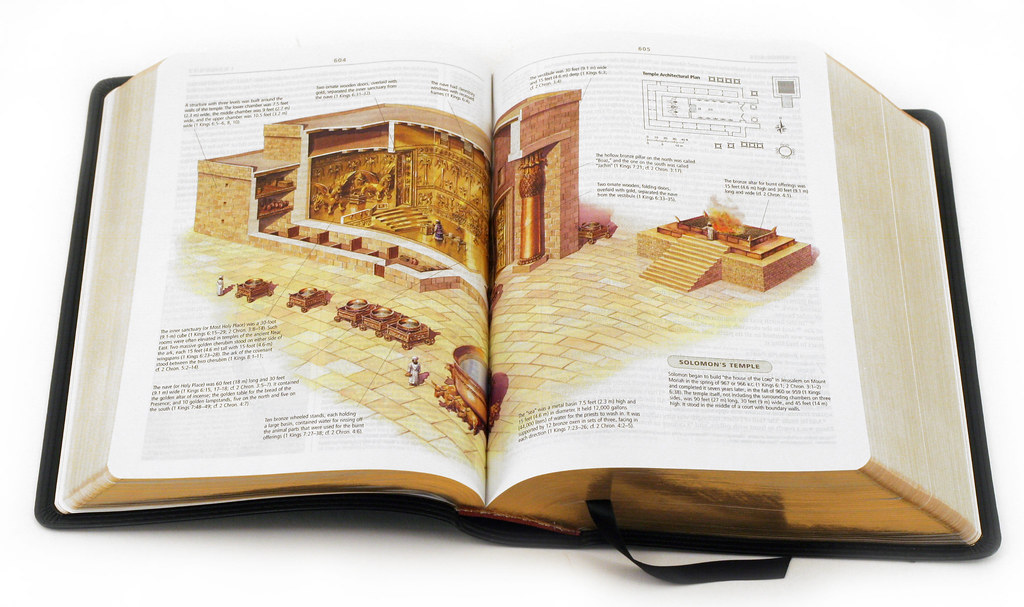
To commemorate the date, Reformation Heritage Books is preparing to release the first of a three-volume series beginning with the first title, Reformed Confessions of the 16th and 17th Centuries in English Translation: 1523-1552 edited by James T. Dennison, Jr. (2008). It will be shipping by Reformation Day. In total, the large cloth covered volume contains 33 confessions. Flipping through the volume I’m reminded of the speed with which the flame of reformation spread from country to country and find it difficult to comprehend the tumult of the period.

Some snapshots of the new volume.

The confessions are chronologically organized, and several of them translated into English for the first time. A brief introduction is included for each of the 33 confessions. The first volume includes:

1. The Sixty-Seven Articles of Huldrych Zwingli (1523)
2. Zwingli’s Short Christian Instruction (1523)
3. The Ten Theses of Bern (1528)
4. Confession of the East Friesland Preachers (1528)
5. William Farel’s Summary (1529)
6. Zwingli, Fidei ratio (1530)
7. The Tetrapolitan Confession (1530)
8. Waldensian Confession (1530)
9. Zwingli, Fidei Expositio (1531)
10. The Bern Synod (1532)
11. Waldensian Synod of Chanforan (1532)
12. The Waldensian Confession of Angrogna (1532)
13. The First Confession of Basel (1534)
14. The Bohemian Confession (1535)
15. The Lausanne Articles (1536)
16. The First Helvetic Confession (1536)
17. Calvin’s Catechism (1537)
18. Geneva Confession (1536/37)
19. Calvin’s Catechism (1538)
20. Waldensian Confession of Mérindol (1541)
21. Waldensian Confession of Provence (1543)
22. The Waldensian Confession of Mérindol (1543)
23. The Walloon Confession of Wesel (1544/45)
24. Calvin’s Catechism (1545)
25. Juan Diaz’s Sum of the Christian Religion (1546)
26. Valdés’s Catechism (1549)
27. Consensus Tigurinus (1549)
28. Anglican Catechism (1549)
29. London Confession of John à Lasco (1551)
30. Large Emden Catechism of the Strangers’ Church, London (1551)
31. Vallérandus Poullain: Confession of the Glastonbury Congregation (1551)
32. Rhaetian Confession (1552)
33. Consensus Genevensis: Calvin on Eternal Predestination (1552)

Links for the Ladies

Lately there have been several resources Christian ladies may find beneficial so today I’m posting some links specifically (though not exclusive) for the ladies:

1. Carolyn Mahaney; audio message; “Beauty.” Her message to the ladies of Covenant Life Church last Friday evening (Oct 17 2008) was excellent! “I have to confess: Many times I have knocked myself out on the treadmill not because I am seeking God’s glory…but Carolyn’s glory.” Humble, honest, practical, and valuable. Worth every second of the 63-minute investment. As a husband, I found the message helpful in caring spiritually for my wife. Listen or download here.

2. Carolyn McCulley; book; Radical Womanhood: Feminine Faith in a Feminist World (Moody, 2008). Carolyn traces out the history of the three distinct waves of feminism and how God’s ever-relevant Word gives direction and hope to women. As the title suggests, to be a godly woman is radical! The book is fantastic and will easily finish in our top 10 books of the year. Very important content that I doubt could have been written more engagingly. Actually, Carolyn is one of my favorite authors and I find in her an excellent blend of a journalist’s eye with an objective and personal tone. And Wayne Grudem wrote the foreword. Carolyn is a friend and fellow co-laborer in the office! If you want more information about her latest book, click over to her book website here (the video on this page is excellent). And Carolyn’s blog is one of the finest in the blogojungle.

3. GirlTalk; blog. Ladies, likely you are already aware of the excellent GirlTalk blog. At some point this week I noticed my precious wife was being especially generous (I think it sunk in after we had grilled salmon one night for dinner and grilled steak the next). Something extra-special was happening and I think I discovered the culprit. The GirlTalk ladies have been discussing and carefully applying the words of Proverbs 31:12 to wives—“She does him good, and not harm, all the days of her life.” A wonderful series that started on Oct 7th. Thank you, Carolyn, Nicole, Kristin, and Janelle! Ladies, please consider extending the series on until, oh, say, Thanksgiving?

4. Margaret Elizabeth Kostenberger; book; Jesus and the Feminists: Who Do They Say That He Is? (Crossway, 2008). A more scholarly book. I read the manuscript a while back and really appreciate this work by Mrs. Kostenberger (wife of N.T. scholar Andreas). She focuses in on so-called “evangelical feminists.” Her challenge to them is clear: Are you willing to take Christ at his word? “The diminishment of biblical authority in feminism has left a vacuum that has been filled by a vast array of feminist readings of Scripture and interpretations of Jesus. These readings make Jesus an extension of feminist aspirations, domesticating him rather than allowing him to speak with his own unique voice to today’s world and church” (p. 34).

Happy clicking, watching, listening and reading, ladies!

Tony

Spiritual Appetites

Sifting through the online manuscripts of Jonathan Edwards, I came across one of my favorite lines in all of his works. In his sermon on Song of Solomon 5:1 (“Eat, friends, drink, and be drunk with love!”) he developed this doctrine: “That persons need not and ought not to set any bounds to their spiritual and gracious appetites.” A precious truth he developed in many of his works. See the full page here.

John Piper has used this quote and sermon in a number of places. Here is one …

Jonathan Edwards argued for this in a sermon that he preached on Song of Solomon 5:1. The text reads, “Eat, friends, drink, and be drunk with love!” Edwards drew out of the text the following doctrine: “Persons need not and ought not to set any bounds to their spiritual and gracious appetites.” Instead, he says, they ought

“to be endeavoring by all possible ways to inflame their desires and to obtain more spiritual pleasures. . . . Our hungerings and thirstings after God and Jesus Christ and after holiness can’t be too great for the value of these things, for they are things of infinite value…[Therefore] endeavor to promote spiritual appetites by laying yourself in the way of allurement…There is no such thing as excess in our taking of this spiritual food. There is no such virtue as temperance in spiritual feasting.”

Therefore, be encouraged that God made you to rejoice in him. Do not settle for any lesser joy. Lay yourself in the way of allurement. That is, fix your eyes on the all-satisfying treasure of Jesus Christ who loved us and gave his life as a ransom for our everlasting joy. [What Jesus Demands from the World, pp. 90-91]

One-Issue Politics

Theologian Dr. John Frame:

“…in some cultures (like the ancient Roman, in which the New Testament was written) there is not much that Christians can do, other than pray, to influence political structures and policies. But when they can influence them, they should. In modern democracies, all citizens are ‘lesser magistrates’ by virtue of the ballot box. Christians have an obligation to vote according to God’s standards. And, as they are gifted and called, they should influence others to vote in the same way.

This is not to say that political choices are always obvious. Often we must choose the lesser of two evils. Candidate Mershon may have a better view of one issue than Candidate Beates, while Beates has a better view on a different issue. It is an art to weigh the importance of different issues and to come to a godly conclusion. Each of us should have a large amount of tolerance for other Christians who come to conclusions that are different from ours. Rarely will one issue trump all others, though I must say that I will never vote for a candidate who advocates or facilitates the killing of unborn children.” [The Doctrine of the Christian Life (P&R 2008). p. 617.]

Preacher/author Dr. John Piper:

“…When we bought our dog at the Humane Society, I picked up a brochure on the laws of Minnesota concerning animals. Statute 343.2, subdivision 1 says, ‘No person shall . . . unjustifiably injure, maim, mutilate or kill any animal.’ Subdivision 7 says, ‘No person shall willfully instigate or in any way further any act of cruelty to any animal.’ The penalty: ‘A person who fails to comply with any provision of this section is guilty of a misdemeanor.’

Now this set me to pondering the rights of the unborn. An eight-week-old human fetus has a beating heart, an EKG, brain waves, thumb-sucking, pain sensitivity, finger-grasping, and genetic humanity, but under our present laws is not a human person with rights under the 14th Amendment, which says that ‘no state shall deprive any person of life . . . without due process of law.’ Well, I wondered, if the unborn do not qualify as persons, it seems that they could at least qualify as animals, say a dog, or at least a cat. Could we not at least charge abortion clinics with cruelty to animals under Statute 343.2, subdivision 7? Why is it legal to ’maim, mutilate and kill’ a pain-sensitive unborn human being but not an animal?

These reflections have confirmed my conviction never to vote for a person who endorses such an evil—even if he could balance the budget tomorrow and end all taxation.”

Princeton prof Dr. Robert George on 10/14/08:

“Barack Obama is the most extreme pro-abortion candidate ever to seek the office of President of the United States. He is the most extreme pro-abortion member of the United States Senate. Indeed, he is the most extreme pro-abortion legislator ever to serve in either house of the United States Congress…”

Jonathan Edwards online

Corresponding to the launch of the beautiful Jonathan Edwards Online 2.0 website, the Yale University Library (aka the Beinecke Rare Book and Manuscript Library) has released a series of stunning hi-res images of the writings of Jonathan Edwards. These images represent a gracious gift to the Edwards community. You may view the large sampling here. Included is a photo of the first page of his diary…