Over the past year God has been at work in my life, giving me a greater appreciation for the Cross in ways that have continued to make profound changes in my thinking and impacting my behavior. Recently, I was journaling at Starbucks, thinking about two things; First, my roaming mind was imagining how great it would be to PhotoShop the Starbucks cup with some true Christian wisdom. Secondly, (more to my purpose) I was reflecting on the most profound way I have encountered the Cross in the past year.
This winter my wife and I will enter our 10th year of marriage. When I think back over this decade, there are many reminders of my leadership failures in the home stretching to both extremes. On the one side, I could be a Caesar, re-asserting authority anytime the little 2-foot-tall insurrectionist forgot who was in charge. On the other side I was Caspar Milquetoast, lazy and reluctant but eventually begrudging and willing to take on duties and tasks requested. In both ways I failed to lead biblically. Both were leadership failures.
The Cross became relevant to leadership at a marriage retreat this winter titled Passionate Partners for Life and led by Steve and Janis Shank. True leadership in the home, Steve explained, is defined by sacrificial love. I quote Ephesians 5 at length because of its importance. Listen to how Paul puts the husband/wife relationship.
22 Wives, submit to your own husbands, as to the Lord. 23 For the husband is the head of the wife even as Christ is the head of the church, his body, and is himself its Savior. 24 Now as the church submits to Christ, so also wives should submit in everything to their husbands. 25 Husbands, love your wives, as Christ loved the church and gave himself up for her, 26 that he might sanctify her, having cleansed her by the washing of water with the word, 27 so that he might present the church to himself in splendor, without spot or wrinkle or any such thing, that she might be holy and without blemish. 28 In the same way husbands should love their wives as their own bodies. He who loves his wife loves himself. 29 For no one ever hated his own flesh, but nourishes and cherishes it, just as Christ does the church, 30 because we are members of his body. 31 “Therefore a man shall leave his father and mother and hold fast to his wife, and the two shall become one flesh.” 32 This mystery is profound, and I am saying that it refers to Christ and the church. 33 However, let each one of you love his wife as himself, and let the wife see that she respects her husband.
I’ve read this dozens or hundreds of times, and maybe you have, too. But notice something very interesting about the roles. The wife finds her obedience in submission to, and respect for, her husband. The husband finds his obedience in loving, sacrificial care for his wife. The husband does not lead by asserting authority as the Caesar, nor simply on-call, awaiting the wife’s next request as Caspar.
The profound nature of the Cross relates to the husband because true leadership in the home is illustrated by the mystery of Christ’s sacrifice on the Cross for His Bride. Nothing of Christ’s was spared in His love for the Church. Christ willingly laid down His comforts, His glory and emptied Himself of all that He was rightfully entitled to save an undeserving and sinful Bride. This He accomplished on the Cross! He released all claims of His reputation, became a bondservant, and humbled Himself in the pursuit of obedience (Phil. 2:5-11).
Christ is no tyrant and no pushover. The same Christ returning to destroy sin with the sharp edge of a sword is the same Christ who washed the feet of His disciples (John 13:5). He came to serve His Bride, not expecting to be served like a lazy husband watching TV with the expectation that his “submitting” wife will cater to the enhancement of his surroundings. Think of this: If the Groom came only to assert his authority and enjoy the fruits of His submitting Bride, we would have no Cross, no Atoning Blood, no forgiveness of sin, no wrath appeased, and we would be hopelessly lost forever.
In the profound mystery of the Cross, true spiritual leadership is emulated. The Cross calls me to serve my wife in way that has no limits on personal comforts sacrificed, calls me to initiate service, and find new ways to care for her spiritual health. I am to care for her as I care for myself.
The stakes are very high. Wives and mothers do not clock out. Their duties can last all waking hours and are on-call through the night. In the past month I have seen the devastating effects of burdened wives who believe everything in the home rests on their shoulders (even spiritually) and receive little help from their husbands. In these marriages, the women think of themselves as inadequate failures. Rather, it seems an overburdened wife is an under-led wife and reflects more poorly on the man than the woman. When we as husbands take our eyes off the Cross, we will fail as leaders and our wives will suffer the heavy consequences.
Remember, I am only a rookie on this issue. Husbands, are you convicted of your leadership failures like I am of mine? I would encourage you to look at the Cross where we are saved from God’s wrath. We may be poor leaders, but we are justified in Christ and our leadership failures do not impact God’s pleasure in us. Christ achieved the full ransom price for our sinfulness. We can look back with conviction but never should the Christian husband look back at failures with condemnation. The same Cross that emulates leadership is the same Cross that covers our leadership failures.
Conclusion
Recently on vacation C.J. Mahaney was walking with his bride, taking obvious joy in a walk with his best friend. From a distance, his daughter captured this sweet image of the couple walking up from the beach. For me, this picture is powerful because is captures the fruit of this biblical Cross-centered headship. C.J. once said, “Love is the one word definition for headship.” Men, let this simple picture be a fresh encouragement to pursue Cross-centered leadership in your home.
By God’s grace, I am learning to initiate and serve my wife and family spiritually in family devotions but also in the less-than-spiritual tasks like helping with evening baths. By the Holy Spirit, I no longer approach leadership grumbling as a Caesar whose authority is being questioned, or with the resentfulness of a push-over. Rather, I see opportunities to initiate service towards my wife as what they are — opportunities to boast in the Cross (Gal. 6:14).
 If you’ve ever walked through a cemetery with a small group, you know the unwritten rules that dominate; speak quietly, don’t laugh and respect the hollowed ground. This is the same feeling I got walking around downtown Minneapolis and St. Paul this morning. Today, the local officials recover bodies and, with such a gruesome scene unfolding, a huge perimeter has been cordoned off by the police stretching upstream and downstream along the river and well into downtown St. Paul and Minneapolis. Public vantage points like five-story parking garages are closed. Every media outlet imaginable is represented, each having their own satellite truck, a reporter with a microphone, a camera on a tripod and a producer on a mobile phone. It was the lead story this morning on the BBC. Students from the University of Minnesota walk around the St. Paul side of the river. Downtown Minneapolis is equally busy. Bicycles zip around. Cars are stacked in traffic. But amidst the tremendous saturation of people, the scene is quiet. Cars don’t honk or boom loud music. The emergency lights flash silently. Even those walking around with friends are speechless. The scene is quiet as people reflect on the obvious: death is inevitable and unpredictable. As onlookers search the cemetery perimeter for the best view, I cannot help but wonder if these souls are looking at a fallen bridge or something more eternal. I came downtown to watch them.
 and the enduring affections of a softened and converted heart. The precise dissection of the soul in Religious Affections is one of the enduring characteristics of Edwards intellectual brilliance and a precision warranted from such delicate matters. But many contemporary readers (like this one) have found Edwards’ intellectual precision difficult to read.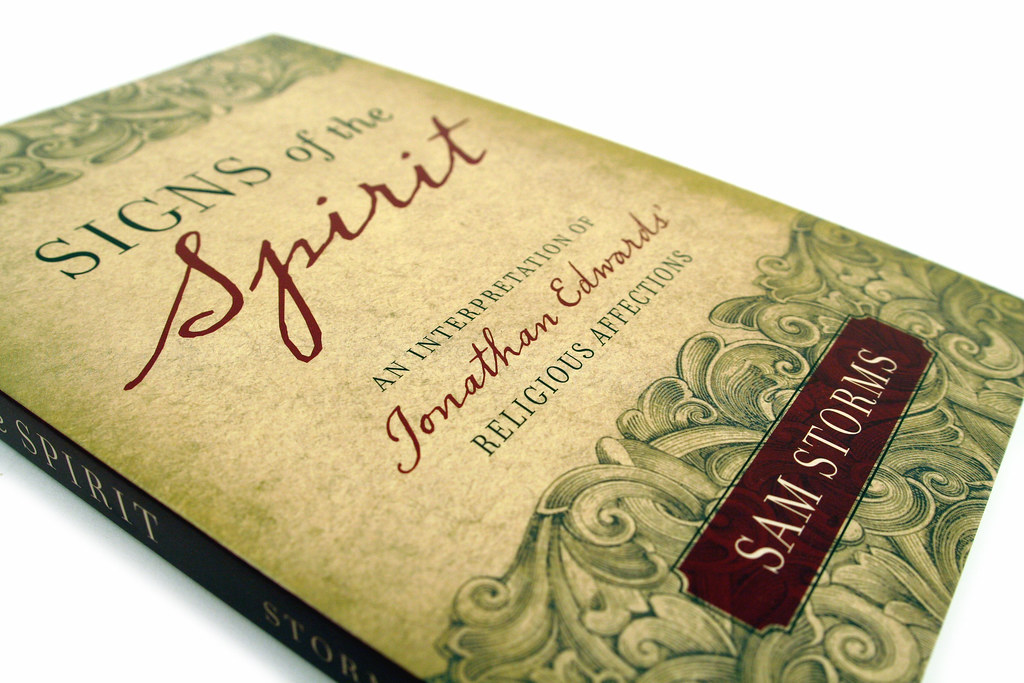
 Today’s post is for communicators who know the clarity a John Owen quote brings to a complex biblical topic or the punch a C.H. Spurgeon quote adds to application points. My goal today is to encourage evangelists, authors, bloggers, preachers in their work of reaching lost souls and edifying redeemed souls.
 – This week we introduced the TSS “Certified Cross Centered” stamp. Our stickers adhere to various resources and signify that a substantial amount of its content directly relates to the perfect work of Christ as our Atoning sacrifice. Many great resources out there are not Cross centered but it’s worth taking special note of those rare resources that are. Currently I am assembling a comprehensive resource guide that will include all the books, music, movies and blogs that carry our shiny little sticker.
 Tony Reinke