Where To Find Joy

Douglas Wilson, expounding the amazing Psalm 97 in his new book, Basic Christian Living: A Survey Course on Practical Christianity (Canon Press), pages 10–11:

Holiness is wild. Holiness is three tornadoes in a row. Holiness is a series of black thunderheads coming in off the bay. Holiness is impolite. Holiness is darkness to make a sinful man tremble. Holiness beckons us to that darkness, where we do not meet ghouls and ghosts, but rather the righteousness of God. Holiness is a consuming fire. Holiness melts the world. And when we fear and worship a God like this, what is the result? Gladness of heart.

Worship a god who does nothing but kittens and pussy willows and you will end in despair. Worship the God of the jagged edge, the God whose holiness cannot be made palatable for the middle-class American consumer, and the result is deep gladness.

Do you hear that? Gladness, not pomposity. And, thank God, such gladness does not make us parade about with cheeks puffed slighted out, or speak with lots of rotund vowels, or strut with a sanctimonious air. Gladness, laughter, joy — set these before you. This is deep Christian faith, and not what so many are marketing today in the name of Jesus. The tragedy is that in the name of relevance the current expression of the faith today is superficial all the way down.

Those who love and worship the Lord are called to hate evil. So this is why an ethical application of the vision of the holy is most necessary. If we bypass this vision of who God actually is, the necessary result will be a prissy moralism, and not the robust morality of the Christian faith. The distance between moralism and true morality is vast, and the thing that creates this distance is knowledge of the holy.

Now go re-read Psalm 97.

My Favorite Quote on Writing

I keep on hand a folder of great quotes from admired writers on the art of prose style. Perhaps my favorite is from C.S. Lewis, Mere Christianity, page 227:

Even in literature and art, no man who bothers about originality will ever be original: whereas if you simply try to tell the truth (without caring twopence how often it has been told before) you will, nine times out of ten, become original without ever having noticed it.

Easter Changes Everything

Christ’s resurrection from the grave changed everything. Seriously. Everything. Easter marks a cosmically epic event and yet it enters and exits our calendars quickly. So several years ago I intentionally slowed my life down to focus on the implications of what Christ’s victory over death means for this world and for my life.

In the spring of 2009 I gathered up my favorite quotes on this important theme to read and study in the month leading up to Easter. A year later I posted the quotes online for others to do the same. Friends who used the collection — and who were introduced to a number of new books and authors for the first time by it — recently encouraged me to expand the document with more of my findings during the intervening years. So I did.

You can download it here: Easter Changes Everything: A Theological Devotional (2015).

Enjoy!

easter

Homosexuality and the Biblical Storyline

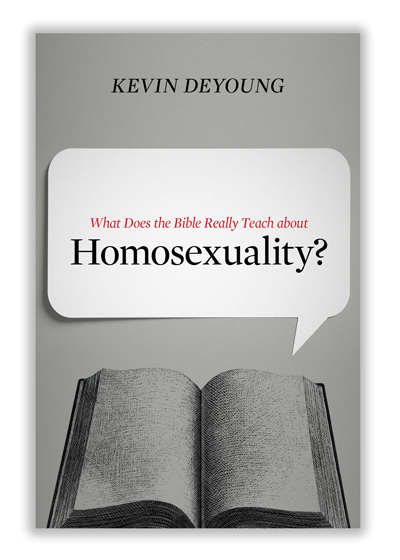
deyoungWhen you need clear answers, you call in a guy like Kevin DeYoung, whose forthcoming book on homosexuality and Bible is very good and very clear on what God says about sexual sin.

When it comes to any culturally celebrated sin (and perhaps no sin is more widely celebrated than homosexuality), the stakes are very high for the Church to be clear and to maintain her convictions about what God has revealed in Scripture.

Here’s what Kevin writes in What Does the Bible Really Teach about Homosexuality? (Crossway; April 2015).

A holy God sends his holy Son to die as an atoning sacrifice for unholy people so that by the power of the Holy Spirit they can live holy lives and enjoy God forever in the holy place that is the new heaven and new earth.

Is this the story celebrated and sermonized in open and affirming churches? What about twenty years from now? And what if we flesh out the story and include the hard bits about the exclusivity of Christ and the eternality of hell? What if part of the story is believing that every little jot and tittle in the Storybook is completely true? What if the story summons us to faith and repentance? What if the story centers on the cross, not supremely as an example of love, but as Love’s objective accomplishment in the pouring out of divine wrath upon a sin-bearing substitute?

The support for homosexual behavior almost always goes hand in hand with the diluting of robust, 100-proof orthodoxy, either as the cause or the effect. The spirits which cause one to go wobbly on biblical sexuality are the same spirits which befog the head and the heart when it comes to the doctrine of creation, the historical accuracy of the Old Testament, the virgin birth, the miracles of Jesus, the resurrection, the second coming, the reality of hell, the plight of those who do not know Christ, the necessity of the new birth, the full inspiration and authority of the Bible, and the centrality of a bloody cross.

Can someone deny that homosexual behavior is a sin and still believe every line in the Apostles’ Creed or the Nicene Creed? Maybe . . . for a time . . . loosely. But as the cultural pressure gets harder and our handling of Scripture gets softer, will we still acknowledge, as the Athanasian Creed does, that “it is necessary for eternal salvation that one also believe in the incarnation of our Lord Jesus Christ,” that “at his coming all people will arise bodily and give an accounting of their own deeds,” that “those who have done good will enter eternal life, and those who have done evil will enter eternal fire,” and that all this (including an orthodox understanding of the Trinity and the two natures of Christ) is “the catholic faith” and that “one cannot be saved without believing it firmly and faithfully”?

What will it a profit a man if he gains a round of societal applause but loses his soul? (131–132)

Are You Willing To Run?

trippPrompted by the latest health update from Paul David Tripp (officially diagnosed with stage 3 kidney disease), I recently returned to my shelf of books he has written to discover I have read all of his books (see a full list of his titles). Paul has been a source of great blessing in my life over the years, and I know I speak for many when I pray for him to be given many more years of life and fruitful labor.

I have read every book by Paul David Tripp because (1) I’m a Christian in need of wisdom, and because (2) I’m a writer in need of superior examples. All of his books deliver on these fronts. But as I mulled over that shelf of books, I think my favorite of all is Sex and Money: Pleasures That Leave You Empty and Grace That Satisfies (Crossway; 2013).

In every book Tripp understands how sin and temptation work in the human heart because he knows his Bible well. And he understands the expulsive power of a new affection is needed to drive out old, fallen desires. But it’s in Sex and Money, and perhaps because of the dominance of these allurements in our culture, that his counter-cultural courage, his prophetic voice, and pastoral skill are on full display.

A lot more to say about the book, but here I only want to point out that Tripp also prioritizes the imperative to run away from temptation. Some of life’s most important decisions are not complex. Yes, there are layers of affections to address and complex motives to uncover sometimes, but in the moment of temptation (especially sexual temptation) we must be willing to simply run.

Tripp makes the point in Sex and Money when addressing the simple command of Paul to “Flee from sexual immorality” (1 Cor. 6:18).

If you are going to live in the sexual domain of your life in the way that God has called you to live in the middle of this world that has gone sexually insane, you are going to have to be willing to do a whole lot of running.

You have to be willing to run from thoughts that work to paint as beautiful what God has forbidden.

You are going to have to run from desires that at times seem too powerful to resist.

You are going to have to run from the seductive whisper of the enemy who will lure you with lies.

You are going to have to run from situations and locations that play to your weaknesses.

You are going to have to run from pride that tells you that you are stronger than you really are.

You are going to have to run from selfishness that would allow you to use others for your own pleasure.

You are going to have to run from things you would love to participate in but expose you to things you cannot handle.

You are simply going to have to run from anything, anywhere, and from any person that is immoral in the eyes of your Savior. You have to be willing to run.

Paul is not calling us to medieval monasticism. We know that the greatest sexual danger to each of us exists inside of us, not outside of us. We know that running won’t make us morally pure. But running acknowledges the presence and power of the sin that still lives inside us and how it makes us susceptible to temptation and sadly able to see as beautiful and beneficial what God calls ugly and dangerous. As you work to separate yourself from what God names as immoral, you cry out to God to do what you cannot do, that is, to deliver you from you. God calls you to do what he has empowered you by grace to do, as he does for you what you cannot do for yourself. How amazing his grace is! (95–96)