Book review
The Gospel Life Series by Jeremiah Burroughs
As we have already discovered, Jeremiah Burroughs [1599-1646] was a first-rate bible expositor. His massive commentary on the book of Hosea is wonderful proof of this (we reviewed this commentary earlier this Summer).
However, unlike most of the Puritans recommended in our Puritan Study Series, Burroughs’ collected works do not exist. His works are largely scattered around, and for the purposes of the Puritan study, we will have to piece his works together.
But one of the easiest ways to collect six of his books comes in a series published by Soli Deo Gloria titled, The Gospel Life Series.

These six volumes were not intended by Burroughs to be a set, though because the word “Gospel” occurs in all six, editor Don Kistler saw that they were all linked together in a common theme. Kistler re-typeset the volumes, updated the spelling, and edited for length. “I do not believe that any of Burroughs’ thoughts have been altered. I have tried to remain faithful to his words as well as to his intent throughout this edition” (3:v ).
The result is a series that covers the various facets of the Christian life, is easy to read, and will appeal to a larger community of readers than just Puritan nerds like me. This year, the sixth and final volume of the series was released.
Contents
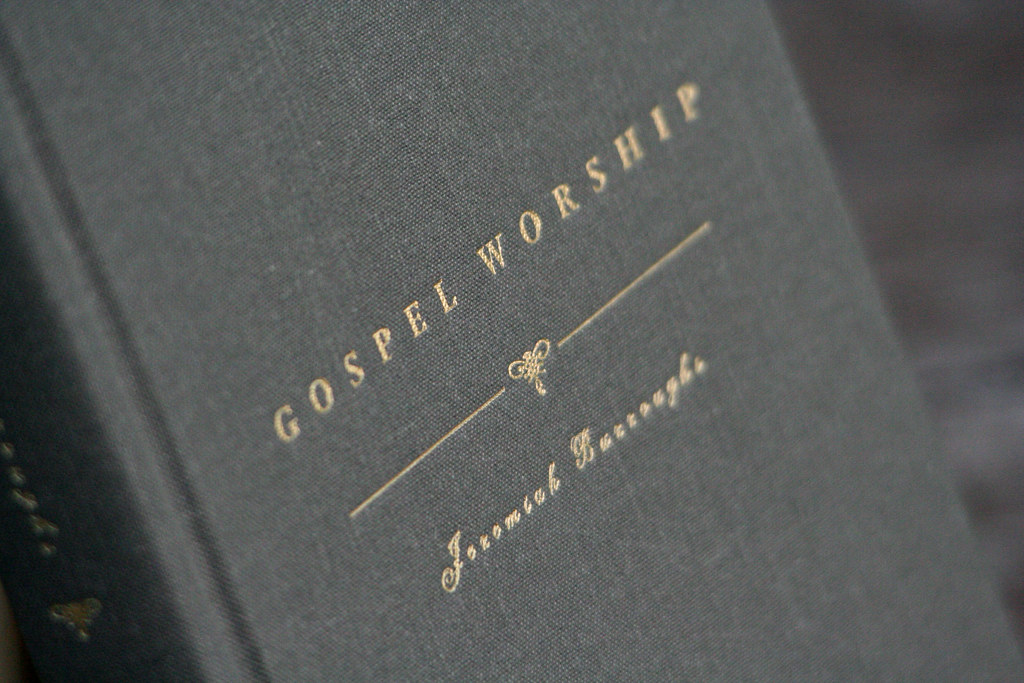
Vol. 1: Gospel Worship (1648/1990). In 14 sermons on Leviticus 10:3 (“Among those who are near me I will be sanctified”) Burroughs shows that we honor God when we draw near to Him in worship, in preparing for worship, in hearing the Word preached, in receiving the sacraments, and in prayer.
Vol. 2: Gospel Fear (1647/1991). In 7 sermons on Isaiah 66:2 (“But this is the one to whom I will look: he who is humble and contrite in spirit and trembles at my word”) and 2 Kings 22:19, Burroughs encourages us to cultivate a tender heart by cultivating a healthy fear of God.
Vol. 3: Gospel Conversation (1648/1995). Not conversation as in speech only, but the Puritan concept of conversation – of work, family, fellowship and all-around general conduct. Here are ten sermons to help us live the Cross-centered life. Most of the sermons are based upon Philippians 1:27 (“Only let your manner of life be worthy of the gospel of Christ”) and focus believers to be diligent in their walk. The Gospel must be the center of the Christian life, he argues.
Vol. 4: Gospel Revelation (1660/2006). In about 18 sermons, Burroughs explains the excellency of the eternal. God is excellent, Christ is excellent, and the nature of an eternal soul is excellent as well. It was here in the excellency of Jesus Christ (pages 51-182) that I came to a deep respect of Burroughs’ love for Christ. Truly, His name is called “Wonderful” (Isaiah 9:6). See “Example” below.
Vol. 5: Gospel Remission (1668 and 1674/1995). In 20 sermons Burroughs shows that the true blessedness of the human heart stems from the knowledge that God has perfectly pardoned my sin! The entire volume is built from Psalm 32:1 (“Blessed is the one whose transgression is forgiven / whose sin is covered”). “There is nothing in all the world that so much concerns us as to know how things stand with us in relation to God and our souls, whether we are pardoned or not. A mistake in this is a wonderful mistake, and yet how many thousands are there who venture the weight of this great business upon poor, weak, and slight grounds, yea, rather, on mere suggestions of their own heart” (p. 175).
Vol. 6: Gospel Reconciliation (1657/1997). Here are 18 sermons on 2 Corinthians 5:19-20 covering the who, what, when, where and why of reconciliation of sinners to God. This volume is filled with excellent encouragement for pastors to remain earnest in their preaching of the Cross.
Each of these volumes shows Burroughs to be a man deeply concerned that Christians live diligent Cross-centered lives. But, as with the great experiential preachers, there is a parallel theme of evangelism as well.
Example
The litmus test of all preachers and writers is this: Are they passionate about the beauty of Jesus Christ? Are they overwhelmed with His preciousness? Are they distracted with duties or are they first centered around a Man?
Burroughs argues that Jesus Christ is beautiful for 13 reasons (!): He is beautiful in His natures, Person, incarnation, His earthly works, His offices, endowments, miracles, as the revelation of God’s glory, in His humiliation, His conquest, exaltation, in the wonder of the saints towards Him, and in His eternal glory (4:59). Yes, Burroughs passes the test.
But he is not content that readers just admit they understand Christ’s greatness, but that they feel Christ’s greatness. He writes,
“When you ask your children what Christ was, you teach them that He was both God and man. Aye, but I appeal to you, when were your hearts taken with this as the greatest wonder in the world…” (4:61)?
It would be inconsistent to believe and not feel the power of the incarnation. After an exposition of Ephesians 1:17-18 and 3:14-20 he writes,
“Oh, what a shame it is that those who profess themselves to be Christian should understand so little of Jesus Christ! God expects that we should study the gospel, search into the gospel, so that we may see more of Christ. And the more we see, the more still we shall wonder; for Christ is an infinite depth, and the more we search into Him, the more we shall see cause to wonder … What I would especially observe is that Christians should not content themselves with a little knowledge of Christ, but they should labor to comprehend what is the length, breadth, depth, and height; they should labor to dive into the mysteries of the gospel” (4:171,173).
It is diving into the mysteries of the Gospel that sanctifies the heart. In other words, the Gospel is central to the Christian’s life!
“We should study Christ, and praise and bless God, and have our hearts enlarged for Jesus Christ. This is the duty of believers to whom God has revealed Christ as wonderful, that in their conversations they should hold out the wonderful glory of Jesus Christ. You should so walk before men as to manifest to all the world that your Savior is a wonderful Savior” (4:177).
All of these volumes contain such God-glorifying and Cross-centered experiential exhortations for the Christian.
Indexes
On the down side, there are no indexes in this series and they are not well-indexed in Martin either. So to use these volumes effectively will require some time. Soli Deo Gloria (and any Puritan publisher that does not include indexes) should consider releasing an electronic version of this set for those who purchase the printed set. This would prove very useful to exegetes like myself who need to sift through the volumes quickly.
For now, preachers who want to use Burroughs in sermon preparations will need to become familiar with the contents of each volume. The detailed contents pages in each volume will help much here.
Conclusion
The bottom line is this: The Gospel Life series is an exceptionally good resource of Puritan exposition. After 350 years, Burroughs still speaks powerfully through these volumes.
The publisher boasts that this book has a shelf life of 200-300 years. But even more important, Dr. Kistler’s editing of the text will make Burroughs accessible to readers for at least another 350. An excellent Puritan resource!

–

Boards: clothbound, hardcover (grey, gilded)
Volumes: 6
Pages: 1,710
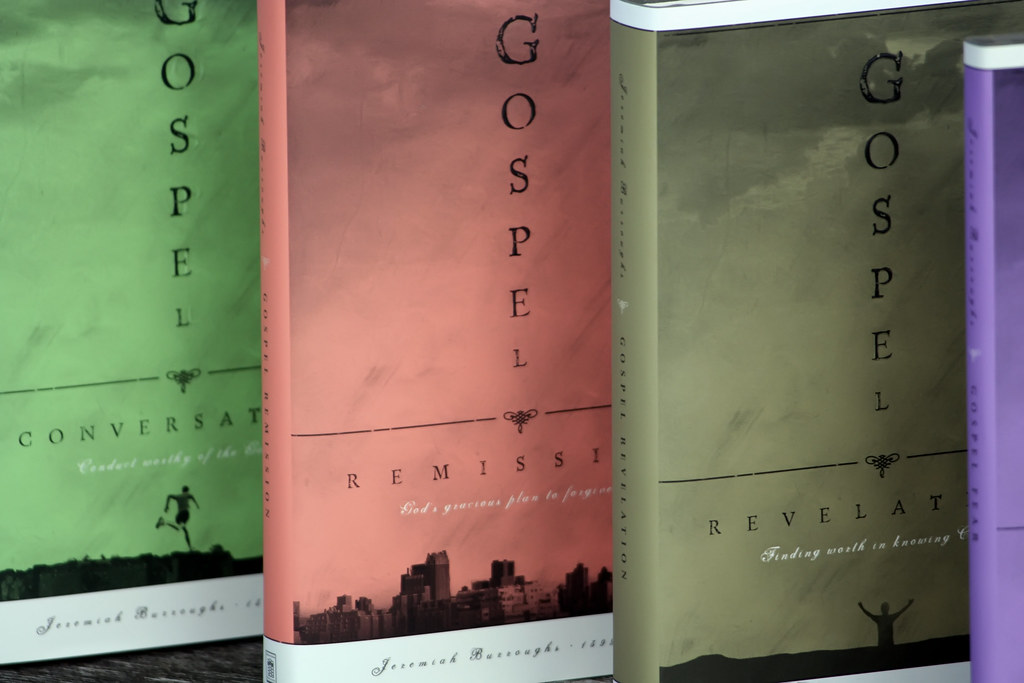
Dust jackets: yes (once again, beautiful covers from SDG)
Binding: Smyth sewn
Paper: acid-free; normal
Text: edited, updated, perfect type
Topical Index: no (electronic file is much needed)
Textual index: no (electronic file is much needed)
Biography: yes (very short; end of Gospel Remission)
Publisher: Soli Deo Gloria
Price USD: $140.00 / $91.00 from publisher
ISBNs: 187761131x, 1877611913, 1573580147, 1877611123, 1567690696, 1573580422
 your computer or print it out for reference. These indexes will also help you discover which volumes will be most beneficial in your studies.
 In August we ran a short series on how to make a Jonathan Edwards blank bible – how to cut and rebind a bible with blank pages interwoven for note taking (see part
  original Jonathan Edwards bible looks like and to give insight how his bible was made. Dozens of blogs linked to the series, pastors and Christians from around the world poured encouraging emails into my inbox as they took up the project themselves.
 he series, I had not explained certain steps well enough. There was a lack of photographs. We needed better explanations on how to clamp the bible before cutting and more info on the paper we used. After the first series was done, binding experts sent their insights into alternate options for those who cannot (for example) use a saw to cut the original binding off.
 of Hell. And what sort of ‘friendliness’ gives comfort to such a one? As if an oncologist, for example, were merciful to spare his patients the pain of necessary chemotherapy. No, we have a name for giving comfort to the curably dying—criminal malpractice. Another name is assisted suicide. And likewise in the Church. Sin is a greater cancer, and salvation is not elective surgery but a dying man’s only hope for eternal life. To give him any comfort other than in fleeing the wrath to come is fully to euthanize his soul—and convince me then that you’re his friend!”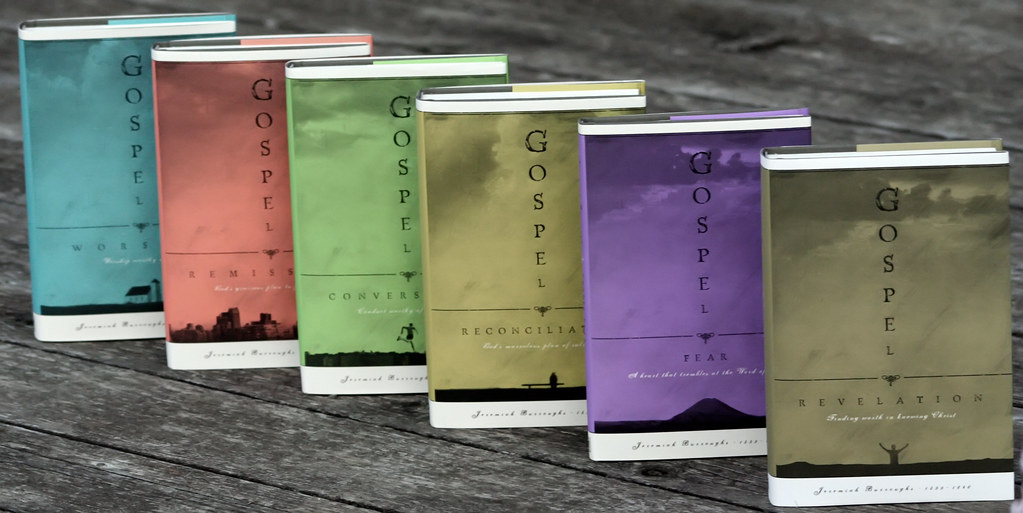

 wonderful principles on life within the Christian community. Written during the height of Nazi by Germany, Bonhoeffer reflects on the community of Christians he experienced with other men. What is the key quality of one who hears our confession, he asks? To be near the Cross.
 Tony Reinke