Book Announcement
Sweet Communion by Arie de Reuver
So I was all ready to wind down a bit this weekend, and not push to get another post up. That was all disrupted Saturday when a bubble mailer arrived in my mailbox from Baker Academic. I simply could not wait until next week to announce their new release. The book is Sweet Communion: Trajectories of Spirituality from the Middle Ages through the Further Reformation by Arie de Reuver. The book was published in Dutch in 2002 and translated into English by James A. De Jong.
To explain the importance of this book, I need to give some background.
We are familiar with the English Puritans (men like John Owen, Richard Sibbes, John Bunyan, Thomas Brooks, etc.) primarily because their original works were written in English, and easily reprinted over the centuries with little editing necessary. However, in the Netherlands another “Puritan” movement was taking place. Like their English counterparts, men like Willem Teellinck, Herman Witsius and Thodorus and Wilhelmus à Brakel were producing valuable theological and spiritual works in Dutch. But until only recently has the work of Dr. Joel R. Beeke and the Dutch Reformed Translation Committee made these works more accessible. In fact, one of the great highlights of Beeke’s Meet the Puritans is a section entirely devoted to the Dutchmen of the “Further Reformation” (see pages 739-824). Books of the Dutch “Further Reformation” authors (like the recently translated The Path of True Godliness by Willem Teellinck) bear all the marks of brilliance we see in the English Puritans.
One of the most noticeable strengths of these “Dutch Puritans” (as I call them) is their emphasis on Reformed spirituality and their enjoyment of sweet communion with Christ. Theirs was a deep and sincere devotion to Christ where their union with Christ was the means of experiencing vibrant communion with Christ. They defended the doctrines of grace and simultaneously enjoyed a joyful and warm spirituality.
This beautiful Reformed spirituality can be seen in the works of Wilhelmus à Brakel (1635-1711).
Wilhelmus à Brakel is most noted for his four-volume work, The Christian’s Reasonable Service (Reformation Heritage Books; 1993; 4 vols.). While it looks like another Reformed systematic theology it is actually more practical in nature and intended to provide content for small group discussions as Christians gather to encourage one another in the Christian life. It is one of the beautiful works of the “Dutch Puritans.”
I have noticed in the past the “sweet communion” of the believer with Christ is a theme that sparkles from this work. After emphasizing the marriage union between the Groom (Christ) and His Bride (the Church), à Brakel explains the believer’s communion with Christ within this marital union. Once this union between the sinner and his Savior has taken place in conversion “Jesus Himself delights in having communion with you” (2:93). Read that incredible sentence again! This communion produces a “sweetness and overflowing delight … Here they (Christians) find balm for their sick souls, light to clear up their darkness, life for their deadness, food and drink for their hunger and thirst, peace for their troubled heart, blood to atone for their sins, the Spirit for their sanctification, counsel when they are at their wit’s end, strength for their weakness, and a fullness of all for their manifold deficiencies” (2:93,94).
Of this marital union and the communion that follows, à Brakel writes,
“A temporal believer concerns himself only with the benefits and has no interest in Christ Himself. Believers, however, have communion with the Person of Jesus Christ, but many neither meditate upon nor closely heed their exercises concerning Christ Himself. They err in this, which is detrimental to the strength of their faith and impedes its growth. Therefore we wish to exhort them to be more exercised concerning the truth of belonging to each other, and the union and communion with Jesus Himself. They will then better perceive the unsearchable grace and goodness of God that such wretched and sinful men may be so intimately united with the Son of God. Such reflection will most wondrously set the heart aflame with love. It will strengthen their resolve to put their trust in Jesus without fear. It will give them strength and liberty to obtain everything from Him to fulfill the desires of their soul, causing them to grow in Him, which in turn will generate more light and joy. Therefore, faith, hope, and love are mentioned in reference to the Person of Christ. Scripture speaks of receiving Him, believing in Him, trusting in Him, living in Him, loving Him, and hoping in Him” (2:91).
This beautiful passage points the believer back to the Person of Christ to find her joy and strength in the beauty of Jesus Christ. This light and joy is the byproduct of communion with Him and this communion goes back to the believer’s union with Christ in justification.
Later, à Brakel explains that since our union with Christ is absolute, our communion with Christ does not shift with circumstances or emotions. “By faith, hold fast to the fact that you are reconciled to and are a partaker of Him and His benefits, even if you do not perceive and feel this. This belonging to Him is not based on feeling. If the souls may truly believe this and be exercised therewith, this will lead the soul toward communion with Him” (2:96). Communion can never be separated from our union and our union is described by our justification by faith alone and in our election in the Son. So à Brakel and the “Dutch Puritans” remind us that our sweet communion with Christ is inseparably bound to our understanding of our union with Christ in the gospel!
In his conclusion on the teachings of Wilhelmus à Brakel, de Reuver writes that his “spirituality is one that is rooted in Christ through the word believed, even in its most intimate and mystical moments. This foundation protects his mysticism from spiritualism” (258).
Many today are drawn towards Roman Catholic mysticism or a non-theological spirituality by thinking a deep spiritual experience of Christ can be separated from a genuine understanding of the gospel. This, as à Brakel displays, is not the case. Neither does Reformed theology favor a cold orthodoxy. Following the best intentions of the Medieval theologians, the Reformed “Dutch Puritans” always believed that rich biblical doctrine is the vein for the warm blood of spiritual experience of the Son in communion.
So here is the importance of Sweet Communion by de Reuver: The rich spirituality we have received from the “Dutch Puritans” is a spiritual legacy following the spiritual traditions of Bernard of Clairvaux (1090-1153) and Thomas à Kempis (1379-1471) but is firmly rooted in the precious theology of the Reformation. The final conclusion of de Reuver is that the all-controlling center of the Dutch Further Reformation spirituality rested in the Reformed theology. This is a beautiful and timely book to further dismantle the idea that Reformed theology is cold and stiff intellectualism. Our rich theology actually leads us deeper into true “mysticism” of direct communion with Christ.

Title: Sweet Communion: Trajectories of Spirituality from the Middle Ages through the Further Reformation.
Series: Texts and Studies in Reformation and Post-Reformation Thought
Author: Arie de Reuver (Dutch)
Translator: James A. De Jong (English)
Reading level: 4.5/5.0 > academic and some untranslated Dutch quotations
Boards: paper
Pages: 303
Volumes: 1
Dust jacket: no
Binding: glue
Paper: normal
Topical index: no
Scriptural index: no
Text: perfect type
Publisher: Baker Academic
Year: 2007
Price USD: $29.99/23.99 from Baker
ISBNs: 0801031222, 9780801031229
————-
Related: Communion with God by Kelly Kapic. Another gem from Baker this year on communion with God. Kapic studies English Puritan John Owen’s understanding that communion with God takes place within a balanced Triunity of the Father, Son and Spirit. Highly recommended.
————-
 e in selecting books centered on the Cross (rather than terminating on ethics or the feats of David, Daniel, Joshua, Ruth, Peter, Paul, etc.). My wife and I have come to love two specific volumes that are both Cross-centered AND child approved. We highly recommend The Big Picture Story Bible (Crossway: 2004) as an easy-to-follow and well illustrated guide through the biblical storyline. And of course another family favorite is Caleb’s Lamb by Helen Santos (Reformation Heritage Books: 2005). Read our review from last year for more information.
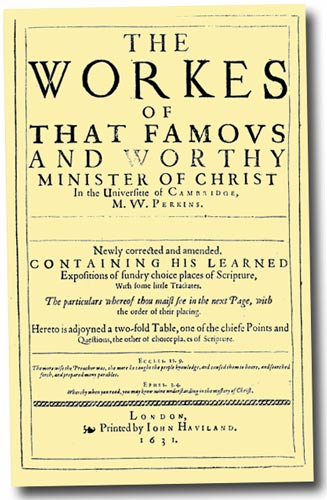 Joel Beeke and Derek Thomas are hard at work editing the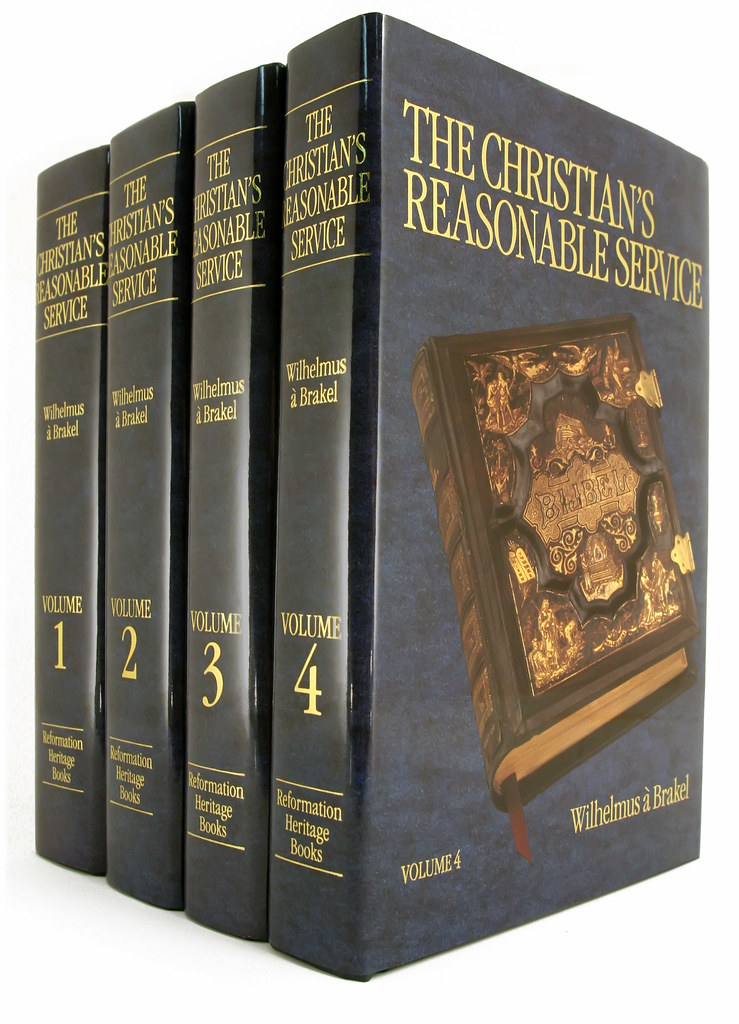


 the blighting shadow of my presence neither old nor young ever really prospered.” Shepard lamented that his children were born — at least to him. His sense of inherent failure and incapacitating sinfulness apart from God’s graciousness makes his thoughts and meditations very humbling.
 C.S. Lewis’, The Lion, the Witch and the Wardrobe presents the work of Aslan (Christ) as the appeasement the White Witch (Satan) sounding more like Origen’s “Ransom to Satan Theory” than the Biblical Gospel. I think this shows just how tough it really is to present to children the substitution of Christ as the appeasement of God’s justice (even the literary genius struggles here). This is why
  s very well. These are animated movies of about 30 minutes each. They contain very accurate historical details that you may not catch until you compare these movies with books.
  Post-Reformation Reformed Dogmatics by Richard Muller. I would recommend you check it out. I asked John to write a review focused on how educated laypersons and pastors could effectively use this excellent work and he did not disappoint! Read the review
  Tony Reinke