 Some say we should avoid reading two new books consecutively without sandwiching an old book in between them. I agree with this rule, it just happens to be a good rule I rarely apply in practice. So when my copy of St. Athanasius’ On the Incarnation (St. Vladimir’s Press, 1977) arrived yesterday, I dove in, partly out of curiosity, but mostly out of guilt for my disproportionate time reading new books lately, and in hopes that an especially old book (originally written in c. AD 318) would make up for my negligence.
At the outset let me say the book’s title is a bit misleading. Athanasius covers the Incarnation well but he sets the incarnation within the contexts of creation, the imago Dei, the fall, redemption, and the consummation of all things while at the same time showing how the Incarnation relates to the full scope of our Savior’s life and work—from his birth, throughout his life, death, resurrection, and forthcoming return. Much more could have been said on all these topics, but the theological breadth of the work is very impressive. For Athanasius the Incarnation is a gospel truth and his chapter on the cross (4: The Death of Christ) was brilliant and devotionally rich, something that came as a bit of a pleasing surprise.
When I finished the book its brevity was another impressive feature (I read it in just over 2 hours). The book is clear and pointed, and of course clear/pointed books are rarely lengthy. C.S. Lewis praised it saying, “only a master mind could, in the fourth century, have written so deeply on such a subject with such classical simplicity.” And later, “The whole book, indeed, is a picture of the Tree of Life—a sappy and golden book, full of buoyancy and confidence.” High words of praise from a man who knew a bit about good books (and bad ones).
Lewis’ introduction on the importance of reading old books (perhaps the most famous Christian introduction ever penned) was a treat at the beginning. The book closes with an appendix, a letter written by Athanasius on the importance, value, and Christ-centeredness of the Psalms. That letter was a treat at the end.
I’ve been waiting for a few years to read On the Incarnation. I finally got around to it and I confer with Lewis: this book is great.
Before you read another new book, read this one.
————————
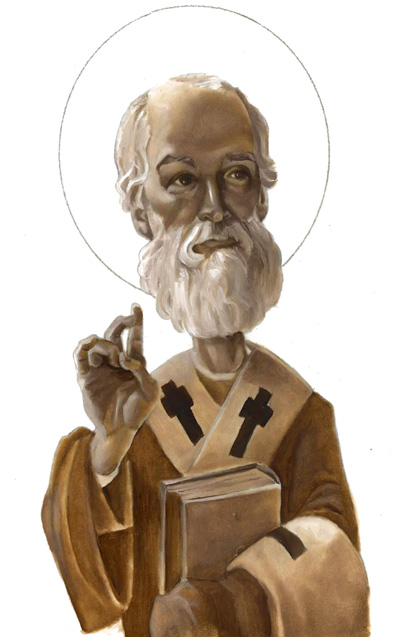
Cool portrait by Zach Franzen
 Charles Spurgeon, in a sermon dated November 2, 1884:
 Tony Reinke