BoT > Session 6 > Derek Thomas on John Calvin

2007-banner-of-truth-confer.jpg
Session 6 – (Thurs. 10:45 AM)
“Meditation and the Future Life: The Goal of Holiness in Calvin’s Institutes”
Derek Thomas

GRANTHAM, PA – Thomas began his final session with some background and advice to reading Calvin’s Institutes. He recommended using a guide to help get through them for the first time. [I would agree having been greatly helped by T.H.L. Parker’s, Calvin: An Introduction to His Thought (Westminster/John Knox: 1995)]. Thomas cautioned against using the Institutes as ones introduction to John Calvin but rather recommended readers begin with Calvin’s rich sermons. Sermons on the Beatitudes (Banner of Truth: 2006) was presented as a particularly marvelous and fresh exposition although the cover image is one of the most awful images of Calvin, he said. “I’ve seen bad images of Calvin but this one takes the biscuit.”

Thomas highly recommends others read Calvin’s chapter on prayer in the Institutes. The chapter is one of the longest (see 3.20.1-52, pp. 1:850-920). Why, he asked, is Calvin’s teaching on prayer not better known? Calvin’s treatment on prayer is marvelous and all should read it.

Thomas then began his final message with three Scripture readings: Romans 8:1-11, Ephesians 4:17-24, Colossians 3:1-4. It’s important to note that Calvin’s teaching on mortification ends with this chapter: “Meditation on the Future Life” (3.9.1-6, pp. 1:712-719).

Calvin and the Puritans

Our love for the Puritans is a love of their experiential exposition of Scripture. We are drawn to the most obscure language of John Owen and endure the Ramist subdivisions of Owen’s subplot because he and other Puritans speak to our hearts. Today we long for God’s Word to be addressed not only to our mind and intellect but also to our hearts and affections. We long to have the question: So what? What is the purpose of the passage? What is it calling me to do and feel? The Puritans redress the mistakes of our day.

Calvin intimidates readers more than the Puritans because we think that Calvin does not speak to the heart as the Puritans. This is to buy into a division between Calvin and the Calvinists. The Puritans – all of them – knew, read and loved John Calvin. All the Puritans read Calvin’s Institutes, commentaries and sermons. Perhaps the best way to dismantle this error of separating Calvin from the Calvinists is to plumb the depths of book 3 in the Institutes because here Calvin teaches us that the heart is more important than all else.

Reformed Spirituality

For Calvin, piety was fundamental and the Institutes are a deliberate contrast to the medieval theology of Summa Theologica by Thomas Aquinas. Calvin’s Institutes are a Summa Pietas (sum of all piety) rather than a Summa Theologica (sum of all theology). For Calvin, his theology is a theology of the heart, addressing the totality of anthropology. If we don’t see this in the Reformers it shows a serious misunderstanding on our part.

The Reformers produced a Reformed spirituality! Reformed faith, by design, encompasses the totality of life including piety and the spiritual. Our theology informs our doctrine, prayers, understanding God’s means of grace, the imperatives of Scripture, preaching, corporate gatherings and liturgy. Their theology informed their spirituality. For Calvin and the Reformers there is a decided shape to spirituality and piety. There is a union with Christ first and then communion with Christ (as we saw earlier)!

So where did J.I. Packer get the title of his bestselling book, Knowing God? From the Institutes of course! Having sold over 1,000,000 copies, what makes it such a popular work? Because, who does not want to know God? This is Calvin’s intent in the Institutes. For Calvin piety in the sense of having a right relationship with God – in knowing Him, giving heartfelt worship, believing, offering filial prayers, etc. – is exactly what the Institutes are all about! Calvin says, “I call ‘piety’ that reverence joined with love of God which the knowledge of his benefits induces” (1.2.1, p. 1:41).

Future Together

For Calvin’s faculty psychology the mind is hugely important. “Be not like a horse or a mule, without understanding” (Ps. 32:9). Calvin says the mind, yes, but also the heart, too! We are to be like newlyweds in their continual talking over their future together. They are thinking about the house and kids they want in the future. In book 3, Calvin says we need to be like newlyweds longing, ever more in love with Christ by which we have been drawn into union and anticipating our future together with Him.

But sin, the world and Satan all seek to draw us away from this anticipation. These are the enemies that prevent this love from blossoming. So we are required, with resolve and effort, to maintain and grow in this love. This resolve and effort comes, for Calvin, in the act of meditation on the future life. For Calvin, like that of the Puritans, they were following a line of sanctification with medieval roots. We live in this world but we anticipate the world to come.

Meditating on the Future Life

What shape does this anticipation take in Calvin?

1. Renovation of the Mind. Not only do we need a renovation in what we think but a renovation in how we think. In his book, The Grace and Duty of Being Spiritually Minded (7:260-497), Puritan John Owen asks: What is it you think about then you are not thinking? When your mind is in the default/neutral position, what is it you think about? We force our thoughts to Christian thoughts. Calvin says nearly the same thing as Owen (did Owen read Calvin’s Institutes?).

Colossians 3:1-4 is very significant here.

“If then you have been raised with Christ, seek the things that are above, where Christ is, seated at the right hand of God. Set your minds on things that are above, not on things that are on earth. For you have died, and your life is hidden with Christ in God. When Christ who is your life appears, then you also will appear with him in glory.”

Calvin says Paul calls us to we are called to “assiduity” (or diligent effort) in our thinking of the things above. Calvin warns us of stopping at the resurrection of Christ. Christ was crucified, buried, raised and now is seated in heaven. Calvin’s thoughts follow redemptive history.

We have made too little of the ascension of Christ. By Christ’s being brought into heaven, we have been brought into heaven. We are with Him! This means the ascension of Christ is critical to meditation. “If then you have been raised with Christ, seek the things that are above, where Christ is, seated at the right hand of God” (Col. 3:1).

This renovation of our minds includes repentance and a rigorous discipline of our minds. “For those who live according to the flesh set their minds on the things of the flesh, but those who live according to the Spirit set their minds on the things of the Spirit. For to set the mind on the flesh is death, but to set the mind on the Spirit is life and peace” (Rom. 8:5-6).

2. Detachment from the present world. Like Augustine, Calvin warns against an improper love for the present world. It is dangerous to set our affections on the things of the world because it brings us into bondage and prevents services. But by nature we are slaves to this world. This world is a shadow and a vapor passing away. Even in the Garden of Eden, Adam and Eve were meant to enjoy the provisions of the garden to see the beauty of the Creator of the beauty, to see the One Who is Beauty Himself. Sin, as Calvin says, turns our hearts into idol factories. We tease ourselves by thinking this world is all there is.

We see in our day the idolatry of health and exercise as though we can live to be 350 years old. Is this not a reflection that even Christians have set their minds on the things of this earth?

As this conference comes to a conclusion many of us have our bags packed and we are ready to leave to the airport to go home. Calvin says this is how we should live our lives on this earth. We should have our bags packed and on our way home. If this earth is not our homeland what is this life but an exile? Calvin has “gobs” of things to say on the proper value of enjoying Christian liberties in this life. But heaven is our home. Calvin says, “no one has made progress in the school of Christ who does not joyfully await the day of death and final resurrection” (3.9.5, p. 1:718). Calvin calls us to know how to die well.

For Calvin, meditation is not mindless humming but a cognitive discourse on the Word of God. Imagine a preacher in your head expounding, applying and reminding us not to set our roots deeply in this world.

Trails are the primary means God uses to detach us from this world. For the Christian, our crosses are ladders by which the mind and heart ascend into heaven. The Christian is a marcher on the way to glory.

We should maintain a proper contempt for this world. Calvin asks: Where will true and lasting joy be found? Not in this world or the relationships of this world. The greatest joy in this world will pale to the bursting joy of heaven when we shall see Jesus in His glory and splendor (1 John 3:2)!

3. Heaven as our ultimate destiny. There are three tenses to our salvation – we are saved, we are being saved and we will be saved. Only in glory will we be fully saved from the remnants of corruption and freed from the temptations of Satan.

The real world is the unseen world. “For this light momentary affliction is preparing for us an eternal weight of glory beyond all comparison, as we look not to the things that are seen but to the things that are unseen. For the things that are seen are transient, but the things that are unseen are eternal” (2 Cor. 4:17-18). The Cherubim and Seraphim and archangels … this is the real world for Calvin. The privilege of being in Christ is that trouble does not shake us. We feel pain but Christ is always the rock beneath our feet and the security that cannot be taken away. In times of our greatest physical weakness we see beyond the groanings of this world to see with the eye of faith what cannot be shaken.

Psalter and Reformed Spirituality

So how do we meditate on the future life? The discipline of meditation is seen in the realities portrayed of this life in the Psalms. The Psalms are crucial to define the nature of the spirituality of the Christian life. Here we see the anatomy of all parts of the soul. This is why Calvin was adamant in commissioning a Psalter for his congregations to sing from. The Psalms are realistic. If the Psalmist is angry he says it. The Psalms range through a full spectrum of emotion and this displays the contours of our Christian lives. If we don’t sing the Psalms we miss the shape and identity of Reformed spirituality! If we do not sing of the brokenness of this world we will not anticipate the world to come.

And nothing portrays the anticipation of the future life more than prayer. The Psalms are prayers. Prayer is being drawn into heaven. The Holy Spirit groans to enables our voices to carry into heaven where Christ is seated at the right hand of the Father. Romans 8:26 is central for Calvin’s understanding of the Spirit. The Spirit is given to enable us to pray. The Spirit works for us and with us to bring our feeble voices into the presence of the Father in heaven! If you read the prayers of Calvin you will notice how many of them are eschatological in nature.

Thomas closed his session by reading some of these precious prayers of Calvin. I close with a personal favorite:

“Grant, Almighty God, that as we now carry about us this mortal body, yea, and nourish through sin a thousand deaths within us; O grant that we may ever by faith direct our eyes toward heaven, and to that incomprehensible power, which is to be manifested at the last day by Jesus Christ our Lord, so that in the midst of death we may hope that thou wilt be our Redeemer, and enjoy that redemption which he completed when he rose from the dead, and not doubt that the fruit which he then brought forth by his Spirit will come also to us when Christ himself shall come to judge the world; and may we thus walk in the fear of thy name, that we may be really gathered among his members, to be make partakers of that glory which by his death he has procured for us. Amen”

———-

Related: For more posts and pictures from the 2007 Banner of Truth Ministers’ Conference check out the complete TSS conference index.

BoT > Session 3 > Derek Thomas

2007-banner-of-truth-confer.jpg
Session 3 – (Wed. 9:00 AM)
“Union with Christ: The Architectonic Principle of Holiness in Calvin’s Institutes”
Derek Thomas

GRANTHAM, PA – Even if a word like “architectonic” was too big for 9 AM, one of the great anticipations of the conference for me was to learn more about John Calvin and his theology (part of my preparation for this conference was the Humble Calvinism series we started in January). Derek Thomas is a man well qualified to teach on Calvin. Thomas originates from Whales Wales but now ministers in Jackson, MS as professor of systematic and practical theology at Reformed Theological Seminary and Minister of Teaching at First Presbyterian Church. Recently we looked at Thomas’ excellent book, Calvin’s Teaching on Job (Christian Focus).

Thomas is very familiar with the Banner of Truth Conference, first attending in 1974. He began his address with kind compliments and thankfulness for the past 30+ years.

Thomas was encouraged to make one theologian his lifelong hobby. In seminary he discovered Calvin when studying Calvin’s Institutes. No one should graduate from seminary without studying them, he said.

Thomas’ messages for the conference would center in book three of the Institutes and especially upon a small section published by itself as the Golden Booklet of the True Christian Life (still in print). This small book has enjoyed, Thomas said, “a life of it’s own.” [The content of this small book can be found in the third book of the Institutes (3.6-3.10 or pp. 1:684-725 in the McNeill/Battles edition).]

Thomas began by reading the sixth chapter of Romans and a short reading from the Institutes. Coming out of Book 2, where Calvin explained the person and work of Christ, he goes on in Book 3 to explain how this is applied to the Christian. Calvin begins Book 3 by writing:

“How do we receive those benefits which the Father bestowed on his only-begotten Son – not for Christ’s own private use, but that he might enrich poor and needy men? First, we must understand that as long as Christ remains outside of us, and we are separated from him, all that he has suffered and done for the salvation of the human race remains useless and of no value for us. Therefore, to share with us what he has received from the Father, he had to become ours and to dwell within us” (3.1.1, p. 1:537).

This quote provides the critical bridge between Book 2 (the work of Christ, His Cross and the Resurrection) into Book 3 (the application of grace to the sinner). Without union to Christ, the application the work of Christ does not happen.

History of the Institutes

The Institutes first appeared in 1536 as a small book but would grow through many editions until the final French edition in 1560. The plan of the original Institutes was different than the final. The first edition followed the structure of a catechism. But in 1559 the Institutes would be remodeled to follow the outline of the Apostle’s Creed – following a Trinitarian design of the Father, Son and Holy Spirit. Some other significant changes include the moving of predestination from the opening chapters of the doctrine of God, into Book 3 being placed under the application of the Holy Spirit — because as Calvin says, “Election is the secret of God’s people.” Once you are born again, then predestination makes sense (similar to how predestination fits into the flow of Romans). Another change was that Calvin’s teaching on the Christian life formerly was a conclusion to his teaching on the church, but in the final edition is a subsection of Book 3 as can be seen from the third book’s title: “The way in which we receive the grace of Christ: What benefits come to us from is, and what effects follow.”

So if you look at the headings of Book 3, Calvin begins with a section on the Holy Spirit and then addresses faith, regeneration, repentance and justification. This is no proper ordo salutis! But Calvin is not attempting here to write an ordo salutis. Calvin is in a place where salvation by faith alone is charged as antinomian by his Roman Catholic critics. Therefore, Calvin first sets up sanctification to remove the ground of his opponents before jumping into justification. In other words, justification by faith alone does not undermine sanctification.

For Calvin, regeneration is not a one-time event that happens in the past. Rather, regeneration is an ongoing process of renewal in our sanctification. [The example of the Christian’s continued repentance for sin throughout life is an act of regeneration. Calvin writes, “in a word, I interpret repentance as regeneration, whose sole end is to restore in us the image of God that had been disfigured and all but obliterated through Adam’s transgression” (3.3.9, p. 1:601)]. It is important to know how Calvin uses the term “regeneration.”

Union with Christ

Union to Christ is the key truth of the application of His work. This union is a multifaceted and multidimensional truth. There is a mystical union with Christ brought about by the Holy Spirit where we are brought into spiritual union with Christ. But this union also incorporates Christ and believers whereby we share communion also in human nature, body and soul together. Christ identifies with believers in both a spiritual and physical union. Calvin’s eschatology includes an existence after glorification where we will have physical bodies and be in an incarnate union with Christ. Christ is the firstborn, elder brother in the family we are adopted: “For those whom he foreknew he also predestined to be conformed to the image of his Son, in order that he might be the firstborn among many brothers” (Rom. 8:29). We are engrafted into Christ and we draw from the sap and vitality of Christ (Rom. 11:17). We put on Christ and grow into One Body with Him (Gal. 3:27-28).

Calvin expands on this union with Christ and its significance to sanctification.

1. Basis of holiness. Christ possessed a spiritual wealth to give to the needy and He prays to His Father that this spiritual wealth would be to the believer’s sanctification. This profound truth is reflected in the prayer of Jesus, “And for their sake I consecrate myself, that they also may be sanctified in truth” (John 17:19). On this passage, Calvin writes in his commentary on John,

“It is, because he consecrated himself to the Father, that his holiness might come to us; for as the blessing on the first-fruits is spread over the whole harvest, so the Spirit of God cleanses us by the holiness of Christ and makes us partakers of it. Nor is this done by imputation only, for in that respect he is said to have been made to us righteousness; but he is likewise said to have been made to us sanctification, (1 Cor. 1:30) because he has, so to speak, presented us to his Father in his own person, that we may be renewed to true holiness by his Spirit.”

Thus, our union with Christ achieved both justification and sanctification for believers. Our sanctification is the result of Christ’s sanctification and it is His perfect sanctification now being worked out in our own lives! This is the union. So how are we saved? Calvin says, not by Christ but rather in Christ. A most common phrase of Paul is to be “in Christ” and this “in Christ” is the key to our justification and the key to our sanctification. Our holiness is His holiness, our righteousness is His righteousness.

Our union with Christ as the basis of holiness is evident in the beginning lines of First Corinthians. “To the church of God that is in Corinth, to those sanctified in Christ Jesus, called to be saints” (1 Cor. 1:2). The Corinthians have two zip codes – one zip code that places them in this world where they are attacked and tempted, but a second zip code that sets them in heaven because they are united with Christ. In this union with Christ we have a divine nature in this world, which means we can put off all vices of the flesh (2 Pet. 1:4).

2. Means of holiness. The Holy Spirit is the applier of the works of Christ. It’s the same Spirit that indwelt Christ in His Incarnate life. See the references to the “Spirit of Christ” (Rom. 8:9, 1 Pet. 1:11). The Holy Spirit is the bond uniting us to Christ. None know Christ more intimately nor has experienced more fellowship with Christ than the Holy Spirit. This Holy Spirit is the Spirit of Christ.

So where is Christ now? Christ is now in heaven at the right hand of the Father, but we are still united with Him. In the Lord’s Supper there is a deep mystery here. Calvin speaks of the Holy Spirit drawing us into fellowship with Christ as the Spirit draws our affections towards Him. Our hearts are lifted into communion with the Body and Blood of Christ. The Spirit comes to us because of the death, burial and resurrection of Christ.

To signify the Spirit being poured over the Body from its Head (Christ), Calvin builds from the image of Psalm 133: “It is like the precious oil on the head, running down on the beard, on the beard of Aaron, running down on the collar of his robes!” (v. 2). Christ is our Head. He pours His Spirit over Himself and the oil of the Holy Spirit runs down from the Head over the rest of His Body the Church. Sanctification from the Spirit of Christ flows from our union with Christ.

3. Shape of holiness. The Christian receives all the fullness of Christ in all of His accomplishments (justification, sanctification, glorification, etc.). Grace reigns through righteousness. “How can we who died to sin still live in it?” (Rom. 6:2). As Calvin writes, “Medicine does not foster the disease it destroys” . We have died to sin and the claims of sin have been fully met (Rom. 6:10, 23). “We know that our old self was crucified with him in order that the body of sin might be brought to nothing, so that we would no longer be enslaved to sin” (Rom. 6:6). The body of sin has been destroyed. Sin was manifested in the body and now righteousness must be manifest in the body, too. The believer has been freed from sin, freed from guilt and the power of sin. The bondage has been broken.

Being freed from sin’s bondage is no mere speculation for Calvin. For Calvin, communion with the death of Christ energizes the imperatives that follow. The imperatives – like “consider yourselves dead to sin and alive to God in Christ Jesus” — come after the indicatives (Rom. 6:11). The template of holiness is union/communion with the death/resurrection with Christ. Calvin sounds so Pauline. This is why when we have a hard time understanding the Pauline texts, Calvin is most helpful. He thinks so much like Paul.

So what does it mean to commune with Christ? Communion with Christ functions in our lives and is manifested in the perpetual death/resurrection cycle of life. The cross is the way to victory and death is the way to life. Don’t be surprised that to know life and joy we must first experience death and crucifixion. Christ is the one who blazes the trail for the Christian and we follow Him (Heb. 5:9).

So reckon yourselves dead and look to heaven where Christ is. The Christian life is not about the imitation of Christ. WWJD is not a sufficient ethic for the Christian life. We act in the Spirit of Christ, not to the details of Christ’s life.

The same Spirit that indwelt Christ is the same Spirit that molds us and takes us along the path of crucifixion and resurrection on our path to glory. Don’t be surprised if that is an increasingly difficult path as we die to self, die to the world, die to the devil, and live more for Christ and His glory.

———-

Related: For more posts and pictures from the 2007 Banner of Truth Ministers’ Conference check out the complete TSS conference index.

Book: Sweet Communion by Arie de Reuver

Book Announcement
Sweet Communion by Arie de Reuver

So I was all ready to wind down a bit this weekend, and not push to get another post up. That was all disrupted Saturday when a bubble mailer arrived in my mailbox from Baker Academic. I simply could not wait until next week to announce their new release. The book is Sweet Communion: Trajectories of Spirituality from the Middle Ages through the Further Reformation by Arie de Reuver. The book was published in Dutch in 2002 and translated into English by James A. De Jong.

To explain the importance of this book, I need to give some background.

We are familiar with the English Puritans (men like John Owen, Richard Sibbes, John Bunyan, Thomas Brooks, etc.) primarily because their original works were written in English, and easily reprinted over the centuries with little editing necessary. However, in the Netherlands another “Puritan” movement was taking place. Like their English counterparts, men like Willem Teellinck, Herman Witsius and Thodorus and Wilhelmus à Brakel were producing valuable theological and spiritual works in Dutch. But until only recently has the work of Dr. Joel R. Beeke and the Dutch Reformed Translation Committee made these works more accessible. In fact, one of the great highlights of Beeke’s Meet the Puritans is a section entirely devoted to the Dutchmen of the “Further Reformation” (see pages 739-824). Books of the Dutch “Further Reformation” authors (like the recently translated The Path of True Godliness by Willem Teellinck) bear all the marks of brilliance we see in the English Puritans.

One of the most noticeable strengths of these “Dutch Puritans” (as I call them) is their emphasis on Reformed spirituality and their enjoyment of sweet communion with Christ. Theirs was a deep and sincere devotion to Christ where their union with Christ was the means of experiencing vibrant communion with Christ. They defended the doctrines of grace and simultaneously enjoyed a joyful and warm spirituality.

This beautiful Reformed spirituality can be seen in the works of Wilhelmus à Brakel (1635-1711).

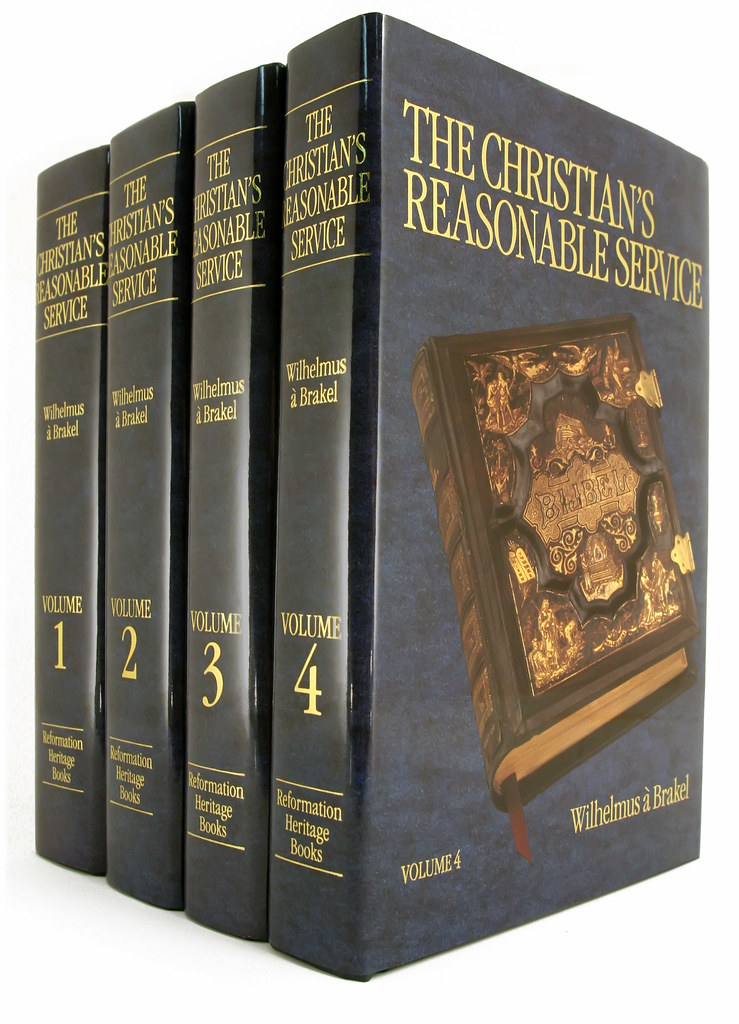
Wilhelmus à Brakel is most noted for his four-volume work, The Christian’s Reasonable Service (Reformation Heritage Books; 1993; 4 vols.). While it looks like another Reformed systematic theology it is actually more practical in nature and intended to provide content for small group discussions as Christians gather to encourage one another in the Christian life. It is one of the beautiful works of the “Dutch Puritans.”

I have noticed in the past the “sweet communion” of the believer with Christ is a theme that sparkles from this work. After emphasizing the marriage union between the Groom (Christ) and His Bride (the Church), à Brakel explains the believer’s communion with Christ within this marital union. Once this union between the sinner and his Savior has taken place in conversion “Jesus Himself delights in having communion with you” (2:93). Read that incredible sentence again! This communion produces a “sweetness and overflowing delight … Here they (Christians) find balm for their sick souls, light to clear up their darkness, life for their deadness, food and drink for their hunger and thirst, peace for their troubled heart, blood to atone for their sins, the Spirit for their sanctification, counsel when they are at their wit’s end, strength for their weakness, and a fullness of all for their manifold deficiencies” (2:93,94).

Of this marital union and the communion that follows, à Brakel writes,

“A temporal believer concerns himself only with the benefits and has no interest in Christ Himself. Believers, however, have communion with the Person of Jesus Christ, but many neither meditate upon nor closely heed their exercises concerning Christ Himself. They err in this, which is detrimental to the strength of their faith and impedes its growth. Therefore we wish to exhort them to be more exercised concerning the truth of belonging to each other, and the union and communion with Jesus Himself. They will then better perceive the unsearchable grace and goodness of God that such wretched and sinful men may be so intimately united with the Son of God. Such reflection will most wondrously set the heart aflame with love. It will strengthen their resolve to put their trust in Jesus without fear. It will give them strength and liberty to obtain everything from Him to fulfill the desires of their soul, causing them to grow in Him, which in turn will generate more light and joy. Therefore, faith, hope, and love are mentioned in reference to the Person of Christ. Scripture speaks of receiving Him, believing in Him, trusting in Him, living in Him, loving Him, and hoping in Him” (2:91).

This beautiful passage points the believer back to the Person of Christ to find her joy and strength in the beauty of Jesus Christ. This light and joy is the byproduct of communion with Him and this communion goes back to the believer’s union with Christ in justification.

Later, à Brakel explains that since our union with Christ is absolute, our communion with Christ does not shift with circumstances or emotions. “By faith, hold fast to the fact that you are reconciled to and are a partaker of Him and His benefits, even if you do not perceive and feel this. This belonging to Him is not based on feeling. If the souls may truly believe this and be exercised therewith, this will lead the soul toward communion with Him” (2:96). Communion can never be separated from our union and our union is described by our justification by faith alone and in our election in the Son. So à Brakel and the “Dutch Puritans” remind us that our sweet communion with Christ is inseparably bound to our understanding of our union with Christ in the gospel!

In his conclusion on the teachings of Wilhelmus à Brakel, de Reuver writes that his “spirituality is one that is rooted in Christ through the word believed, even in its most intimate and mystical moments. This foundation protects his mysticism from spiritualism” (258).

Many today are drawn towards Roman Catholic mysticism or a non-theological spirituality by thinking a deep spiritual experience of Christ can be separated from a genuine understanding of the gospel. This, as à Brakel displays, is not the case. Neither does Reformed theology favor a cold orthodoxy. Following the best intentions of the Medieval theologians, the Reformed “Dutch Puritans” always believed that rich biblical doctrine is the vein for the warm blood of spiritual experience of the Son in communion.

So here is the importance of Sweet Communion by de Reuver: The rich spirituality we have received from the “Dutch Puritans” is a spiritual legacy following the spiritual traditions of Bernard of Clairvaux (1090-1153) and Thomas à Kempis (1379-1471) but is firmly rooted in the precious theology of the Reformation. The final conclusion of de Reuver is that the all-controlling center of the Dutch Further Reformation spirituality rested in the Reformed theology. This is a beautiful and timely book to further dismantle the idea that Reformed theology is cold and stiff intellectualism. Our rich theology actually leads us deeper into true “mysticism” of direct communion with Christ.

Title: Sweet Communion: Trajectories of Spirituality from the Middle Ages through the Further Reformation.
Series: Texts and Studies in Reformation and Post-Reformation Thought
Author: Arie de Reuver (Dutch)
Translator: James A. De Jong (English)
Reading level: 4.5/5.0 > academic and some untranslated Dutch quotations
Boards: paper
Pages: 303
Volumes: 1
Dust jacket: no
Binding: glue
Paper: normal
Topical index: no
Scriptural index: no
Text: perfect type
Publisher: Baker Academic
Year: 2007
Price USD: $29.99/23.99 from Baker
ISBNs: 0801031222, 9780801031229

————-

Related: Communion with God by Kelly Kapic. Another gem from Baker this year on communion with God. Kapic studies English Puritan John Owen’s understanding that communion with God takes place within a balanced Triunity of the Father, Son and Spirit. Highly recommended.

————-

The Heidelberg Catechism

Book Review
The Heidelberg Catechism

In the March issue of reformation21 magazine, Carl Trueman wrote an interesting article on the place of creeds in the church today. In his article, A Good Creed Seldom Goes Unpunished, he writes,

“On the issue of creeds, the evangelical world often seems absolutely divided into two broad camps: There are those who are so passionately committed to a particularly narrow view of scripture’s sufficiency that they not only deny the need for creeds and confessions but regard them as actually wrong, an illegitimate attempt to supplement scripture or to narrow the Christian faith in doctrinal or cultural ways beyond the limits set by scripture itself. Then there are those whose view of creeds and confessions is so high that any other theological statement, and sometimes even the Bible itself, seems to be of secondary importance. Neither group, I believe, really does the creeds justice.”

I certainly fall into the category of non-denominationally, creedally-deficient. To rectify this, I’ve taken up the Heidelberg Catechism of late. It has been a wonderful boost to my study time, sometimes reading like a concise doctrinal statement, sometimes reading like a passage from The Valley of Vision, but always edifying.

What makes the Heidelberg Catechism unique is its subjective, experiential emphasis. Here is one example:

27. Q. What do you understand by the providence of God?

A. God’s providence is His almighty and ever present power,[1] whereby, as with His hand, He still upholds heaven and earth and all creatures,[2] and so governs them that leaf and blade, rain and drought, fruitful and barren years, food and drink, health and sickness, riches and poverty,[3] indeed, all things, come not by chance[4] but by His fatherly hand.[5] … [1] Jer. 23:23, 24; Acts 17:24-28. [2] Heb. 1:3. [3] Jer. 5:24; Acts 14:15-17; John 9:3; Prov. 22:2. [4] Prov. 16:33. [5] Matt. 10:29.

As you can see the Heidelberg Catechism is unique in its ability to double as a devotional. Comparing the Belgic, Helvetic and Westminster Confessions, Joel Beeke and Sinclair Ferguson write, “The [Heidelberg] catechism presents doctrines with clarity and warmth. Its content is more subjective than objective, more spiritual than dogmatic. Not surprisingly, this personal, devotional catechism, as exemplified by its use of the singular pronouns, has been called ‘the book of comfort’ for Christians” (Reformed Confessions Harmonized, p. x).

You can read the catechism for free here. An updated version of the catechism is available from Faith Alive Christian Resources. This version (used by the Christian Reformed Church) comes with the complete text of the biblical references printed from the NIV. Obviously some conclusions will be contentious (like infant baptism). But overall I highly recommend it if (like me) you find yourself creedally-deprived.

Title: The Heidelberg Catechism with Scripture Texts
Reading level: 1.75/5.0 > easy
Boards: paperback
Pages: 181
Volumes: 1
Dust jacket: no
Binding: glue
Paper: normal
Topical index: no
Scriptural index: no
Text: perfect type
Publisher: Faith Alive Christian Resources
Year: 1989
Price USD: $11.25
ISBNs: 093026567x