From Theological Fads to Timeless Exegesis

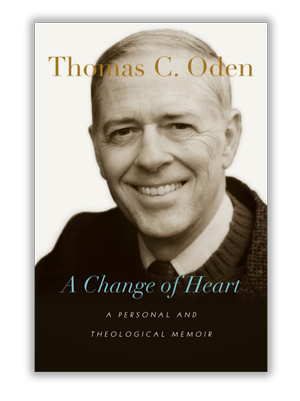
odenI finally got around to reading Thomas C. Oden’s A Change of Heart: A Personal and Theological Memoir (IVP, 2014). The book is a fascinating, self-effacing memoir of a widely respected theologian who spent much of his life gobbling down political and theological fads. He would later become a man who found his place sharing patristic exegesis of Scripture, a work he frequently mentions by the saucy label “consensual exegesis.”

Oden summarizes his theological journey with a characteristic bluntness and honesty that makes his book endearing.

My life story has had two phases: going away from home as far as I could go, not knowing what I might find in an odyssey of preparation, and then at last inhabiting anew my own original home of classic Christian wisdom. The uniting theme of the two parts of my life can only be providence. For confessing Christians it is a familiar story of a life unexpectedly turned around by an outpouring of grace. . . . I had been enamored with novelty. Candidly, I had been in love with heresy. Now I was waking up from this enthrallment to meet a two thousand year stable memory. (140)

This summary statement is pregnant with the fads he bought into, advocated, and then abandoned (his relationship with feminism alone is worth reading the book).

But most interesting to me is how his life intertwines with so many theologians, particularly the neo-orthodox like Bultmann, Barth, Tillich, and Niebuhr, all of whom he knew personally, and some of them he wrote about extensively. Those theologians would eventually leave him unsatisfied, something he explains in a buried endnote:

None of the neo-orthodox theologians had adequately rediscovered the consensual center of classic patristic teaching. Bultmann had demythologized the resurrection. Barth had trounced many aspects of classic Christian natural-law reasoning. Tillich had turned the gospel into an uneventful philosophy of “being itself.” Reinhold Niebuhr abandoned classic ecclesiology in favor of political actions and arguments. All four had influenced me decisively. I had written books on two of them (Bultmann and Barth). Yet none had followed the classic consensual method. None broke through the illusion of the permanence of modern ideologies. What neo-orthodoxy lacked was the pre-Reformation core of classic Christian exegesis — before Luther, before Calvin, before Harnack. (352–53)

It was finally the patristic writers who got through to Oden, and who would break through the illusion of the permanence of modern ideologies. And it was here, in this turn to the patristics, Oden found an earlier premonition fulfilled:

In the season of Epiphany 1971 I had a curious dream in which I was in the New Haven cemetery and accidentally stumbled upon my own tombstone with this puzzling epitaph: “He made no new contribution to theology.” I woke up refreshed and relieved. (143)

Law v. Internet

the-newsroom-banner

One thing is clear about Aaron Sorkin’s abruptly-ended show, Newsroom (HBO), he used it to expose the friction between old media (big, slow institutional news agencies) and the new media (speedy, viral, crowdsourced platforms). And then on top of those tensions he added a layer of ethical conversation about what role our legal system plays in adjudicating public accusations of criminal activity.

Character Don Keefer, an executive news producer at the network, while vetting whether or not an accused and accuser should appear together on air, warned:

It is a huge, dangerous, scary mistake to convene your own trial in front of a television audience where there is no due process, no lawyers, no discovery, no rules of procedure, no decisions on admissible evidence, no threat of perjury, no confrontation of witnesses, or any of the things we do to ensure an innocent person isn’t destroyed. The law can acquit; the Internet never will. [S3 Ep5]

Update:

Novel Alert: Kristin Lavransdatter

undset

In the early 1990s, R. Kent Hughes surveyed Elisabeth Elliot for her favorite books, and then published her response in an appendix to his book Disciplines of a Godly Man [?].

When asked to name her single favorite spiritual book, Elliot simply wrote: “Impossible to say.” But when asked about her favorite novel, the decision must have been easier, for she listed one title: Kristin Lavransdatter by Norwegian novelist Sigrid Undset (1882–1949). For it, Undset was awarded the Nobel Prize in Literature in 1928.

A few days back, Wesley Hill published his favorite reads of 2014, announcing:

. . . the best book I read this year was Kristin Lavransdatter by Sigrid Undset. . . . Originally a trilogy published in the early 1920s, Kristin Lavransdatter tells the story, over the course of about one thousand pages, of the whole life of its title character in medieval Norway. It has elements of the macabre, as it eerily explores lingering superstitions in face of an ascendant Christianity. It also has elements of the devotional, reading at times like a spiritual handbook, a chart of the soul’s progress to be used as a goad to the reader’s own self-examination. Mainly, though, it is a story of marriage and motherhood and all the ways that we remain mysteriously — sometimes wondrously, sometimes fearfully and devastatingly — distinct and distant from one another.

The Year of the Troubadour

Calvin Miller, The Singer Trilogy (IVP, 1990), 86–91:

The wall of the great city reached upward till it defied all measurement of mind.

Outside the fortress, stretching up the slopes, a grove of trees bearded the great stone wall that had slept for centuries above the seasons of new leaf and naked frost.

Towers and minarets glinted in the sun-washed sky and caused the Singer apprehension as he leaned against a tree.

He watched the human commerce flowing through the rough-hewn gates. Never had he seen so many people hungry for a living song. They jostled shapelessly, a mass of urban sameness. Each hurried after urgent unattended business, yet none had any reason for the press.

The Singer sighed.

Sometimes a child would follow in the madding throng. Already it appeared the youngster tried to learn the routine, manufactured steps of older men he mimicked in the way.

Reluctant to adopt the business cadence of the empty throng, the Singer turned and sought a quiet place beneath the wall. He walked into the trees.

“Hello, Singer” said the voice he knew too well. “Welcome to the quiet of the grove. Does the senseless empty crowd offend you?”

The Singer’s only offense came in knowing that the World Hater always seemed to know what he was thinking.

“How did you manage to make them cherish all this nothingness?” he asked the World Hater.

“I simply make them feel embarrassed to admit that they are incomplete. A man would rather close his eyes than see himself as your Father-Spirit does. I teach them to exalt their emptiness and thus preserve the dignity of man.”

“They need the dignity of God.”

“You tell them that. I sell a cheaper product.”

They were deeper in the woods. They stopped in a shaded spot beneath the fortress wall.

A heavy set of chains hung from a great foundation stone that held the towering wall. Manacles hung bolted on the wrists of a burly, naked man.

danceHe slept or seemed to.

Before him on the ground lay a heavy stoneware basin nearly filled with water and the dried remains of bread half-eaten.

“Is he mad?” the Singer asked.

“Senselessly,” the Hater answered.

“Who brings him bread and water?”

“I do.”

“Why?”

“To see him dance in madness without a tiny hope! Imagine my delight when he raves and screams in chains. Would you like for me to wake this animal?”

“He is a man. Earthmaker made him so. What is his name?”

“The Crowd.”

“Why such a name?”

“Because within this sleeping hulk there are a thousand hating spirits from the Canyon of the Damned. They leap at him with sounds no ears but his can hear. They dive at him with screaming lights no other eyes can see. And in his torment he will hold his shaggy head and whimper. Then he rises and strains in fury against the chains to tear them from the wall. Stand back and see.”

The Hater took the silver pipe out of its sheath. The tune began — a choppy, weird progression of half tones.

The sleeping giant stirred and placed his massive hands upon his temples. In fever hot the Hater played and just as rapidly the Madman stumbled to his feet.

The Singer never had beheld so Great a man as he. Some unseen, unheard agony rippled through his bleeding soul. He growled, then screamed and tried to tear the chains that held him to the wall.

“Stop, Hater!” cried the Singer.

But the Hater played more loudly than before. At that precise and ugly moment, the pinion on the left gave way. The chain fell loose. Then with his one free hand the monster tore the other chain away. In but a second he stood unchained before them. The Hater took his pipe and fled into the trees. The Singer then began to sing and continued on until the Madman stood directly in his path. With love that knew no fear, the Singer caught his torment, wrapped it all in song and gave it back to him as peace.

And soon the two men held each other. In their long embrace of soul, the spirits cried and left. They stood at last alone.

“What year is it?” the giant asked with some perplexity.

“It is the year of the Troubadour,” the Singer said.

The 53 Best Books of 2014

2014 was a great year in Christian non-fiction, and while I doubt I saw every noteworthy title (who can?), I did come across 53 books this year that caught my attention. Here now is the list I’ll be using to select my favorite books of the year — an unenviable task:

Books of the Year 2014: The Contenders

I plan to select a list of my favorite books of 2014. My last list covered 2012.

Unlike 2013, during those years when I do have time to stay current on the non-fiction releases from Christian publishers, I usually take some time in July to begin writing out a list of contenders. At this point the list is quite incomplete, but a rough list at this stage will help inventory the books that have caught my attention so far. So here is the early stages of my list of books that will be seriously considered as I develop my final list in November.

My list (updated on 10/10) is now up to 50+ titles (* = recent adds):