Book: Sweet Communion by Arie de Reuver

Book Announcement
Sweet Communion by Arie de Reuver

So I was all ready to wind down a bit this weekend, and not push to get another post up. That was all disrupted Saturday when a bubble mailer arrived in my mailbox from Baker Academic. I simply could not wait until next week to announce their new release. The book is Sweet Communion: Trajectories of Spirituality from the Middle Ages through the Further Reformation by Arie de Reuver. The book was published in Dutch in 2002 and translated into English by James A. De Jong.

To explain the importance of this book, I need to give some background.

We are familiar with the English Puritans (men like John Owen, Richard Sibbes, John Bunyan, Thomas Brooks, etc.) primarily because their original works were written in English, and easily reprinted over the centuries with little editing necessary. However, in the Netherlands another “Puritan” movement was taking place. Like their English counterparts, men like Willem Teellinck, Herman Witsius and Thodorus and Wilhelmus à Brakel were producing valuable theological and spiritual works in Dutch. But until only recently has the work of Dr. Joel R. Beeke and the Dutch Reformed Translation Committee made these works more accessible. In fact, one of the great highlights of Beeke’s Meet the Puritans is a section entirely devoted to the Dutchmen of the “Further Reformation” (see pages 739-824). Books of the Dutch “Further Reformation” authors (like the recently translated The Path of True Godliness by Willem Teellinck) bear all the marks of brilliance we see in the English Puritans.

One of the most noticeable strengths of these “Dutch Puritans” (as I call them) is their emphasis on Reformed spirituality and their enjoyment of sweet communion with Christ. Theirs was a deep and sincere devotion to Christ where their union with Christ was the means of experiencing vibrant communion with Christ. They defended the doctrines of grace and simultaneously enjoyed a joyful and warm spirituality.

This beautiful Reformed spirituality can be seen in the works of Wilhelmus à Brakel (1635-1711).

Wilhelmus à Brakel is most noted for his four-volume work, The Christian’s Reasonable Service (Reformation Heritage Books; 1993; 4 vols.). While it looks like another Reformed systematic theology it is actually more practical in nature and intended to provide content for small group discussions as Christians gather to encourage one another in the Christian life. It is one of the beautiful works of the “Dutch Puritans.”

I have noticed in the past the “sweet communion” of the believer with Christ is a theme that sparkles from this work. After emphasizing the marriage union between the Groom (Christ) and His Bride (the Church), à Brakel explains the believer’s communion with Christ within this marital union. Once this union between the sinner and his Savior has taken place in conversion “Jesus Himself delights in having communion with you” (2:93). Read that incredible sentence again! This communion produces a “sweetness and overflowing delight … Here they (Christians) find balm for their sick souls, light to clear up their darkness, life for their deadness, food and drink for their hunger and thirst, peace for their troubled heart, blood to atone for their sins, the Spirit for their sanctification, counsel when they are at their wit’s end, strength for their weakness, and a fullness of all for their manifold deficiencies” (2:93,94).

Of this marital union and the communion that follows, à Brakel writes,

“A temporal believer concerns himself only with the benefits and has no interest in Christ Himself. Believers, however, have communion with the Person of Jesus Christ, but many neither meditate upon nor closely heed their exercises concerning Christ Himself. They err in this, which is detrimental to the strength of their faith and impedes its growth. Therefore we wish to exhort them to be more exercised concerning the truth of belonging to each other, and the union and communion with Jesus Himself. They will then better perceive the unsearchable grace and goodness of God that such wretched and sinful men may be so intimately united with the Son of God. Such reflection will most wondrously set the heart aflame with love. It will strengthen their resolve to put their trust in Jesus without fear. It will give them strength and liberty to obtain everything from Him to fulfill the desires of their soul, causing them to grow in Him, which in turn will generate more light and joy. Therefore, faith, hope, and love are mentioned in reference to the Person of Christ. Scripture speaks of receiving Him, believing in Him, trusting in Him, living in Him, loving Him, and hoping in Him” (2:91).

This beautiful passage points the believer back to the Person of Christ to find her joy and strength in the beauty of Jesus Christ. This light and joy is the byproduct of communion with Him and this communion goes back to the believer’s union with Christ in justification.

Later, à Brakel explains that since our union with Christ is absolute, our communion with Christ does not shift with circumstances or emotions. “By faith, hold fast to the fact that you are reconciled to and are a partaker of Him and His benefits, even if you do not perceive and feel this. This belonging to Him is not based on feeling. If the souls may truly believe this and be exercised therewith, this will lead the soul toward communion with Him” (2:96). Communion can never be separated from our union and our union is described by our justification by faith alone and in our election in the Son. So à Brakel and the “Dutch Puritans” remind us that our sweet communion with Christ is inseparably bound to our understanding of our union with Christ in the gospel!

In his conclusion on the teachings of Wilhelmus à Brakel, de Reuver writes that his “spirituality is one that is rooted in Christ through the word believed, even in its most intimate and mystical moments. This foundation protects his mysticism from spiritualism” (258).

Many today are drawn towards Roman Catholic mysticism or a non-theological spirituality by thinking a deep spiritual experience of Christ can be separated from a genuine understanding of the gospel. This, as à Brakel displays, is not the case. Neither does Reformed theology favor a cold orthodoxy. Following the best intentions of the Medieval theologians, the Reformed “Dutch Puritans” always believed that rich biblical doctrine is the vein for the warm blood of spiritual experience of the Son in communion.

So here is the importance of Sweet Communion by de Reuver: The rich spirituality we have received from the “Dutch Puritans” is a spiritual legacy following the spiritual traditions of Bernard of Clairvaux (1090-1153) and Thomas à Kempis (1379-1471) but is firmly rooted in the precious theology of the Reformation. The final conclusion of de Reuver is that the all-controlling center of the Dutch Further Reformation spirituality rested in the Reformed theology. This is a beautiful and timely book to further dismantle the idea that Reformed theology is cold and stiff intellectualism. Our rich theology actually leads us deeper into true “mysticism” of direct communion with Christ.

Title: Sweet Communion: Trajectories of Spirituality from the Middle Ages through the Further Reformation.
Series: Texts and Studies in Reformation and Post-Reformation Thought
Author: Arie de Reuver (Dutch)
Translator: James A. De Jong (English)
Reading level: 4.5/5.0 > academic and some untranslated Dutch quotations
Boards: paper
Pages: 303
Volumes: 1
Dust jacket: no
Binding: glue
Paper: normal
Topical index: no
Scriptural index: no
Text: perfect type
Publisher: Baker Academic
Year: 2007
Price USD: $29.99/23.99 from Baker
ISBNs: 0801031222, 9780801031229

————-

Related: Communion with God by Kelly Kapic. Another gem from Baker this year on communion with God. Kapic studies English Puritan John Owen’s understanding that communion with God takes place within a balanced Triunity of the Father, Son and Spirit. Highly recommended.

————-

2007 Banner of Truth Ministers’ Conference

2007-banner-of-truth-confer.jpg

Hello everyone! This weekend I prepare to travel to Grantham, PA and the 2007 Banner of Truth Ministers’ Conference. Really looking forward to the teaching, learning more about John Calvin, enjoying fellowship and of course rummaging through stacks and stacks of books. I plan to pick up blogging on Tuesday as time permits out East and updates throughout the week. Looking forward to meeting some of the TSS readers out East as well. We’ll see you next week from Grantham. Blessings! Tony

Fun in the sun

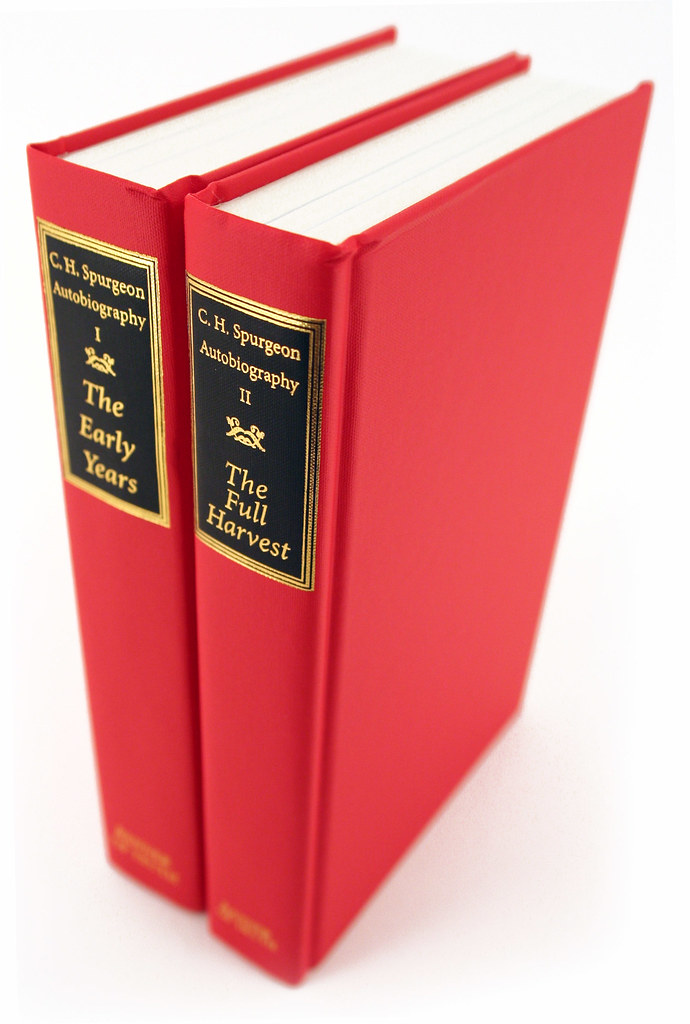
At the 2007 Sovereign Grace Ministries Leadership Conference, Mark Dever suggested Charles Spurgeon’s autobiography as the funnest book he has read. And since the long and hot poolside days of Summer are approaching I’ll take Dever up on on his suggestion for some edifying fun-in-the-sun.

Today I embark on the 1,000+ page journey of the life of Spurgeon as narrated by the man himself (Banner of Truth, 2 vol. edition). If you are looking for some great Summer reading I would encourage to embark on the journey as well. Or you may be interested to read the best biography I’ve ever read (George Whitefield by Arnold Dallimore) or my favorite biography of Spurgeon (also by Dallimore). Now is a good time to plan out your Summer reading schedule.

The importance of God’s wrath

The importance of God’s wrath

Yesterday I posted some comments about my gratefulness to Christ for escaping the horrifying consequences of my own sinfulness, namely escaping God’s wrath (see Saved from the wrath of God). Today I want to return to the topic and post from arom59big.jpg slightly different angle.

From my perspective – and knowing my own heart — we sinners are apt to forget the gospel. When we become ignorant of the gospel, we make unwise life decisions, bear children ignorant of the gospel, and live in marriages where the Cross is not central (Eph. 5:22-33). It’s to our benefit, humility, and joy to be reminded of Scripture’s emphasis upon the wrath of God poured out towards sinners. This is what Christians have been saved from. The wrath of God is absorbed in the substitutionary work of Jesus Christ as our judicious and forensic Savior, and we are never beyond need of reminding.

So why is the doctrine of God’s wrath so important? For starters, the gospel – that the wrath of God resting upon the heads of all sinners, is, in Christ, absorbed when He drank the cup of our condemnation and substitutes Himself for the redeemed – is always in a process of erosion. This is especially true today.

One of the most noted dangers of the New Perspective(s) of Paul is the de-emphasis on Christ as the substitute who absorbs the wrath of God. After citing direct quotations from prominent NPP writer N.T. Wright, T. David Gordon writes, “The enemies and powers defeated by Christ do not (for Wright) include God’s own wrath or judgment … when he explains Paul’s narrative theology, and the cross and resurrection as the center of that narrative, he is entirely right, but when he explains precisely what Christ therein triumphed over, the wrath of God is not among the panoply” [in Gary L.W. Johnson and Guy P. Waters, editors. By Faith Alone: Answering the Challenges to the Doctrine of Justification (Crossway: 2006), p. 63].

The point is we are always in danger of forgetting God’s wrath. By sheer volume of Bible references, the wrath of God towards every sinner is the central consequence of our sinfulness. It is central to the work of Christ, central to the gospel, and central to living the Cross centered life.

So in hopes of stirring you up by way of reminder, here is a (short) list of some reasons why the theme of God’s wrath is important:

1. God’s wrath is biblical. The Scriptures are saturated with the wrath of God. Look for yourself. Talking about God’s wrath is nothing but letting the priorities of Scripture become our own priorities. We should be humbled and sobered by God’s wrath, but never silent. God has promised that sinners – all who are sexually impure, covetous, idolatrous, or otherwise impure and unrighteous – will face the wrath of God (Jam. 2:10; Eph. 5:3-6). Those who say otherwise are speaking empty and deceptive words.

2. God’s wrath reveals God. The wrath of God reveals His holiness, envy, perfections, an intense hatred of rebellion, His righteousness, His justice, His power. “I will make myself known among them, when I judge you” (Ezek. 35:11). Soberly, God reveals Himself in the damnation of the wicked. “What if God, desiring to show his wrath and to make known his power, has endured with much patience vessels of wrath prepared for destruction, in order to make known the riches of his glory for vessels of mercy, which he has prepared beforehand for glory” (Rom. 9:22-23). The beauty of the Cross and the redeemed shines with greater luster when compared to the coming condemnation coming upon the wicked. Until we understand God’s holiness and wrath, we will only have wrong conceptions of Him.

3. God’s wrath reveals who we are.
We are sinners. We exchange the glory of God for created things. We happily replace the joy of God for collecting Hallmark figurines, antiques and Beanie Babies (Rom. 1:18-23). We would rather treasure the fleeting things of the world and forfeit our souls (Mark 8:36). We are His subjects, but we do everything in our power to reject Him. We will abandon the natural biological creation to invent our own unnatural means of rebellion (Rom. 1:27). Every act of rebellion stokes the wrath of God (Rom. 1:18). If we have become honest with ourselves, we know that we are wrath-deserving, glory-exchanging, sin-pursuing sinners that (apart from Christ) can only expect the eternal wrath of God’s holiness. This is who we are. Martyn Lloyd-Jones, one of the great preachers of the 20th century, writes: “The way to appreciate your own sinfulness is not to look at your actions, nor your life, but to come into the presence of God” (Great Doctrines, 1:72). Step close enough to feel the heat of God’s holiness.

4. Importance of God’s wrath in the daily life of the Christian. To the question, “How are you today?”, C.J. Mahaney has popularized the response: “Better than I deserve.” Try it sometime. The barista behind the counter at Starbucks will give you a very puzzled look. But this will also be a great opportunity to share that an understanding of God’s wrath has made a permanent impact in your heart. So what do you deserve? Do you deserve perfect health? A venti Americano? Comfortable finances? An early retirement? Comforts? Vacations? The Christian knows better. Sinners (of which Christians will be until we see Christ face-to-face and have our sin burned away) deserve the wrath of God. It’s only because of God’s graciousness in the death of His Son that some sinners will be spared. Most sinners will get exactly what they deserve — the undiluted, eternal torment of God’s burning wrath. So why do we get angry when our comforts are disrupted by our spouse or children? Take a look into your own heart and ask: What upsets me? These disruptions are typically rooted in a misunderstanding that we are entitled to something other than wrath.

5. God’s wrath kills self-righteousness. If ever there was a truth that would break a self-righteous sinner like me, it’s the truth that God’s wrath rests upon me eternally if I am uncovered by the righteousness of Christ. My church attendance and good works and kindness and charity are a flick of water into a raging furnace. What can I do to cool the wrath of God? In light of His blazing holiness, what efforts, what works, will extinguish His wrath towards each of my sins? The popular wax gospel of human invention — that God will be pleased with me because I am not as bad as others – melts near the furnace of God’s wrath. Even a great and righteous prophet must pronounce condemnation upon himself in the presence of a holy God (Isa. 6:1-7).

6. God’s wrath exalts the work of Christ. How easily we forget that the searing pain and scorching suffering of Christ can never be pictured by His lacerated back and the holes in His hands, feet and side. These physical pains are only a surface-level visual to the horrors of the Son drinking down the cup of God’s wrath (Mark 14:32-36 with Jer. 25:15-38). “For our sake he made him to be sin who knew no sin, so that in him we might become the righteousness of God” (2 Cor. 5:21). Or to put it another way, “But he was wounded for our transgressions; he was crushed for our iniquities; upon him was the chastisement that brought us peace, and with his stripes we are healed” (Isa. 53:5). The Gospel is centered around God’s wrath. For in His anger towards sinners He transferred the wrath from His children onto His only Son and then crushed that only Son. Until we catch a glimpse of the horrors of God’s wrath, we will never begin to see the horror and the beauty of the Cross.

7. God’s wrath motivates evangelism. How can we be quiet? “Therefore, knowing the fear of the Lord, we persuade others” (2 Cor. 5:11). The thought that sinners would rest content in self-righteousness was appalling to the Apostle Paul. All self-righteous sinners, and especially the religious, need to hear the gospel to be saved from the wrath of God. This gospel travels on the wings of preachers sent out with the self-righteous killing Gospel (Rom. 10:1-21). What loosens the mouth to speak the Gospel is a heart that has seen a glimpse of the eternal wrath awaiting sinners (Acts 17:30-31).

8. God’s wrath drives me deep into doctrine. I can only escape God’s wrath if I am justified. So what is justification? Justification is the transfer of Christ’s righteousness to me, whereby God declares me “righteous” and takes my sin and wrath and transfers these upon the account of Christ, whereby He is declared “guilty” and endures the wrath I deserve. By faith, I entrust my salvation alone to Jesus Christ, my sin is atoned, I am declared righteous, I have the hope of eternal life and enjoy peace with God (Rom. 3:9-5:21; Gal. 3:1-14; Phil. 3:1-11; 2 Cor. 5:21). If I am not justified, I am not safe from the wrath of God. “Since, therefore, we have now been justified by his blood, much more shall we be saved by him from the wrath of God” (Rom. 5:9). The wrath of God gives significance to doctrines like justification.

9. God’s wrath reveals the beauty of our adoption. We are all by nature sinners and this makes us naturally “children of wrath” (Eph. 2:3). But now the enemies of God can be reconciled to God (Rom. 5:10). We are more than justified and declared righteous, we are taken into the family of God! Through Christ, our relationship to God radically changes! By faith alone, we come back to our Father in all our filthy sinfulness and He runs to us, grabs us, kisses us, celebrates over us, and calls us His children (Luke 15:11-32). If you are justified, God has taken His judgments away from you and now sings over you with loud singing (Zeph. 3:14-17)! The wrath of God was paid in Christ and through this beautiful Gospel I am now accepted. It’s not because I am good enough or ever will be obedient enough, rather because of His graciousness alone. Every day I can wake up knowing I am a child of God and that will never depend upon my own appeasement of God. Jesus, Thank you!

Jesus, Thank You (song by Pat Sczebel, Sovereign Grace Ministries)

The mystery of the cross I cannot comprehend
The agonies of Calvary
You the perfect Holy One, crushed Your Son
Who drank the bitter cup reserved for me

Your blood has washed away my sin
Jesus, thank You
The Father’s wrath completely satisfied
Jesus, thank You
Once Your enemy, now seated at Your table
Jesus, thank You

By Your perfect sacrifice I’ve been brought near
Your enemy You’ve made Your friend
Pouring out the riches of Your glorious grace
Your mercy and Your kindness know no end

—————-

Related: Propitiation is the theological term for the appeasement of God’s wrath in Christ’s substitutionary work for sinners. Theologian John Murray writes, “Sin is the contradiction of God and he must react against it with holy wrath. Wherever sin is, the wrath of God rests upon it (cf. Rom. 1:18). Otherwise God would be denying Himself, particularly His holiness, justice, and truth. But wrath must be removed if we are to enjoy the favor of God which salvation implies. And the only provision for the removal of wrath is propitiation. This is surely the import of Romans 3:25, 26, that God set forth Christ a propitiation to declare His righteousness, that He might be just and the justifier of the ungodly.”